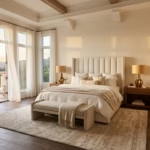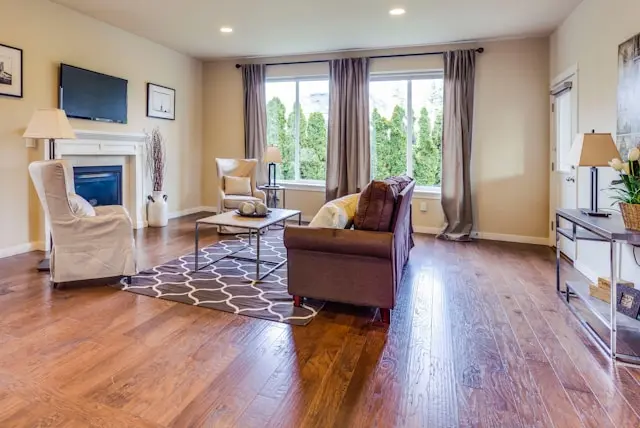

Wood flooring comes in four main types: solid hardwood, engineered hardwood, laminate, and bamboo. Each differs in how it is constructed, where it can be installed, how long it lasts, and what it costs. Solid hardwood is cut from a single plank of timber. Engineered hardwood is built from layered wood with a hardwood veneer on top. Laminate uses a photographic layer over a composite core. Bamboo, though technically a grass, is processed and installed in the same way as hardwood and performs comparably.
Key Takeaways
- Solid hardwood lasts 50 to 100 years and can be sanded and refinished many times.
- Engineered hardwood works in moisture-prone areas and over radiant heat where solid wood cannot.
- Laminate costs the least and resists scratches well, but cannot be refinished.
- Bamboo is a renewable material that rivals the hardness of many traditional hardwoods.
- The right choice depends on your subfloor, room humidity, foot traffic, and budget.
- Related reading: See our pillar guide, Types of Flooring, for comparisons across all flooring categories.
What Is Wood Flooring?
Wood flooring is any floor covering made primarily from timber, processed timber composites, or wood-like plant materials such as bamboo. It has been used in domestic and commercial construction for centuries and remains one of the most widely chosen flooring materials worldwide.
According to the National Wood Flooring Association (NWFA), the global hardwood flooring market was valued at approximately USD 36 billion in 2023 and is projected to grow steadily through 2030, driven by sustained demand for natural materials in residential renovation.
The Four Main Types of Wood Flooring
Most wood floors sold today fall into one of four categories. Understanding how each is made will help you determine which performs best for your home or project.
| Type | Construction | Thickness | Can Be Refinished? | Typical Cost (per sq ft) |
|---|---|---|---|---|
| Solid Hardwood | Single timber plank | 18–20 mm | Yes, 5–8 times | $5 – $15 |
| Engineered Hardwood | Plywood core + veneer | 10–20 mm | Yes, 1–3 times | $4 – $12 |
| Laminate | HDF core + photo layer | 7–12 mm | No | $1 – $5 |
| Bamboo | Compressed bamboo strips | 10–15 mm | Yes, if solid | $3 – $8 |
1. Solid Hardwood Flooring
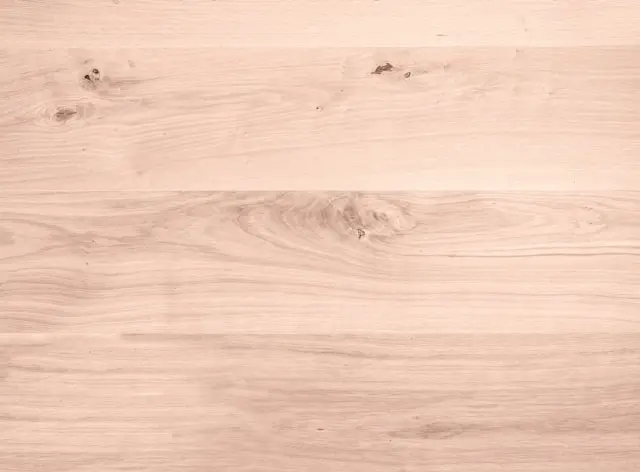
Solid hardwood is milled from a single piece of timber, from the top surface to the bottom. It is the most traditional form of wood flooring and is widely considered the benchmark against which other types are measured.
Best for: Living rooms, dining rooms, bedrooms, and hallways in climate-controlled environments.
Not recommended for: Basements, bathrooms, or any space with high humidity or direct water exposure.
Common species used in solid hardwood include oak, maple, walnut, cherry, and hickory. Oak is by far the most popular choice in the United Kingdom and North America due to its availability, grain variety, and mid-range cost.
Because the boards are solid timber throughout, they can be sanded flat and refinished multiple times over their lifespan. A well-maintained solid hardwood floor can last well over a century. Interior designers and property valuers frequently cite this longevity as a key reason solid hardwood adds measurable resale value to a home.
As architectural historian and flooring specialist Dr Michael Gunn of the University of Edinburgh has noted: “Solid hardwood is one of the few flooring materials whose value to a property tends to appreciate rather than depreciate over time, provided it is properly maintained.”
2. Engineered Hardwood Flooring
Engineered hardwood is constructed from multiple layers of wood pressed and glued together under heat and pressure. The top layer, called the veneer or wear layer, is real hardwood and is what you see and walk on. The layers beneath it, typically plywood or high-density fibreboard (HDF), are oriented in alternating directions to create a board that is more dimensionally stable than solid wood.
For a deeper look at construction, costs, and installation, read our dedicated guide on engineered hardwood flooring.
Best for: Kitchens, basements, rooms with underfloor heating, and areas with seasonal humidity changes.
Not recommended for: Spaces with standing water or prolonged moisture exposure.
The cross-ply construction means engineered hardwood expands and contracts less than solid wood when humidity changes. This makes it suitable over radiant heating systems, which solid hardwood manufacturers typically advise against.
The thickness of the veneer layer matters greatly. A thicker veneer of 3 mm or more allows for sanding and refinishing, which extends the floor’s useful life significantly. Thinner veneers of 0.6 to 1.5 mm offer little or no scope for refinishing and should be treated more like laminate in terms of longevity expectations.
The NWFA recommends that installers in areas with fluctuating humidity levels consider engineered hardwood as the first choice over solid wood, citing a reduction in moisture-related claims and installation callbacks.
3. Laminate Flooring
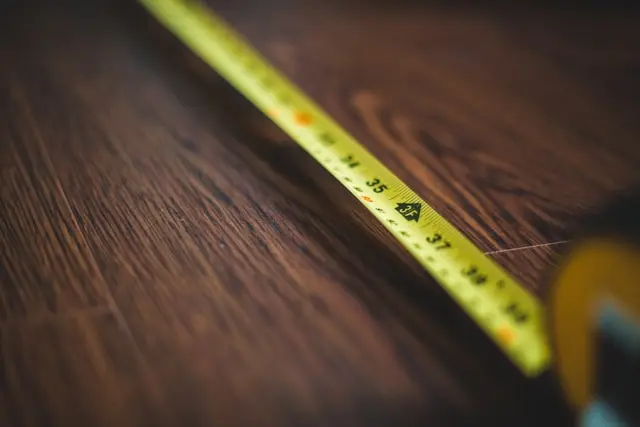
Laminate flooring is not wood in the traditional sense. It consists of a high-density fibreboard (HDF) core topped with a photographic image of wood grain, protected by a hard resin wear layer. Modern printing technology has made high-quality laminate visually convincing, though it lacks the warmth and texture variation of real timber.
Best for: High-traffic areas, rental properties, children’s rooms, and projects with tight budgets.
Not recommended for: Areas with moisture unless specifically rated for wet conditions (AC4 or higher).
Laminate is graded by the AC (Abrasion Criteria) rating system:
- AC1–AC2: Light residential use (bedrooms, guest rooms)
- AC3: General residential use (living rooms, hallways)
- AC4: Heavy residential or light commercial use
- AC5: Heavy commercial use (offices, public buildings)
For most homes, AC3 or AC4 is appropriate. The primary limitation of laminate is that it cannot be refinished. Once the wear layer is scratched or worn through, the board must be replaced. Laminate also produces a hollow sound when walked on, though quality underlay and floating installation methods can reduce this noticeably.
If laminate does not suit your requirements, luxury vinyl plank flooring offers a waterproof alternative worth considering.
4. Bamboo Flooring
Bamboo is a grass, not a hardwood, but it is processed and installed in the same way as wood flooring and performs comparably. It grows to harvest maturity in three to five years, compared with decades for most timber species, making it one of the more sustainable flooring options available.
Best for: Environmentally conscious projects, kitchens, living areas, and commercial spaces.
Not recommended for: High-humidity rooms unless properly treated and sealed.
There are two main forms of bamboo flooring. Strand-woven bamboo, in which fibres are compressed under high pressure, is considerably harder than most traditional hardwoods. Horizontal or vertical bamboo, in which strips are laminated together, is softer and more similar to mid-range hardwoods in hardness.
The Janka hardness rating, a standard measure of wood hardness, places strand-woven bamboo at around 3,000 lbf, compared with white oak at roughly 1,360 lbf. This makes strand-woven bamboo one of the hardest flooring materials available at its price point.
How to Choose the Right Type of Wood Flooring
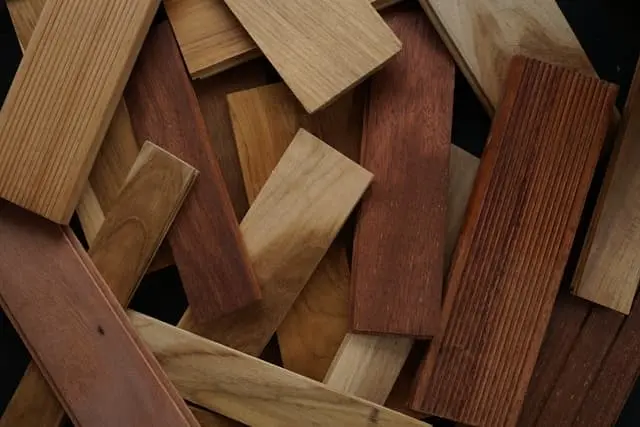
The most appropriate type of wood flooring depends on several factors specific to your property. A decision based only on appearance often leads to performance problems within a few years.
| Factor | What to Consider |
|---|---|
| Room location | Above-grade rooms allow all types; below-grade or basement rooms need engineered or laminate. |
| Subfloor type | Concrete subfloors require engineered or laminate; timber subfloors accept all types. |
| Foot traffic | High-traffic areas benefit from hard species (hickory, walnut) or high AC-rated laminate. |
| Underfloor heating | Use engineered hardwood or bamboo; avoid solid hardwood. |
| Humidity levels | High humidity favours engineered wood; low, stable humidity suits solid hardwood. |
| Budget | Laminate is the least expensive; solid hardwood and premium engineered are the costliest. |
| Refinishing plans | If you want to sand and change colour in future, choose solid or thick-veneer engineered. |
Flooring choice works best when planned alongside your lighting scheme. Our kitchen lighting guide covers how light placement affects the appearance of different floor surfaces.
Wood Flooring and Indoor Air Quality
All wood flooring products, particularly those with adhesives and resin coatings, can emit volatile organic compounds (VOCs) during and after installation. This is a legitimate concern for households with young children, elderly occupants, or those with respiratory conditions.
Solid hardwood with water-based finishes emits the lowest levels of VOCs. Some laminate and engineered products use urea-formaldehyde adhesives, which are associated with higher emissions. Look for products certified to CARB Phase 2 standards in North America or E1/E0 classification in Europe, as these indicate low formaldehyde emissions.
Installation Methods for Wood Flooring
Nail-Down Installation
Used almost exclusively for solid hardwood installed over timber subfloors. Planks are blind-nailed through the tongue at an angle. This is a permanent installation and not suitable for floating applications.
Glue-Down Installation
Common for engineered hardwood over concrete subfloors. A flexible flooring adhesive is spread across the subfloor, and planks are pressed into place. This method provides the most stable result in humid or high-traffic environments.
Floating Installation
The most common method for engineered hardwood, laminate, and bamboo. Planks click together using a tongue-and-groove or click-lock system and rest over an underlay without being fixed to the subfloor. This is the easiest method for DIY installation.
Glue-and-Float (Hybrid)
Some engineered hardwood products designed for use over underfloor heating use a combination of spot-glueing and floating to balance stability with controlled movement.
Maintenance and Care by Flooring Type
Each type of wood flooring has specific maintenance requirements. Meeting these requirements is the single most important factor in whether a floor achieves its expected lifespan.
| Type | Daily Care | Long-Term Care | Avoid |
|---|---|---|---|
| Solid Hardwood | Sweep or vacuum | Refinish every 7–10 years | Wet mopping, standing water |
| Engineered Hardwood | Sweep or vacuum | Refinish if the veneer is thick enough | Steam cleaners, excess moisture |
| Laminate | Dry mop or vacuum | Replace damaged boards | Water, steam, abrasive cleaners |
| Bamboo | Sweep or vacuum | Refinish if solid type | Harsh chemicals, standing water |
Flooring contractor and British Institute of Floor Laying member James Arkwright puts it plainly: “A floor’s lifespan is largely determined in the first year. Incorrect cleaning products, poor underlay choice, and inadequate expansion gaps are the three issues I see most often in early floor failures.”
What Flooring Experts Say
On solid vs. engineered hardwood: Sarah Connolly, Chartered Interior Designer at an RIBA-accredited London practice, advises: “For most modern homes, especially open-plan layouts with underfloor heating, engineered hardwood is the more practical choice. The visual result is virtually identical to solid wood, but the performance envelope is much wider.” (2024)
On sustainability: Professor Lena Bergstrom of the Department of Environmental Engineering at Chalmers University cautions: “Bamboo is often cited as the sustainable choice, but the full picture requires looking at processing methods, adhesive types, and shipping distances. A locally sourced solid oak floor may have a lower carbon footprint than imported bamboo.” (2023)
On property value: Tom Hadley, Senior Property Valuer and RICS member based in Bristol, observes: “Properties with solid or engineered hardwood floors consistently achieve higher valuations than those with laminate or carpet, all else being equal. Buyers perceive real wood as a quality signal.” (2024)
Wood Flooring Costs: What to Budget
The figures below represent typical mid-market supply and installation costs in the United Kingdom.
| Type | Material Only | Installed (mid-range) | Lifespan |
|---|---|---|---|
| Solid Hardwood | GBP 30–80/sqm | GBP 70–130/sqm | 50–100+ years |
| Engineered Hardwood | GBP 25–70/sqm | GBP 55–110/sqm | 25–50 years |
| Laminate | GBP 8–25/sqm | GBP 25–50/sqm | 10–25 years |
| Bamboo | GBP 20–50/sqm | GBP 45–80/sqm | 20–30 years |
Installation costs depend on subfloor preparation, room shape, and whether existing flooring must be removed. Obtain at least three quotes from NWFA-registered or Chartered Institute of Building-accredited contractors before committing.
Browse all our flooring and interior guides at Floor and Decor.
FAQ’s
What is the most durable type of wood flooring?
For residential use, solid hardwood from a hard species such as hickory, walnut, or white oak is typically the most durable. It can withstand decades of heavy foot traffic and be refinished repeatedly. In environments with moisture or temperature variation, strand-woven bamboo or thick-veneer engineered hardwood offers comparable durability with greater dimensional stability.
Can wood flooring be installed in a bathroom or kitchen?
Solid hardwood is not recommended in bathrooms and should be used cautiously in kitchens. Engineered hardwood with a waterproof core and sealed joints can work in kitchens if spills are wiped promptly. For bathrooms, a laminate rated for wet areas or a luxury vinyl product is a more appropriate choice than any wood-based material.
What is the difference between solid and engineered hardwood?
Solid hardwood is a single piece of timber from top to bottom. Engineered hardwood has a real hardwood veneer bonded to a core of layered plywood or HDF. Solid hardwood can be refinished more times, but it is more sensitive to moisture and temperature changes. Engineered hardwood is more dimensionally stable and suited to a wider range of subfloor conditions.
How long does wood flooring last?
Solid hardwood, when properly maintained, can last well over a century. Engineered hardwood typically lasts 25 to 50 years, depending on veneer thickness. Laminate generally has a lifespan of 10 to 25 years. Bamboo falls between 20 and 30 years in most residential applications.
Is laminate flooring the same as wood flooring?
No. Laminate flooring contains no solid wood. It is a composite product with an HDF core, a photographic image of wood grain, and a hard resin surface. It is designed to look like wood but does not share its physical properties. It cannot be refinished and has a shorter lifespan than real wood alternatives.
Does wood flooring increase home value?
Multiple property valuation studies suggest that real wood flooring, both solid and engineered, is associated with higher sale prices and faster sale times compared with laminate, carpet, or vinyl. The Royal Institution of Chartered Surveyors notes that quality flooring is among the improvements buyers notice and value most in property assessments.
Conclusion
Choosing between solid hardwood, engineered hardwood, laminate, and bamboo is not simply a question of aesthetics. Each type has a distinct construction, performance range, maintenance requirement, and cost profile. Solid hardwood remains the long-term benchmark for durability and value. Engineered hardwood offers the widest installation flexibility. Laminate is the most cost-effective entry point. Bamboo delivers strong hardness ratings with a lower environmental footprint.
The right wood floor is the one that suits your specific room conditions, your maintenance habits, and your long-term plans for the property. Armed with this information, you are in a sound position to make that decision or to evaluate the advice of a qualified flooring installer.
Explore cork, vinyl, and tile options in our complete guide to flooring types to compare wood flooring against all other categories.