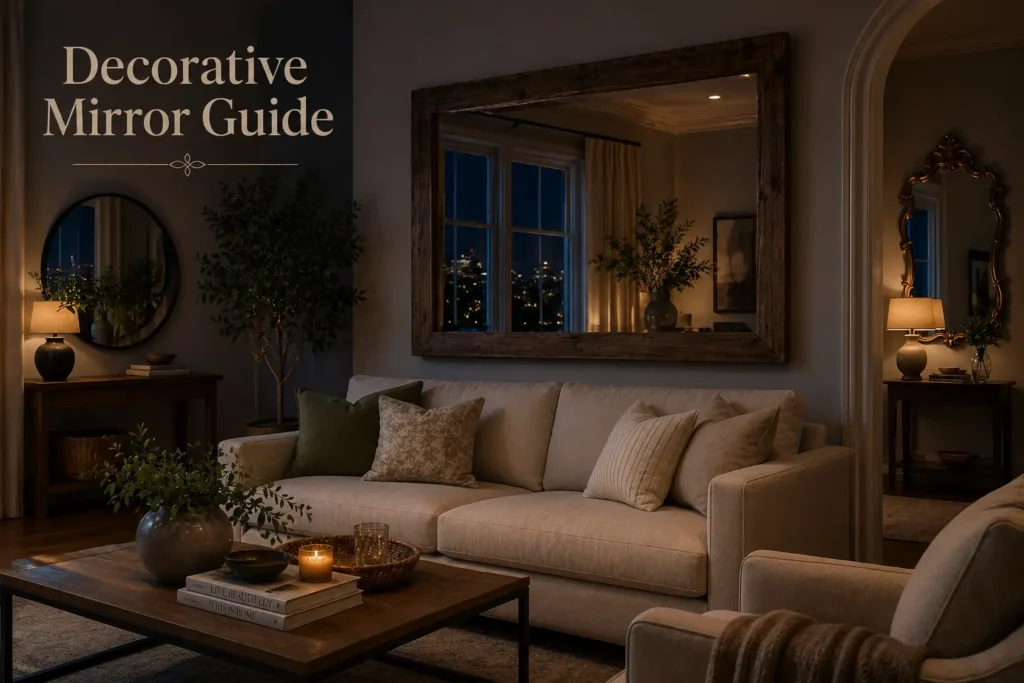

A decorative mirror improves light, enhances space, and strengthens interior design when chosen with the correct size, style, and placement. For most homes, the best approach is to match the mirror type to the room’s purpose. Use lounge wall mirrors for comfort and balance in social areas, big living room wall mirrors to manage scale and brightness, farmhouse mirrors for rustic simplicity, and Victorian style mirrors for detailed, classic interiors.
What Is a Decorative Mirror?
A decorative mirror is a mirror selected not only for reflection but also for its contribution to interior design. It combines function and style, often acting as a focal point within a room.
- Frame design and material
- Shape and size
- Placement within a space
Key Takeaways
- A decorative mirror increases light and creates the illusion of space
- Placement should reflect natural light or key focal points
- Lounge wall mirrors improve comfort and visual balance
- Big living room wall mirrors solve scale and empty wall issues
- Farmhouse mirrors suit rustic and natural interiors
- Victorian-style mirrors add detail and historical character
- Correct sizing and positioning are more important than decoration alone
Why Decorative Mirrors Matter in Interior Design
A decorative mirror has three main effects on a room:
1. Light Enhancement
A decorative mirror improves lighting by reflecting both natural daylight and artificial light sources such as lamps or ceiling lights. When placed opposite or near a window, it captures incoming sunlight and spreads it across the room. This reduces dark corners and creates a more evenly lit space without needing additional electrical fixtures.
2. Space Expansion
One of the most important functions of a decorative mirror is creating the illusion of more space. This effect works by extending the visual depth of a room. When a mirror reflects part of the room, it tricks the eye into perceiving the space as larger than it actually is.
3. Visual Balance
A decorative mirror also plays an important role in balancing interior design. Many rooms feel visually incomplete when large wall areas remain empty or when furniture is unevenly distributed. A mirror helps correct this imbalance by filling blank spaces and creating symmetry.
Types of Decorative Mirror
Lounge Wall Mirrors

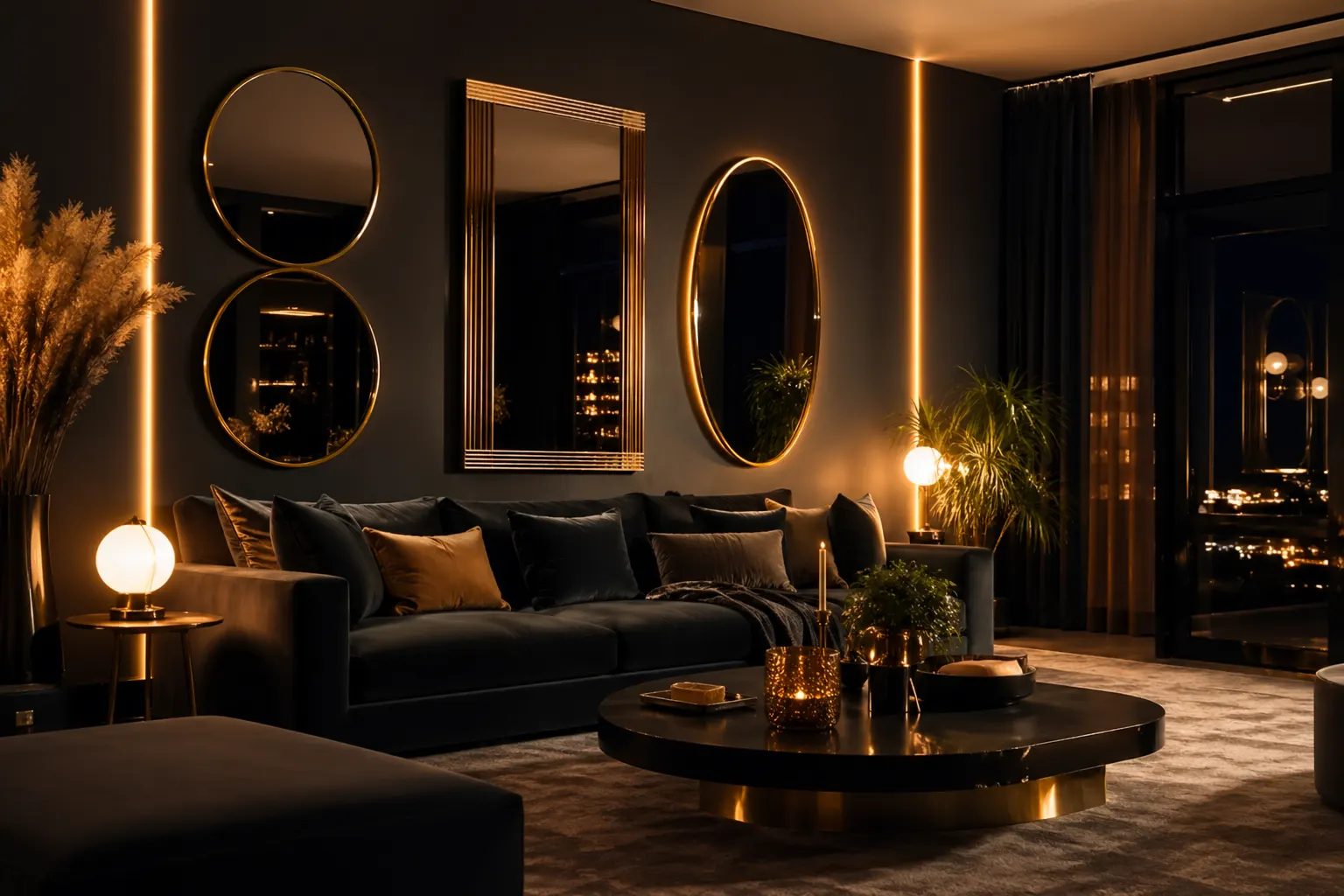
Lounge wall mirrors are designed for relaxed, social areas. These mirrors focus on comfort, warmth, and balance rather than dramatic impact. They are often used to improve the atmosphere of shared living spaces by reflecting light and creating a sense of openness. In many interiors, they also help soften heavy furniture layouts and make seating areas feel more connected and visually complete.
Key features:
- Medium to large size
- Simple or lightly detailed frames
- Placement above sofas or seating areas
Best use case:
When a lounge feels dim or visually unbalanced, a decorative mirror can reflect light and create a more inviting atmosphere.
For more styling inspiration and layout ideas, see detailed lounge wall mirror ideas and arrangements.
Big Living Room Wall Mirrors
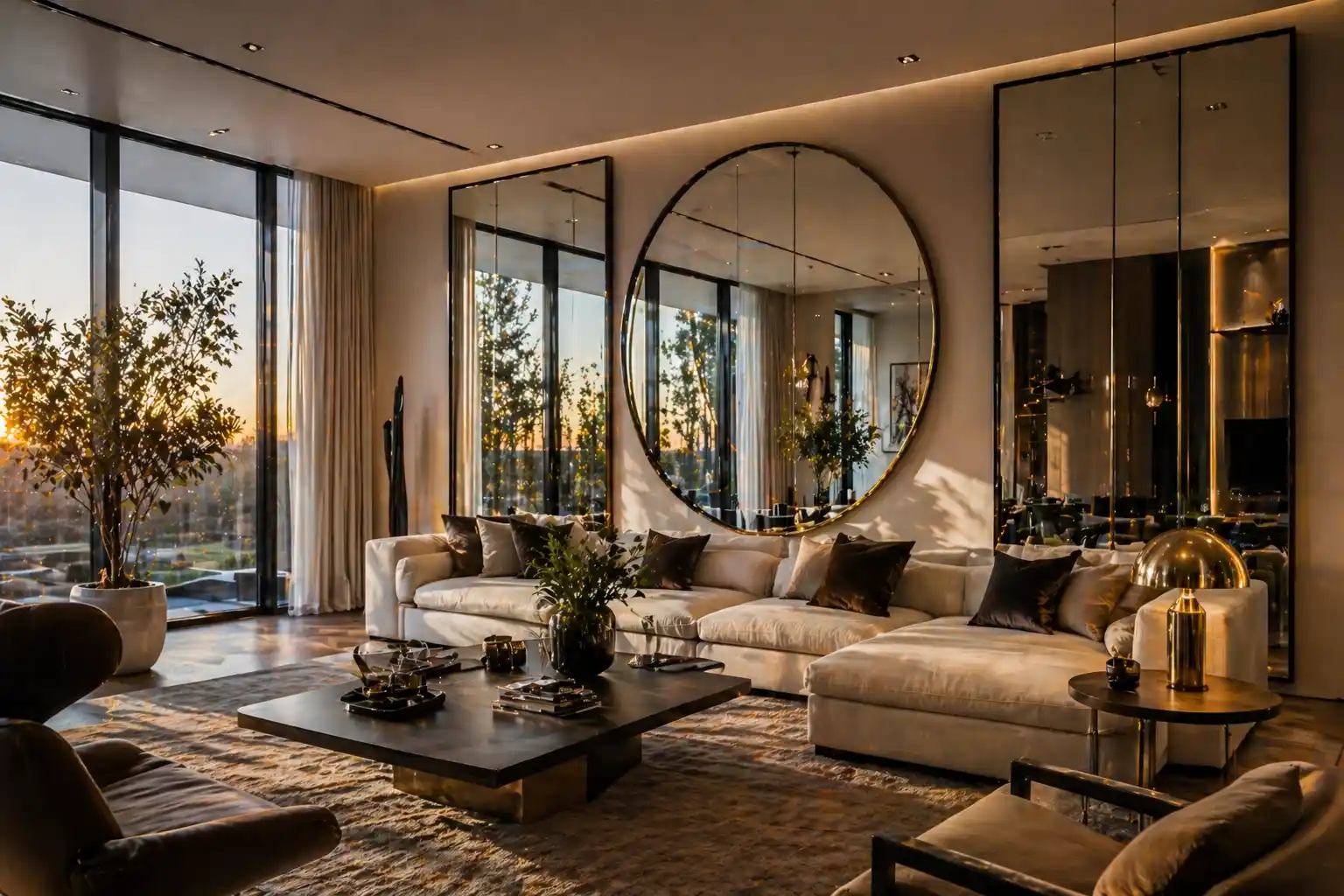
Living room wall mirrors are designed to improve scale, brightness, and overall balance in larger interior spaces. These mirrors are often used as statement pieces that help define the structure of a living room while enhancing natural and artificial light.
They are especially effective in open-plan areas where walls feel empty or furniture layout lacks visual connection. A well-placed decorative mirror can create a strong focal point and bring harmony between different design elements.
Key features:
- Large dimensions
- Strong visual presence
- Often used as a focal point
Placement tips:
| Area | Recommended Position |
|---|---|
| Opposite window | Maximizes natural light |
| Above sofa | Creates balance |
| On an empty wall | Fills space effectively |
A decorative mirror of this size can significantly improve how a large room feels without adding more furniture. For more ideas on styling and placement, explore big living room mirror design inspirations and layout ideas.
Farmhouse Mirror
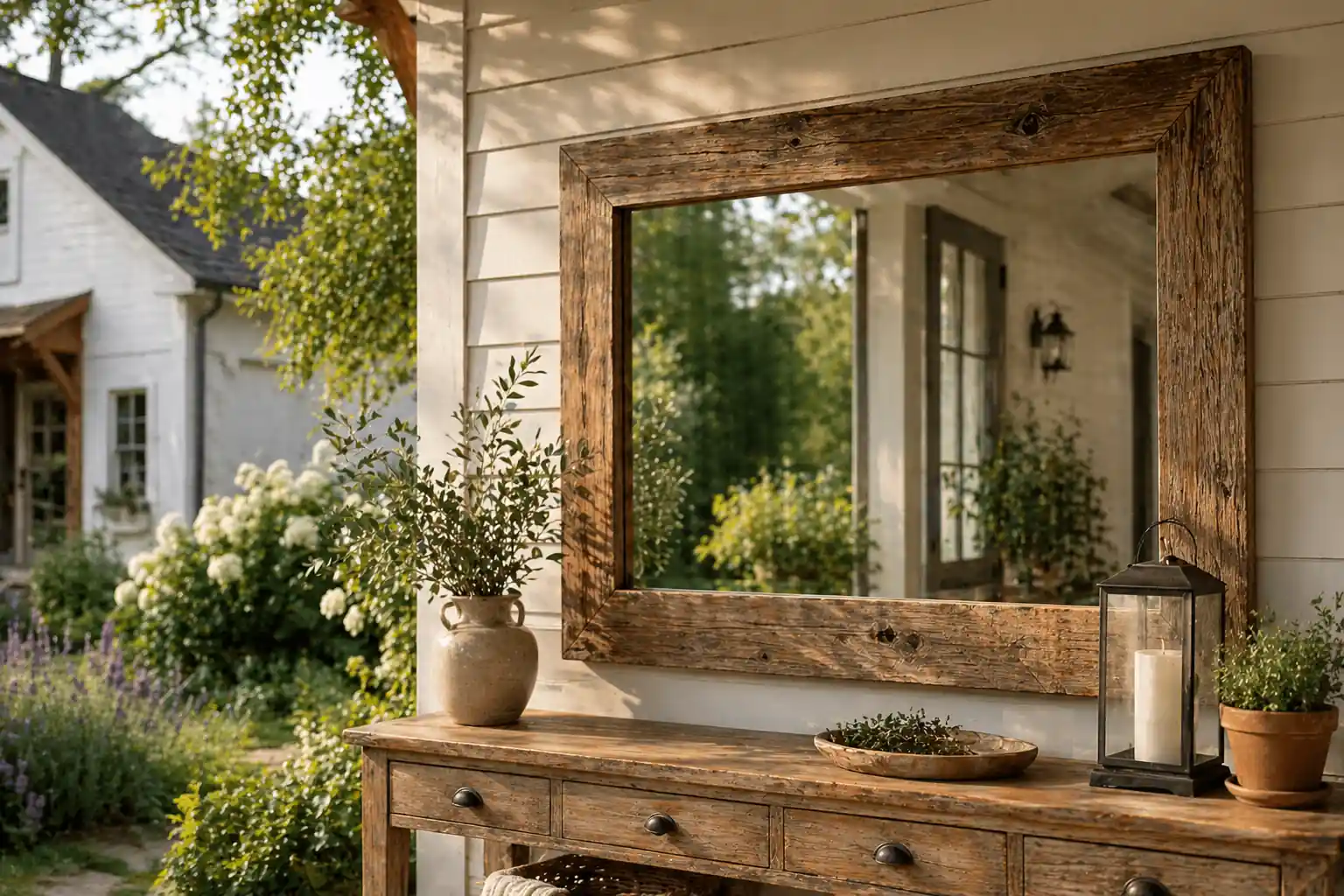
A farmhouse mirror reflects a rustic and practical design style that emphasizes natural materials, simplicity, and warmth. It is commonly used in interiors where the goal is to create a relaxed, homely atmosphere rather than a highly polished or formal look.
These mirrors are often made with wood frames that show natural grain, light distressing, or matte finishes. The design avoids heavy ornamentation and instead focuses on texture and authenticity, which makes it suitable for both modern rustic and traditional farmhouse interiors.
Characteristics:
- Wooden frames
- Neutral or earthy tones
- Minimal decoration
Best environments:
- Rustic homes
- Country-style interiors
- Warm, natural spaces
Best use case:
A farmhouse mirror works best in spaces where warmth and simplicity are important, such as living rooms, dining areas, entryways, or bedrooms. It helps soften modern interiors and adds a natural, grounded feel to the room.
For more styling inspiration and placement ideas, explore farmhouse mirror design ideas.
Victorian Style Mirror
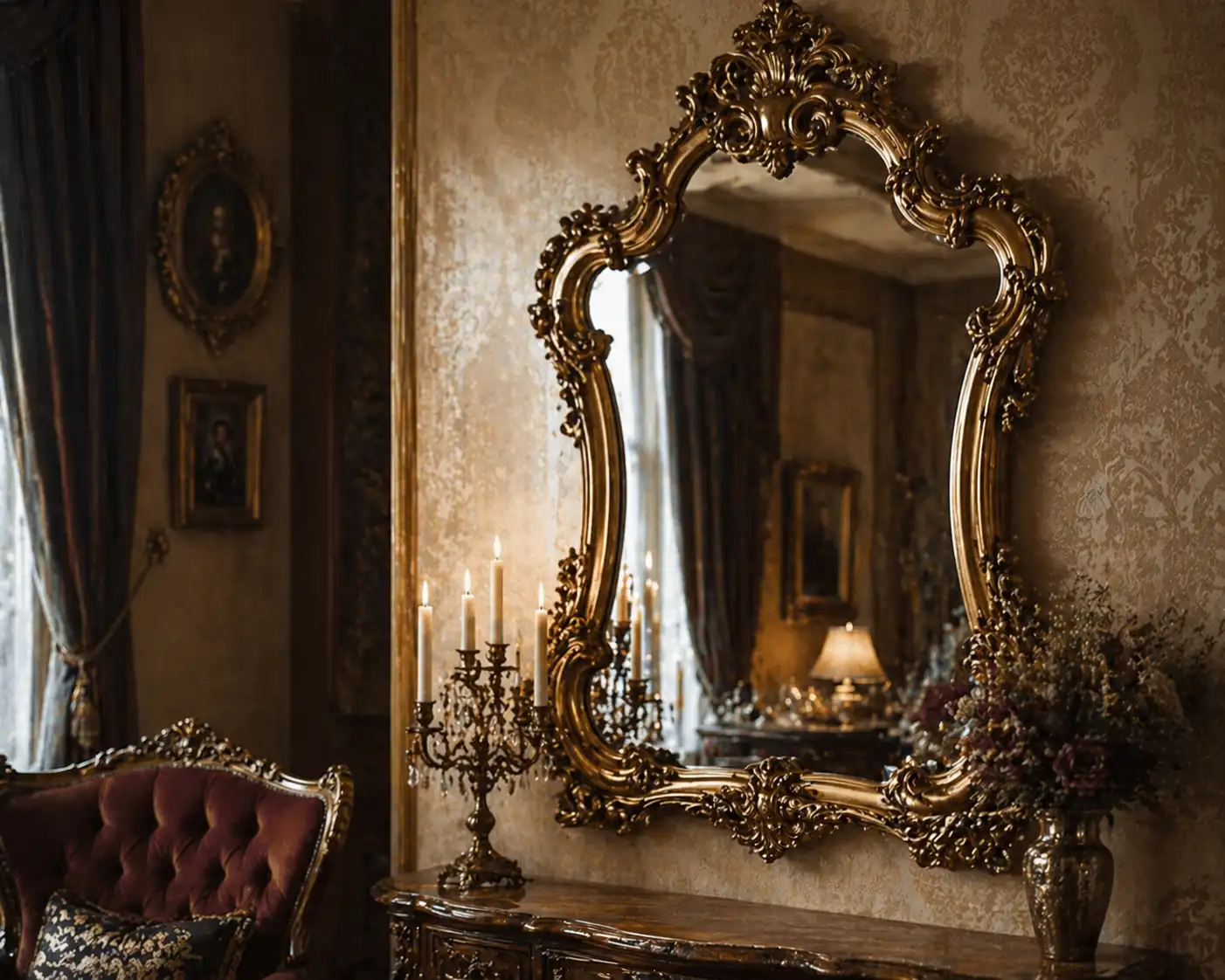
A Victorian-style mirror is a decorative mirror influenced by 19th-century interior design, where ornamentation, craftsmanship, and detail were central to home décor. These mirrors are known for their rich frames, curved forms, and highly decorative finishes that make them stand out as statement pieces in a room.
Unlike simpler modern designs, Victorian mirrors focus on visual richness. They are often used to add elegance and historical character to interiors that need a stronger decorative identity.
Features:
- Ornate frames
- Curved or oval shapes
- Gold or antique finishes
Best use case:
A Victorian-style mirror works best in formal living rooms, classic interiors, or feature walls where the mirror is meant to act as a focal point. It enhances traditional décor themes and adds depth, richness, and a sense of heritage to the space.
For deeper styling ideas and placement inspiration, explore Victorian mirror design and classic wall décor concepts.
How to Choose the Right Decorative Mirror
Selecting the right decorative mirror requires careful evaluation of space and purpose.
Step 1: Measure the Wall
The mirror should generally be:
- No wider than the furniture below it
- Proportional to the wall size
Step 2: Match the Interior Style
| Interior Style | Suitable Mirror |
|---|---|
| Modern | Simple or frameless |
| Rustic | Farmhouse mirror |
| Classic | Victorian-style mirror |
Step 3: Consider Light Reflection
Place the decorative mirror where it can reflect:
- Windows
- Lamps
- Open spaces
This increases brightness and depth.
Step 4: Choose Frame Material
- Wood for warmth
- Metal for a modern look
- Decorative resin for detailed designs
Placement Strategies for Maximum Effect
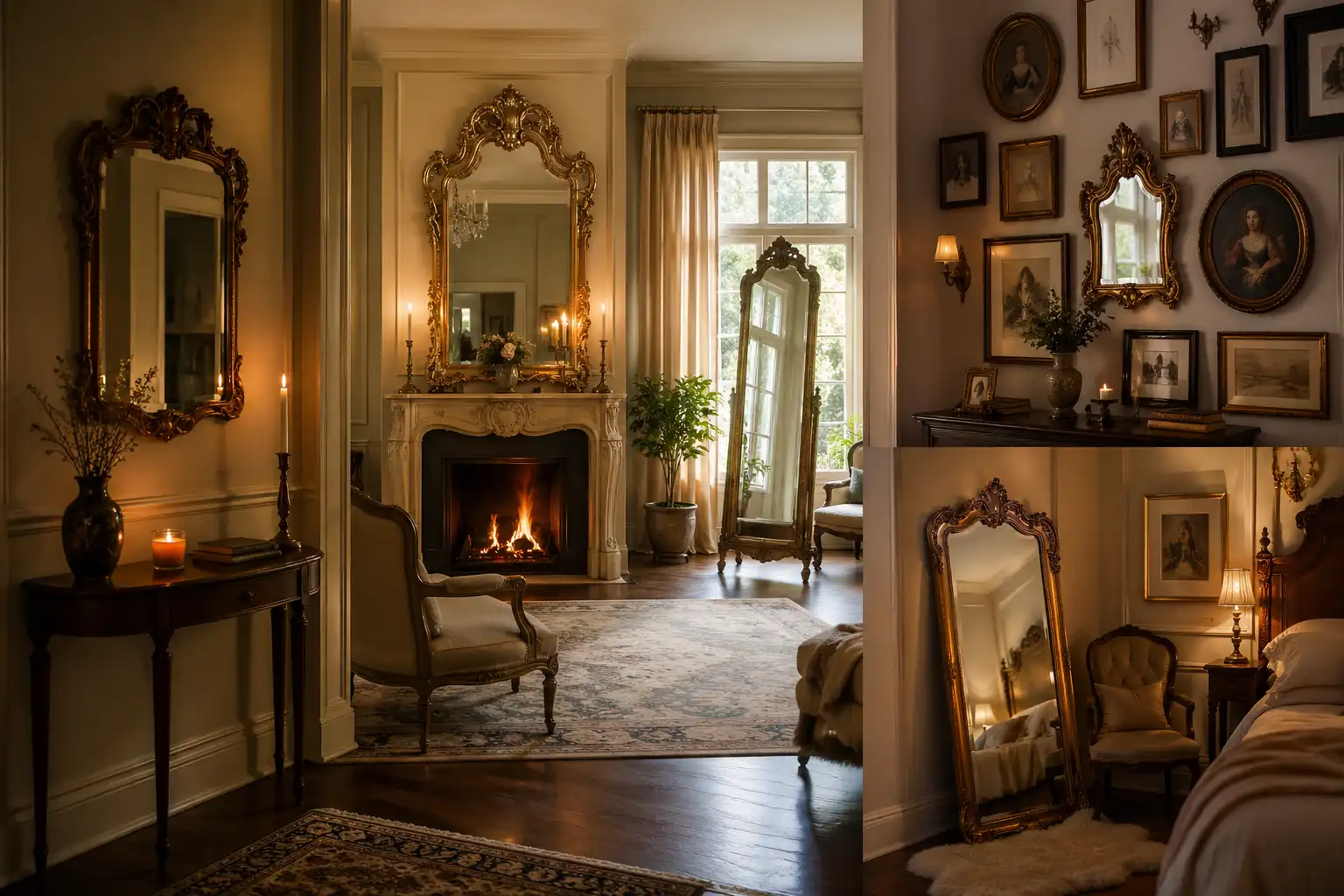
Correct placement determines how effective a decorative mirror will be.
Ideal Locations
- Opposite windows
- Above fireplaces
- In narrow hallways
Avoid
- Reflecting clutter
- Facing direct harsh light
- Placing too high above eye level
A decorative mirror should enhance the room, not distract from it.
Unified Structure
| Design Need | Mirror Type |
|---|---|
| Social comfort | Lounge wall mirrors |
| Large space balance | Big living room wall mirrors |
| Rustic styling | Farmhouse mirror |
| Classic elegance | Victorian-style mirror |
This structure ensures that each section supports the main topic. it remains central, while each type solves a different problem.
Expert Insights on Decorative Mirrors
Interior design experts emphasize the importance of mirrors in shaping space.
“Mirrors are one of the simplest ways to increase light and create the illusion of space.”
— Nate Berkus
“A mirror can transform how a room feels without structural changes.”
— Kelly Hoppen
“Scale matters. A mirror must relate to the furniture and wall around it.”
— Bobby Berk
These observations highlight that selection and placement are more important than decoration alone.
Buying Guide for Decorative Mirrors
When purchasing a decorative mirror, consider both quality and practicality.
Quality Checklist
- Clear, distortion-free glass
- Strong frame construction
- Secure mounting system
Price Overview
| Mirror Type | Cost Range |
|---|---|
| Small decorative mirror | Low |
| Medium wall mirror | Moderate |
| Large statement mirror | Moderate to high |
| Victorian-style mirror | High |
Investing in quality ensures durability and better visual results.
Maintenance and Care
To maintain a decorative mirror:
- Clean with a soft cloth
- Avoid moisture on frames
- Check wall fittings regularly
Proper care extends both clarity and lifespan.
Conclusion
A decorative mirror is a practical and effective way to improve both the function and appearance of a room. By selecting the correct type, such as lounge wall mirrors for comfort, big living room wall mirrors for scale, farmhouse mirrors for rustic style, or Victorian style mirrors for elegance, it is possible to achieve clear design results without major changes. You can explore more styles in this wall art collection.
Frequently Asked Questions
1. What is a decorative mirror used for?
A decorative mirror is used to improve light, create space, and enhance interior design.
2. Where should a decorative mirror be placed?
It should be placed where it reflects light or complements furniture, such as above a sofa or opposite a window.
3. Does a mirror attract negative energy?
Mirrors do not scientifically attract negative energy; this is a belief from traditions like Feng Shui rather than a proven fact.
4. Which mirror suits a rustic home?
A farmhouse mirror with wood and a simple design suits rustic interiors.
5. Which wall to avoid for mirrors?
Avoid placing mirrors on walls facing cluttered or messy areas, as they can amplify visual chaos. It is also best to avoid mirrors directly opposite the bed or harsh lighting due to discomfort and glare