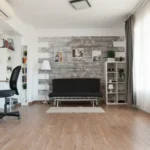

For most homes, lighting designers and retail lighting guides recommend 10–20 lumens per square foot for general living areas, 30–50 lumens per square foot for kitchens, and 35–50 lumens per square foot for bathrooms. In practice, this means a small bedroom or living room might use 1,000–2,000 lumens, a medium kitchen 2,500–4,500 lumens, and a bathroom 1,500–3,000 lumens, depending on layout and ceiling height.
The exact number of lumens you need depends on three main factors:
-
The room’s size and ceiling height.
-
The primary activities that take place there (reading, cooking, grooming, etc.).
-
Your preference for brightness: some people prefer a cozier, dimmer space, while others want a bright, workspace‑like environment.
Below is a practical room‑by‑room guide that translates these factors into usable lumen ranges.
Living room lumens: comfortable ambient light
The living room is usually a mixed‑use space for relaxing, watching television, and light reading, so designers recommend 10–20 lumens per square foot for general ambient light. For a typical 120 sq ft living area, this works out to about 1,200–2,400 total lumens from ceiling fixtures and floor or table lamps.
If you read or work in the room, add focused task lighting at individual seats. One reading lamp of about 300–500 lumens per chair can brighten the task zone without over‑lighting the whole room.
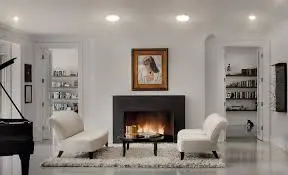
Practical rule for living rooms
-
Ambient whole‑room target: 10–20 lumens per sq ft.
-
Small living room (80–120 sq ft): 800–2,400 lumens.
-
Medium living room (120–200 sq ft): 1,800–4,000 lumens.
Kitchen lumens: bright, even task lighting
Kitchens require more light than living rooms because many tasks involve fine detail, such as chopping food or reading small labels. General guidance suggests 30–50 lumens per square foot for overall kitchen lighting, and up to 80 lumens per square foot for work areas if you want a very bright, modern feel.
For a typical 100–150 sq ft kitchen, this translates to about 3,000–7,500 lumens in total, often split between ceiling fixtures, under‑cabinet strips, and above‑range lights. Countertop work zones are often lit to about 300–500 lux, which can require 1,800–3,000 lumens localized over the prep area.
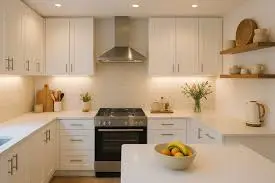
How to plan kitchen lighting
-
General kitchen: 30–50 lumens per sq ft.
-
Worktop task zones: 300–500 lux, typically achieved with LED strips or spotlights.
-
Example: A 12 m² / 130 sq ft kitchen might combine a ceiling fixture of 2,000–3,000 lumens with 1,500–2,500 lumens of under‑cabinet lighting.
Bedroom lumens: soft, layered light
Bedrooms are primarily relaxation spaces, so lighting standards often recommend 10–20 lumens per square foot for general ambient light and 50–150 lumens per square meter depending on the activity. In a typical 120 sq ft bedroom, this usually means 1,200–2,400 lumens of total light from the ceiling, plus additional bedside lamps.
For reading by the bed, one lamp of about 300–400 lumens per side is often sufficient and avoids glare. A common recommendation is a ceiling light of about 1,500 lumens in a 10 m² / 100 sq ft bedroom, paired with two bedside lamps of 300–500 lumens each.
Bedroom lumen targets
-
Ambient bedroom light: 10–20 lumens per sq ft.
-
Bedside reading lamp: 300–400 lumens per side.
-
Small bedroom (80–120 sq ft): 800–2,400 lumens total, plus task lamps.
Bathroom lumens: clear, glare‑free grooming light
Bathrooms need brighter, more even light than bedrooms because people must see clearly for grooming, shaving, and applying makeup. Many lighting sources recommend 35–50 lumens per square foot for general bathroom lighting, or 200–300 lumens per square meter for a 6–10 m² bathroom.
A practical setup often uses a central ceiling fixture of 1,500–2,000 lumens over the main area, plus mirror‑mounted lights or sconces of about 400–800 lumens on each side of the mirror. This arrangement helps reduce shadows on the face and improves color accuracy.
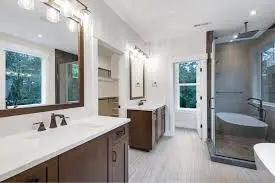
Example bathroom lumen setup
-
General bathroom: 35–50 lumens per sq ft (≈200–300 lumens/m²).
-
6 m² bathroom: roughly 1,500–2,000 lumens from ceiling plus mirrors. Visit mirror store
-
Mirror task lighting: 400–800 lumens distributed around the mirror.
Dining room and home office lumens
Dining rooms and home offices both benefit from moderate‑to‑bright light, but they serve different purposes. For a dining table, illumination is often described in lux rather than pure lumens, but a commonly cited range is 100–250 lux on the tabletop, which usually corresponds to a pendant or chandelier delivering about 300–600 lumens focused on the table, plus ambient room lighting.
Home offices require brighter, more focused light to reduce eye strain. Many lighting guides suggest 300–500 lumens per square meter for a desk‑centric space, or 50–70 lumens per square foot for the whole room. In a 10 m² / 100 sq ft office, this might mean 3,000–4,500 lumens of total light, with a desk lamp of 400–1,000 lumens directed at the keyboard and documents.
Office and dining lumen targets
-
Dining table (task): 150–250 lux ≈ 300–600 lumens focused on the table.
-
Home office (general): 300–500 lumens/m² or 50–70 lumens/sq ft.
-
Desk task lamp: 400–1,000 lumens at the workspace.
Quick reference table: recommended lumens by room
The following table condenses typical lumen targets into a simple, room‑by‑room guide that can be used with most homes.
These ranges are consistent with current residential‑lighting standards and practical LED‑fixture planning.
How to calculate lumens for your own rooms
To estimate how many lumens you need in any given room, you can use the following simple formula:
-
Measure the room’s floor area in square feet.
-
Multiply that area by the recommended lumens per square foot for that room type.
For example, if your bedroom is 12 ft × 10 ft (120 sq ft) and you choose 15 lumens per square foot as a middle‑of‑the‑range value, the calculation is:
That tells you the ceiling fixture and any overhead sources should provide roughly 1,800 lumens, with bedside lamps adding extra brightness where needed.
If you prefer metrics, the same logic applies in lumens per square meter, with many European‑style guides suggesting 100–150 lumens/m² for living rooms and 200–300 lumens/m² for kitchens and bathrooms.
How room characteristics can shift your lumen needs
Even with these guidelines, the exact number of lumens you need can shift depending on a few practical factors. For example:
-
Ceiling height: Higher ceilings (above about 9 ft) often require fixtures with 20–30% more lumens to maintain the same perceived brightness at floor level.
-
Wall and floor color: Dark walls or flooring absorb more light, so you may need 10–20% more lumens than the base recommendation.
-
Natural light: Rooms with large windows or skylights may need fewer lumens at the upper end of the recommended range, because daylight supplements the electric lighting.
Lighting professionals often treat these ranges as starting points, then adjust upward or downward based on how the light feels in the actual space.
Inspecting your current lighting: a practical approach
If you are unsure whether your rooms have enough lumens, a practical double‑check is to:
-
Identify the lumen output of each existing bulb or fixture (printed on the packaging or fixture label).
-
Add up the total lumens in each room and compare them to the recommended ranges in the table above.
-
Test the light in real‑life conditions, such as reading on the sofa or chopping vegetables at the counter, and adjust by adding or replacing bulbs if the space feels too dim or too harsh.
In many cases, upgrading a single ceiling fixture or adding a well‑placed LED strip can bring a room into the recommended lumen range without a full redesign.
Expert guidance and real‑world considerations
Lighting standards are often summarized by organizations that specialize in residential and commercial illumination. For instance, one widely cited guideline is that workspaces such as kitchens, offices, and garages benefit from 30–50 lumens per square foot, while relaxation spaces such as bedrooms and living rooms can comfortably sit in the 10–20 lumens per square foot range.
Another useful perspective comes from designers who emphasize layered lighting: “A single bright fixture rarely satisfies all needs; instead, combine ambient light with targeted task and accent lighting to create a comfortable, functional environment.” This approach explains why a bedroom might use a ceiling light of about 1,500 lumens plus two reading lamps of 300–500 lumens each, rather than one very bright ceiling fixture.
Real‑world examples show that many homeowners light small kitchens to about 3,000–4,500 lumens in total, with the bulk of that light concentrated over the countertops rather than spread evenly across the whole room. This pattern matches the idea that task‑oriented areas deserve higher lumen density than the surrounding space.
Final checklist for choosing lumens by room
Before buying or replacing bulbs, helpful practice is to:
-
Determine the room’s primary use (relaxing, cooking, working, grooming).
-
Pick a lumen‑per‑square‑foot range from the table above and multiply by the room’s area.
-
Decide whether you prefer a cozier (lower end) or brighter (upper end) of that range.
-
Plan layered lighting (ceiling + task + accent) rather than relying on a single fixture.
FAQs
1. How many lumens do I need for a bedroom?
Most bedrooms need about 1,200–2,400 lumens total, or roughly 10–20 lumens per square foot, with a ceiling light plus two bedside lamps of 300–500 lumens each for reading.
2. How many lumens should a living room have?
A typical living room benefits from about 1,200–2,400 lumens spread across the room, or 10–20 lumens per square foot, with extra task lighting over chairs or tables.
3. How many lumens do I need for a kitchen?
Kitchens usually need 3,000–7,500 lumens total, or 30–50 lumens per square foot, with brighter lighting focused over countertops and workspaces.
4. How many lumens are enough for a bathroom?
A standard bathroom generally needs 1,500–3,000 lumens total, or 35–50 lumens per square foot, with a ceiling fixture and mirror‑mounted lights around 400–800 lumens combined.
5. How do I calculate lumens for any room?
Multiply the room’s square footage by the recommended lumens per square foot for that room; for example, 120 sq ft × 15 lumens/sq ft = 1,800 lumens for a cozy bedroom.