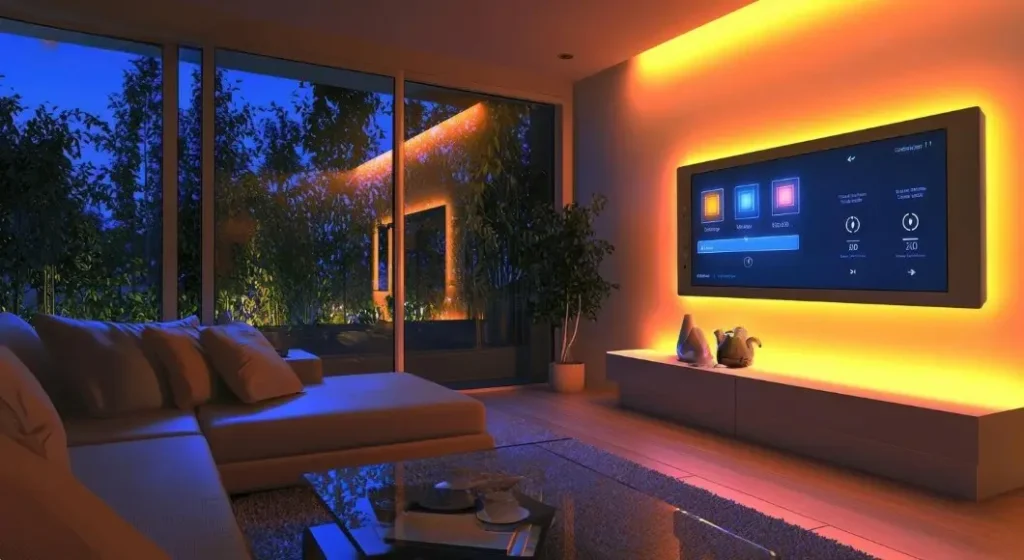

For creating the perfect home lighting, use lumens for controlling brightness, watts for managing energy usage, and color temperature (Kelvin) for setting the right mood. The standard amount of lumens that a residential room requires is between 1000-4000 lumens. To create relaxing ambiance in the bedroom or living room space, one should choose warm white light, which comes from 2700K. For kitchen and bathroom lighting, one should choose 4000K-5000K light. When choosing the bulb, select LED lights first by considering lumens, then watts, for efficient energy consumption.
How This Interactive Guide Works
The guide is designed according to a functional lighting device:
- The guide is organized in a manner that is similar to a functional lighting device for home use.
- It consists of interactive modules about lighting for all types of rooms – bedrooms, living rooms, kitchens, and bathrooms.
- It contains lumens to watts calculator logic for brightness calculations and energy savings.
- It allows the selection of color temperature – warmth, neutrality, and coolness depending on the room lighting goals.
- It presents the visualization of lighting using mockups explained properly.
- It gives realistic recommendations and tips for decision making.
- It helps find a balance between brightness and comfort.
- It is clear and practical for each room.
Lumens ↔ Watts Conversion
Use this simplified conversion when selecting bulbs:
| Lumens | Incandescent Watts | LED Watts |
|---|---|---|
| 450 lm | 40W | 6–9W |
| 800 lm | 60W | 8–12W |
| 1100 lm | 75W | 11–15W |
| 1600 lm | 100W | 16–20W |
👉 Key rule: Same lumens = same brightness, regardless of watts
Bedroom Lighting Guide: Make a Perfect Atmosphere
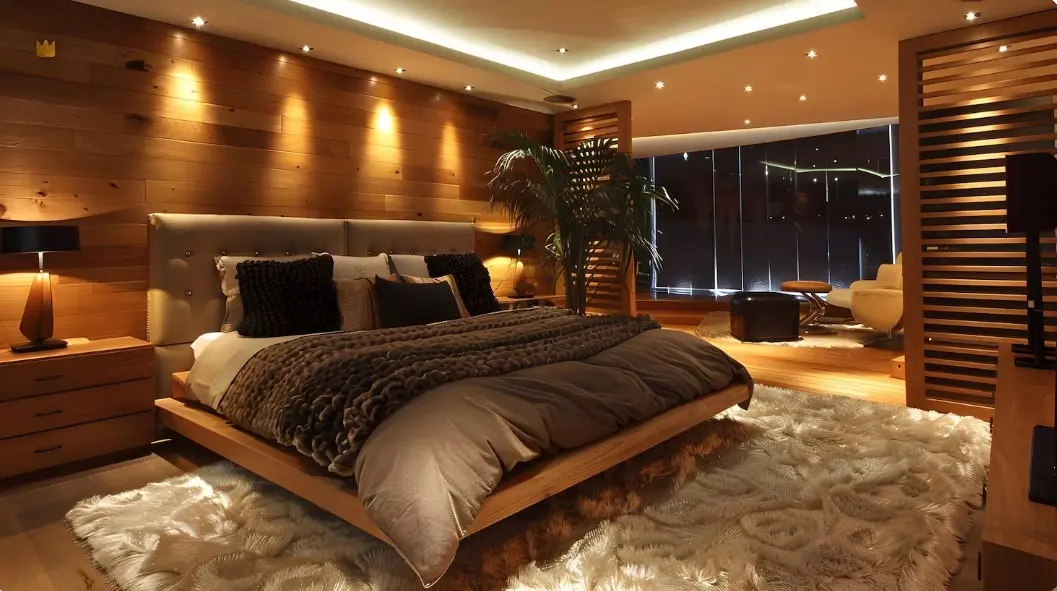
Arrange an optimal bedroom lighting combination by balancing brightness (lumens) and color temperature (Kelvin).
Selecting a Degree of Brightness.
Control your room lighting according to mood and purpose:
- Soft Lighting (1000-1500 Lumens): Great for relaxing and unwinding
- Neutral Lighting (1500-2000 Lumens): Optimal for daily life and comfort
- Bright Lighting (Over 2000 Lumens): Perfect for reading, undressing, etc.
- Picking Color Temperatures (Kelvin)
Control atmosphere and mood with lighting tone:
- 🟡 2700K – Warm White: Warm, soft, relaxing
- ⚪ 3000K – Soft White: Balanced, comforting yet a bit warm
- 🔵 4000K – Neutral White: Sharp, white, great for reading
Create a perfect combination of lights:
- Ceiling Light: 800-1200 Lumens – General Lighting
- Bedside Lamps: 400-800 Lumens per one – Task Lighting
- Decorative Lighting: 200-400 Lumens per one
- Total Optimal Lumens: 1000-2000 Lumens
Visual Effect of Lighting (What You’ll Get)
- 2700K: Warm golden light, soft shadows, comfortable atmosphere
- 3000K: Brighter than previous one, yet still comfortable
- 4000K: Crisp and bright, but not very comfortable for night use
Tips & Tricks: Layering Lights
Apply different types of lights for improved mood and room appearance.
Expert Insight
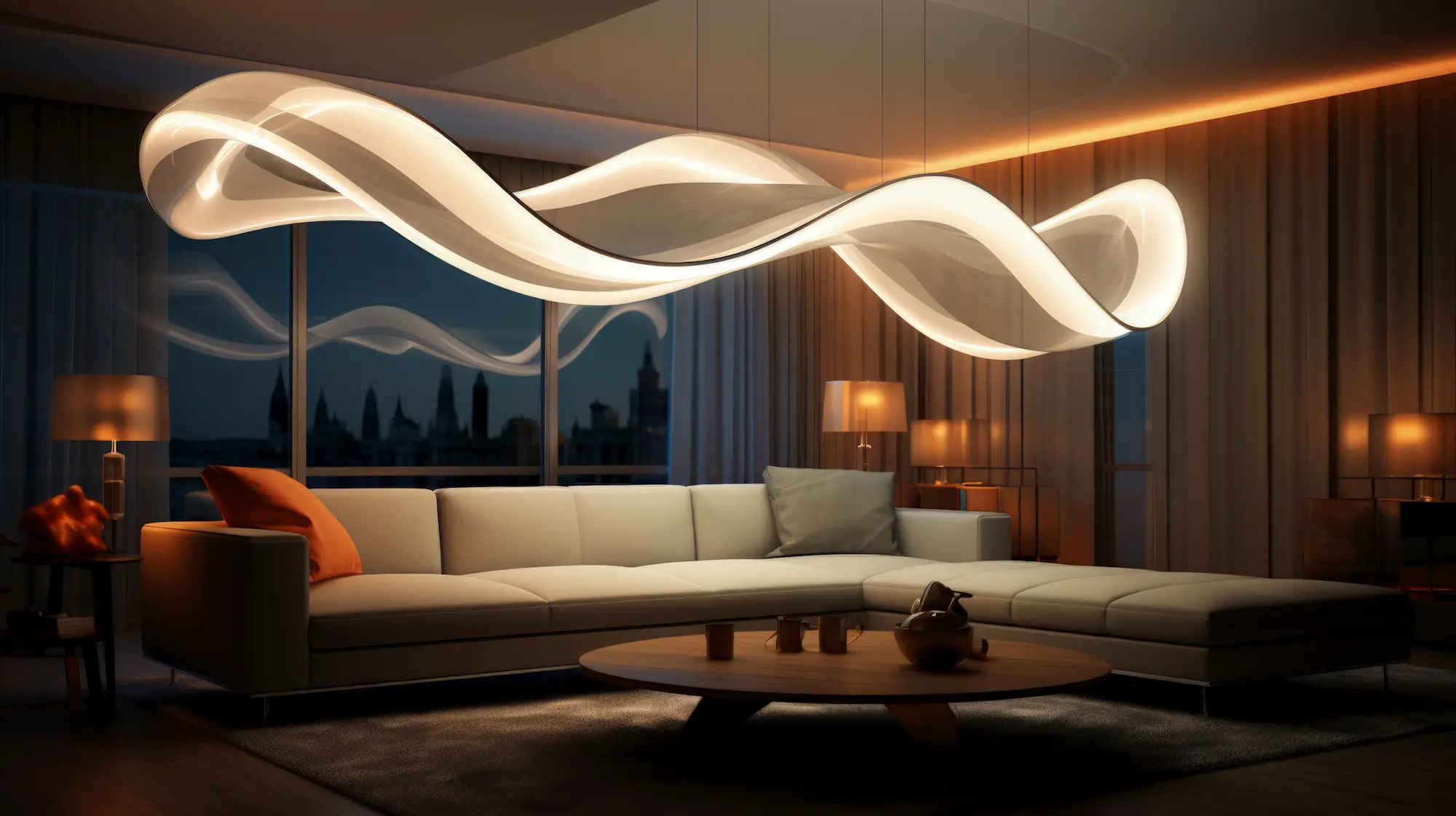
“Lighting research shows warm light promotes relaxation and better sleep conditions by reducing visual stimulation.”
Expert Quote
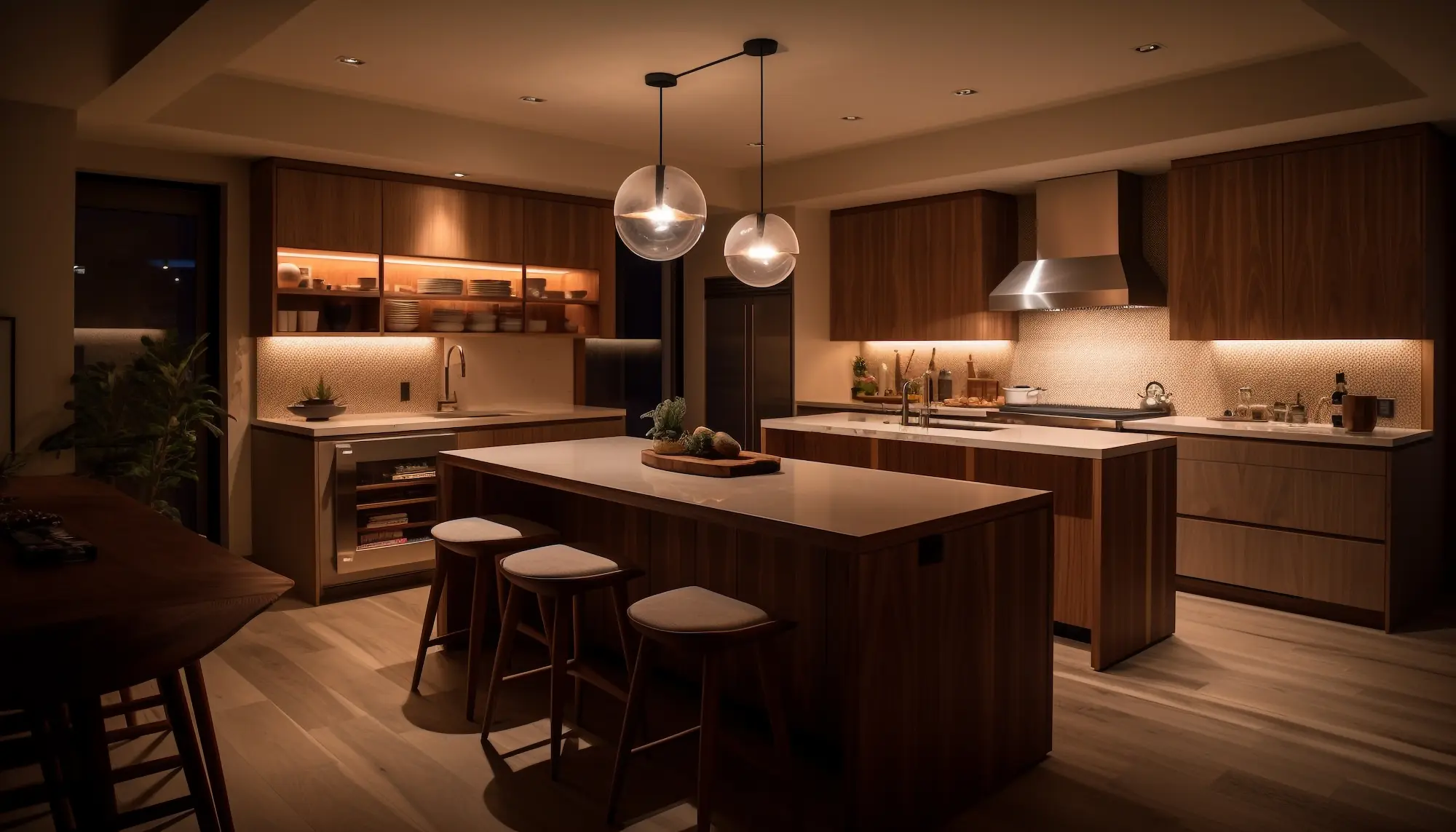
“Task spaces require higher brightness and neutral to cool light for clarity.”
Guide to Bathroom Lighting: Clarity & Accuracy
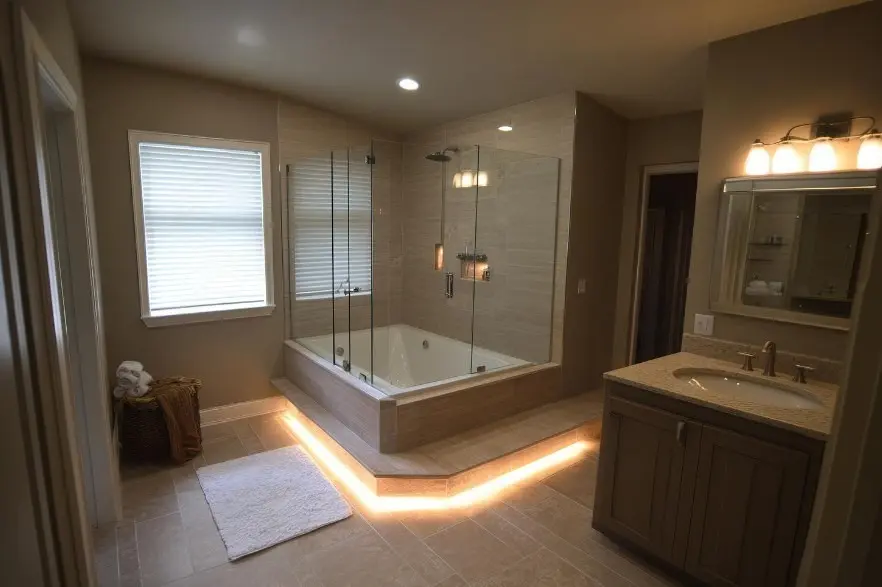
Get the best out of your bathroom experience with proper bathroom lighting and lumens (brightnes), as well as the correct color temperatures (Kelvin). Whatever you need whether preparing for work or relaxing, this interactive guide is here to help you find the best lighting that is both comfortable and precise.
Which brightness is right for your bathroom?
- General Lighting (2000–4000 lumens): Provides overall light and visibility
- Vanity Lighting (1500-3000 lumens): Suitable for grooming, shaving and applying makeup
- Choose The Right Color Temperatures
Which one should you pick?
It depends on the comfort and precision needed.
- ⚪ 3000K Soft White: A warm soft lighting which adds to the comfort of grooming
- ⚪ 4000K Neutral White: Perfect grooming lighting that provides the right color balance
- 🔵 5000K Daylight: Maximum clarity and best color accuracy
How to layer your lights properly?
- Overhead Light (General Lighting): 1500–2500 lumens for bright lighting
- Mirror Light: 1000-2000 lumens for shadow free lighting
Effects Of Visual Lighting (What You Will Get)
- 3000K (Soft white): Provides a very soothing light but it slightly distorts true colors of skin tone
- 4000K (Neutral white): Gives a very balanced natural white lighting which perfectly shows true colors
- 5000K (Cool daylight): Provides bright and clear white light, but it can be quite harsh for spa like lighting
Pro-Tip: Focus On Accuracy
To have an ideal bathroom lighting, you should layer the general light with the mirror light at a neutral white lighting.
Safety Note
- Bathrooms need lighting because we do things in there that require a lot of attention to detail like shaving putting on makeup and taking care of our skin.
- If the lighting is not good it can be hard to see what we are doing. We might not get the results we want. We might even get hurt a bit.
- We should use lights that’re really bright so we can see everything clearly.
- Lights that are not too yellow or too blue but just right help us see things clearly and make sure the colors look right.
- It is an idea to put lights in places where they will not make shadows like, above the mirror or sink.
- When we have lighting in the bathroom it is safer and more comfortable to get ready in the morning.
- Good bathroom lighting makes it easier for everyone to take care of themselves. It helps us do things faster and better.
To Make Your Home Lighting Really Nice: A Simple And Helpful Guide
You can make your home feel really cozy with this guide on lighting. When you think about how big your roomsre how bright you want them to be and what kind of light color you like you can have lighting that is just right for your home. This means it will be good, for what you need to do look nice and not waste energy.
Step 1: Measure Your Room Size
Start by calculating the area of your room:
| Room Dimensions | Calculation | Total Area |
|---|---|---|
| 10 × 10 ft | 10 × 10 | 100 sq ft |
Knowing your room size helps determine accurate lighting requirements.
Step 2: Apply Lighting Factor (Lumens per Sq Ft)
Choose brightness based on room function:
| Room Type | Lumens per Sq Ft | Lighting Purpose |
|---|---|---|
| Bedroom | 10–20 | Soft, relaxing atmosphere |
| Living Room | 10–20 | Balanced everyday lighting |
| Kitchen | 30–40 | Bright, task-focused lighting |
| Bathroom | 70–80 | High clarity for grooming |
Step 3: Calculate Required Lumens
Multiply area by lighting factor:
| Room Size | Factor | Total Lumens Needed |
|---|---|---|
| 100 sq ft | × 20 | 2000 lumens |
This ensures your space is neither too dim nor overly bright.
Interactive Color Temperature Selector
| Temperature | Feel | Best For |
|---|---|---|
| 2700K | Warm, cozy | Bedrooms |
| 3000K | Soft white | Living rooms |
| 4000K | Neutral, clear | Kitchens |
| 5000K | Cool daylight | Offices |
Pro Tip: Balance Light & Mood
For the best home lighting design, combine the right lumens and color temperature. This improves comfort, boosts productivity, and enhances your home’s overall style and functionality.
Common Lighting Problems Solved
- Problem: The room feels too dark
To fix this you should get a bulb or fixture with lumens. This is because lumens are what make a room bright. Watts are just about how energy the bulb uses.
- Problem: The light is too harsh
If the light is bothering your eyes you should get a bulb with a Kelvin rating. Something like 2700K to 3000K is good. This kind of light is warm and soft. It is easy on your eyes and makes you feel relaxed.
- Problem: Your electricity bills are too high
You can save money by using LED lighting. These bulbs give you the amount of light, as regular bulbs but they use a lot less energy. This means you will use energy and pay less for electricity over time.
Case Study: Lighting Upgrade
- Before the upgrade the home had 60W incandescent bulbs. These bulbs did not use energy well. The brightness was not the same in every room. Some areas were too dark. Others were too bright. This made people feel uncomfortable. It was hard to see well.
- After the upgrade the old bulbs were replaced with 800-lumen LED lights that only used 10W of power. The color of the light was chosen to fit what each room was used for and the kind of mood people wanted.
- The result of the Lighting Upgrade was that it saved around 70 to 80 percent of the energy used before. This meant that the cost of electricity was much lower. The Lighting Upgrade also made the home feel more comfortable to be, in because the lighting was better and more balanced. The home had a pleasant indoor lighting environment after the Lighting Upgrade.
Expert Insights
- When you are picking out lights you should think about how bright they’re in lumens not how much energy they use in watts. This is because lumens tell you how light you are actually getting, while watts just tell you how much energy is being used.
- One thing to keep in mind is that new LED lights are really good at using energy. They can give you around 80 to 150 lumens of light for every watt of energy they use. This is a lot better, than fashioned light bulbs, which waste a lot of energy by turning it into heat.
- The way you set up your lights is also important. Using a combination of light sources like background lights reading lights and special accent lights can make a room look and feel a lot better. This is called lighting. It helps you see what you are doing makes the room look nicer and gives you control over the mood and brightness of the room. You can make some areas bright. Others dim, which creates a nice balance and makes the room feel deeper.
Practical Buying Checklist
Before you buy any bulb do things:
- Check the lumens rating so you know how bright the bulb really is.
- The color temperature of the bulb is important too.
- For example you want colors in a room where you relax and cool colors in a room where you do tasks.
- You should also compare the wattage to see how energy the bulb uses and how much electricity it will cost you in the long run.
- It is better to choose a bulb with wattage but higher lumens because it is more efficient.
- Think about what you will use the room for and choose a bulb that’s right for that.
- The lighting in the room should make you feel comfortable be able to see what you are doing and work well.
- When you are buying a bulb think about how bright it’s how efficient it is and how it will make you feel.
- Choose a bulb that looks good and also works well for what you need it for.
- The bulb should be good for the design of the room and, for what you will use it for.
Conclusion
Lighting is not one thing it is a mix of how bright it is how well it uses energy and how comfortable it is to look at. The number of lumens tells you how well you can see the number of watts tells you how energy you use and the color temperature affects how a room feels. When you put these things together in a way you can make any room a nice place to be it is comfortable and it works well.
A good way to do this is to look at one room at a time figure out how lumens you need and pick a color temperature that is right for what you do, in that room. This way you get lighting that’s consistent works well and looks good in every room of your home. Lighting like this makes a big difference and lighting is what matters when you want to make your home a nice place to live so you need to think about lighting.