
Modern Wall Decor Ideas for Every Room in Your Home
Blank walls are a missed opportunity. In every room of your home, the vertical space above your furniture, beside your windows, and across your hallways carries real decorating power. Modern wall decor ideas do not follow a single rulebook. They respond to the room, the light, the furniture, and the people living there.
This guide walks through the strongest approaches for each key space in your home, so you can move from inspiration to action with clarity.
Why Modern Wall Decor Is Different from Traditional Approaches
Traditional wall decoration often defaulted to a single framed print centered above a sofa. Modern home wall decoration thinks in systems. It considers negative space as intentionally as filled space. It mixes textures, scales, and materials rather than matching everything to a single set.
The result is interiors that feel curated rather than decorated, and personal rather than catalog-ready.
Living Room: The Statement-First Approach
The living room carries the heaviest visual responsibility in most homes. It is where guests form their first impression and where families spend the most time together.
Wall decor for living rooms works best when it anchors the room rather than merely filling it. Consider these approaches:
Large-scale focal art. A single oversized canvas or print above the main sofa creates immediate visual weight. The piece does not need to be expensive. Scale matters more than price.
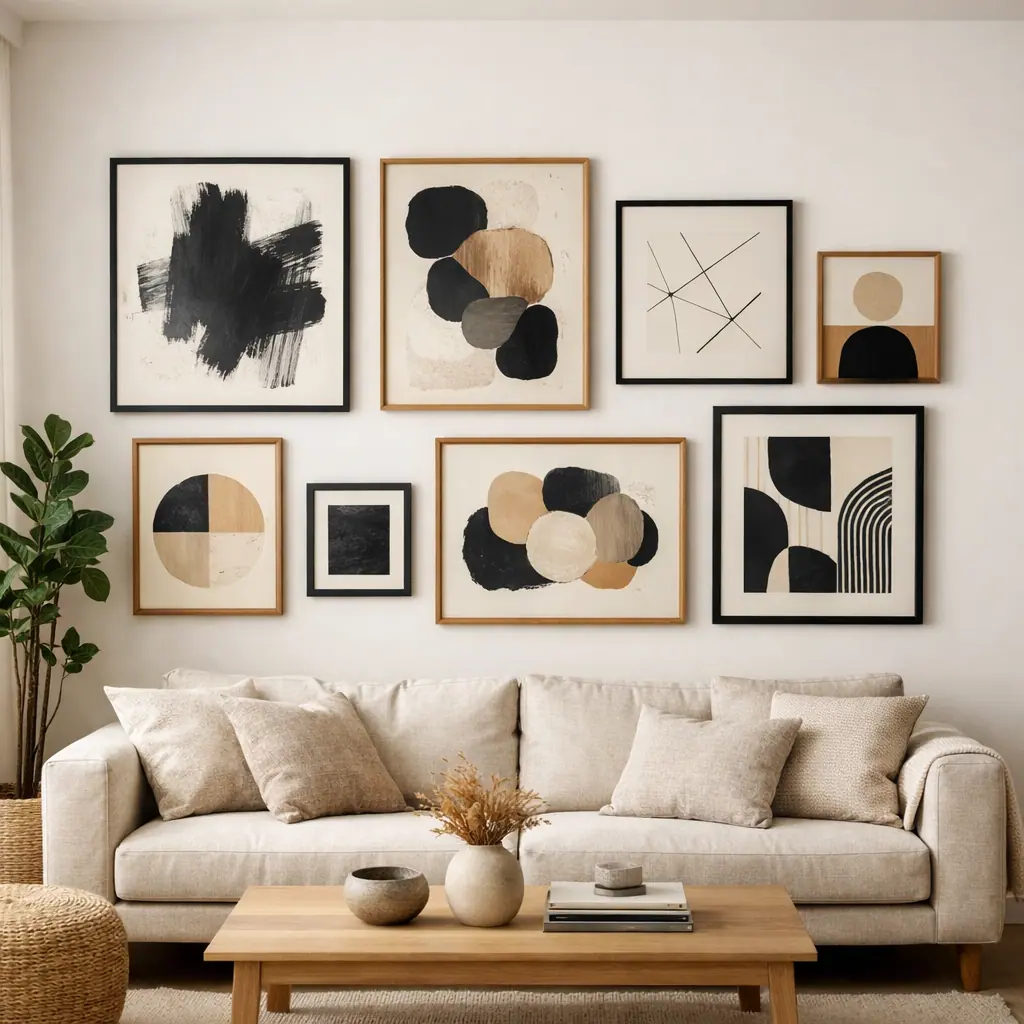
Gallery walls with intentional structure. A gallery wall built around a consistent frame color or a clear geometric arrangement looks deliberate and editorial. Random arrangements on mismatched frames can work in bohemian spaces, but modern interiors benefit from visible logic.
Textured wall panels. Slat wood panels, plaster-effect canvases, and woven fiber art introduce tactile dimension that flat prints cannot replicate. In rooms with strong natural light, texture creates movement across the wall throughout the day.
Floating shelves as decor systems. Shelves that hold a rotating mix of small sculptures, trailing plants, and framed prints function as dynamic wall art. They allow you to refresh the room without repainting or rehanging.
Bedroom: Calm, Personal, and Layered
The bedroom calls for a different register than the living room. The goal here is not visual impact but visual comfort.
Modern wall art ideas for bedrooms prioritize softness and restraint. Muted tones, organic forms, and personal imagery create a space that supports rest rather than stimulating it.
Above the headboard is the most valuable wall real estate in any bedroom. A horizontal piece or a triptych arrangement at the right scale transforms the bed into a fully composed vignette. The art should not be wider than the headboard, and it should sit close enough to the bed to feel connected rather than floating.
Consider also the walls you face when you wake up and when you lie down. These sight lines deserve as much thought as the wall behind the bed.
Home Office: Purposeful and Motivating
Decorating walls in a home office requires balancing aesthetic intent with functional focus. A chaotic wall can fragment attention. A sterile wall is a missed opportunity to reinforce the energy and purpose of the space.
Typographic prints with clean sans-serif fonts, architectural photography, and abstract geometric work all perform well in office environments. They provide visual interest without narrative complexity that pulls your mind off task.
A pegboard or grid panel system solves the dual problem of wall decor and practical organization simultaneously. When styled with care, these systems look intentional rather than utilitarian.
Kitchen and Dining Areas: Warmth and Conversation
Kitchens and dining areas benefit from wall decor that adds warmth and prompts conversation. Wall art ideas for these spaces often work best when they are slightly unexpected.
Botanical prints, vintage maps, ceramic plate arrangements, and food-related illustration work can all land well. The key distinction between a thoughtful kitchen gallery and a cliched one is curation: three strong pieces beat ten mediocre ones in every case.
In open-plan layouts where the kitchen flows into a dining area, treat the full wall as one continuous canvas rather than decorating each zone separately.
Hallways and Entryways: First Impressions and Continuity
Hallways are the most underestimated decorating opportunity in most homes. Because they are transitional spaces, they are often treated as afterthoughts. In well-designed homes, they function as curated galleries that connect the visual language of each room.
A single vertical piece works well in narrow hallways. A horizontal series of consistently framed prints works along longer corridors. Mirror placement in entryways combines decorative function with practical use and makes tight spaces feel larger.
The wall decor in your entryway sets the tone for every room that follows. It deserves the same level of thought.
The Principles Behind Every Strong Decor Decision
Regardless of the room, three principles govern every strong modern wall decor decision.
Scale before style. A beautiful piece in the wrong size looks wrong. Measure your wall and your furniture before selecting anything.
Cohesion over matching. Cohesion means the pieces feel like they belong in the same world. Matching means they are identical in style or color. Cohesion produces rooms that feel designed. Matching produces rooms that feel purchased.
Intentional negative space. Not every wall needs covering. Strategic empty space makes the pieces you do hang feel more considered and more powerful.
Once you have your inspiration locked in, the next step is execution. Learning how to arrange wall decore at home with the precision of an interior designer will ensure your chosen pieces land exactly as intended.
If you are still working through which aesthetic direction suits your space, our breakdown of modern wall decor styles worth buying will help you narrow your options with confidence.