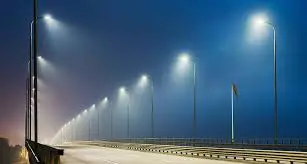

Most street lamps range from 9 to 14 feet in residential areas, 15 to 25 feet on main city roads, and 30 to 50 feet on highways. These height standards are set to provide uniform illumination, reduce glare, and ensure safe visibility for drivers and pedestrians. The exact height depends on the road width, lighting technology, pole spacing, and the purpose of the street. Modern planning guidelines such as the Illuminating Engineering Society (IES) recommendations and ANSI/IES RP-8 provide the benchmarks that cities use when determining the proper height for each type of roadway. No single universal federal standard exists; height is determined by road classification and local municipal codes.
Understanding Street Lamp Height: Why It Matters
Street lamp height is a foundational element of roadway design. It affects visibility, uniformity of light distribution, energy efficiency, and driver comfort. Modern street lighting standards attempt to balance illumination strength with glare reduction so roads remain safe during all night hours.
The governing professional standard in North America is ANSI/IES RP-8, published by the Illuminating Engineering Society. The most recent edition, ANSI/IES RP-8-22, covers all aspects of roadway lighting including streets, parking lots, intersections, toll plazas, tunnels, and work zones. Its design guidance shapes specifications used by transportation departments at the state and county level across the country.
This guide is relevant to homeowners encountering questions about street lighting near residences, community associations reviewing lighting proposals, planners designing new subdivisions, and anyone seeking to understand the engineering logic behind the poles they pass each evening.
Standard Street Lamp Heights by Location
Residential Streets (9 to 14 ft)
Residential lamps are intentionally kept shorter than public roadway lighting. Lower poles create localized pools of warm, controlled light suitable for quiet neighborhoods. The 12-foot pole is a common municipal default in the United States. The town of St. James, North Carolina, for example, specifies round aluminum poles at 12-foot mounting height for residential areas, paired with 100 to 150-watt luminaires. This height places the fixture low enough to illuminate sidewalks and driveways without producing the harsh overhead glare that taller poles generate.
Shorter lamps also limit light intrusion into bedroom windows and across adjacent yards. A pole that stands 30 feet tall in a quiet neighborhood pushes light into upper-story windows. Shorter poles combined with full-cutoff luminaires confine illumination to the road surface and the immediate pedestrian zone.
Typical residential lamp applications:
- Suburban and cul-de-sac streets
- Private residential drives and lanes
- Pedestrian pathways within housing developments
- Homeowner association common areas
Commercial and Urban Roads (15 to 25 ft)
On collector streets and commercial corridors, a taller pole is necessary to spread light across multiple lanes and onto adjacent sidewalks simultaneously. Los Angeles County’s Bureau of Street Lighting specifies a 25-foot mounting height for local residential collector streets, stepping up to 30 feet for major intermediate and highway intermediate streets. These specifications correspond to LED fixtures equivalent to 150-watt and 200-to-250-watt high-pressure sodium luminaires.
The 25-to-30-foot range balances two competing requirements: the pole must be tall enough that a single fixture can illuminate the full width of a lane, yet low enough to remain proportionate to the two-to-four-story buildings that line most commercial streets.
Typical commercial lamp applications:
- Downtown business districts and mixed-use commercial zones
- Municipal parking areas and surface lots
- Shopping center perimeters and access roads
Highways and Expressways (30 to 50 ft)
High-speed roads require long-range visibility. Highway lamps are often installed at heights of 30 to 50 feet, especially at interchanges or major junctions. These lamps are engineered to withstand wind, weather, and continuous vibration from heavy traffic. They deliver broad light distribution that limits dark patches at high speeds.
The American Association of State Highway and Transportation Officials (AASHTO) includes these height ranges in roadway lighting considerations. The Liberty, Missouri Street Lighting Design Criteria document, which aligns with common municipal practice, states that luminaires should be installed at a maximum mounting height of 40 feet for standard arterial applications.
As a foundational rule, the width of the road should not exceed 3.7 times the mounting height of the fixture. A four-lane divided arterial measuring 72 feet curb to curb calls for poles of at least 19 feet. In practice, engineers add a safety margin and typically specify 30-to-40-foot poles, with bracket arms of 4 to 8 feet extending the fixture toward center lanes.
High-Mast Lighting (50 to 150 ft)
Complex highway interchanges, freight terminals, seaports, airports, and large parking lots sometimes require high-mast lighting systems standing between 50 and 150 feet. These structures carry multiple luminaires in a ring at the crown, illuminating a broad area from a single point. One high-mast pole covering a 300-foot radius replaces a dozen conventional poles, reducing infrastructure, wiring, and maintenance costs.
Comparative Height Reference: All Road and Setting Types
The following table combines residential, commercial, highway, and specialty settings into a single reference. Heights are given in both feet and meters. All figures reflect common practice in the United States and align with Los Angeles County, Global Designing Cities Initiative, and Iowa DOT published specifications.
| Road / Setting Type | Typical Height | Category | Purpose & Notes |
| Residential Streets | 9–14 ft (2.7–4.3 m) | Residential | Calm lighting, reduced glare, neighborhood comfort; 12-ft pole is a common municipal default |
| Collector / Local Road | 20–25 ft (6–7.6 m) | Collector | Bridges residential and commercial; LA County specifies 25-ft for local collectors |
| Commercial / Urban Road | 15–25 ft (4.6–7.6 m) | Commercial | Wider coverage, enhanced visibility; 30-ft LA County standard for major streets |
| Arterial / Major Road | 25–40 ft (7.6–12 m) | Arterial | Multi-lane coverage; max 40-ft mounting per Liberty, Missouri design criteria |
| Highways / Expressways | 30–50 ft (9–15 m) | Highway | Long-range visibility, high-speed safety, uniform illumination across lanes |
| High-Mast / Interchange | 50–150 ft (15–46 m) | Interchange | Multi-fixture arrays; freight yards, complex junctions, stadiums |
| Pedestrian Pathways | 8–12 ft (2.4–3.7 m) | Pedestrian | Focused walkway lighting; personal safety and comfort |
| Parking Lots | 12–20 ft (3.7–6 m) | Parking | Wide area coverage with controlled glare; similar scale to residential |
| Historic / Conservation | Up to 20 ft (≤6 m) | Special | Heritage overlays cap height; retro styling required in many jurisdictions |
| Park / Garden Paths | 8–15 ft (2.4–4.6 m) | Landscape | Aesthetics-driven; average 10-ft (3 m) landscape poles |
Sources: LACDPW Street Lighting Design Guidelines; Liberty, Missouri Street Lighting Design Criteria; GDCI Lighting Design Guidance; Lightmart Light Pole Height Standards (2024).
Factors That Determine Street Lamp Height
Beyond road classification, several specific factors push pole height above or below the typical range for a given setting.
1. Road Width
As road width increases, lighting must extend farther across lanes. Taller lamps allow broader distribution patterns that reach the opposite side of the roadway. The IES Roadway Lighting Practice and the AASHTO Roadway Lighting Design Guide both frame mounting height in relation to road width and lane count.
2. Spacing Between Poles
Height and spacing work together. A taller pole can often be spaced farther apart, which reduces installation and hardware costs. The standard spacing rule is that poles should be placed 2.5 to 3 times their height apart. Roads wider than 65 feet call for poles on both sides placed directly opposite each other; roads 50 feet wide or narrower use single-side placement.
| Pole Height | Min Spacing (2.5×) | Max Spacing (3×) | Typical Setting |
| 12-ft pole | 30 ft apart | 36 ft apart | Residential |
| 25-ft pole | 62 ft apart | 75 ft apart | Urban collector |
| 30-ft pole | 75 ft apart | 90 ft apart | Arterial |
| 40-ft pole | 100 ft apart | 120 ft apart | Highway |
Source: Lightmart Light Pole Height and Spacing Standards (2024).
3. Light Source Technology
LED fixtures offer more controlled beam patterns than older high-pressure sodium lamps. LEDs enable precise height selection because they reduce unnecessary light spread and produce consistent brightness across the illuminated surface. The widespread adoption of LED street lighting since 2010 has subtly influenced pole height conventions, with some municipalities reducing pole heights on residential streets during LED retrofit programs.
4. Glare Control and Safety Requirements
Excessive glare can impede driver visibility. Engineers calculate mounting height relative to driver eye level to ensure safe illumination angles. ANSI/IES RP-8 classifies roads by pedestrian conflict level: high, medium, and low. High-pedestrian corridors call for more intense illumination, which often means a taller pole to achieve broader, more even coverage.
5. Environmental and Neighbourhood Concerns
Communities often request lower lamps to minimize sky glow and protect dark-sky environments. Historic and conservation districts frequently impose maximum pole heights to preserve visual character. Several European cities require that residential street light poles not exceed 8 meters (26 feet) and mandate light shields on all fittings. Airports restrict pole heights near runways to protect flight paths.
Expert Commentary and Industry Authority
“Street lighting height must balance uniformity, glare control, and energy use. Proper mounting height is central to visual comfort and efficient roadway illumination.”
— Illuminating Engineering Society, ANSI/IES RP-8-22: Lighting Roadway and Parking Facilities
“In most contexts, standard heights for narrow streets in residential, commercial, and historical contexts are between 8 and 10 meters. Taller poles between 10 and 12 meters are appropriate for wider streets in commercial or industrial areas.”
— Global Designing Cities Initiative, Lighting Design Guidance
“The designer’s first obligation is to conform to state codes and jurisdictional requirements, but in the absence of such requirements, it is recommended that the designer follow a nationally recognized written street lighting design standard such as RP-8.”
— Iowa DOT Design Manual, Chapter 11: Street Lighting
How Street Lamp Height Affects Safety
Visibility and Reaction Time
Proper height ensures that obstacles, lane markers, and pedestrians are visible well ahead of the vehicle. Taller poles on highways extend the illuminated zone ahead of a moving vehicle, giving drivers more reaction time at higher speeds.
Uniform Light Distribution
Even distribution reduces visual fatigue. Drivers depend on consistent brightness as eyes adapt from dark to illuminated surfaces. Poor uniformity, typically caused by incorrect pole height or spacing, creates alternating bright and dark zones that strain the eyes and reduce hazard detection.
Pedestrian Security
Lower poles in residential and walkway areas reduce isolated shadows and strengthen personal safety. Lighting that is too high for a residential street can produce harsh shadows between pools of light, which undermines both perceived and actual security for pedestrians.
Modern LED Street Lamps and Height Adjustments
LED adoption has changed height selection across many cities. Because LEDs can direct light precisely, engineers can adjust mounting height to either reduce energy use or increase spacing without losing illumination quality. Many municipalities now revise old 20 to 25-foot poles to optimized LED-based heights that match new distribution patterns.
The ANSI/IES RP-8-22 standard fully incorporates LED-specific guidance, including provisions for adaptive lighting systems that dim during periods of low traffic volume. This energy-saving approach is standard practice in new installations across many American cities.
Key advantages of LED technology for roadway lighting:
- Controlled beam angles that direct light precisely onto the road surface
- Higher energy efficiency, often 50 to 70 percent lower consumption than sodium lamps
- Longer operational lifespan, typically 50,000 to 100,000 hours
- Better color rendering that improves hazard detection
- Reduced light spill and sky glow, addressing dark-sky ordinance requirements
- Compatibility with adaptive dimming and smart city sensor integration
International Height Comparisons
European standards generally produce taller residential poles than American practice, partly because European residential streets are often narrower and must illuminate both the carriageway and a pedestrian zone from a single pole. American residential streets, which frequently carry sidewalks set back from the road, can use shorter poles because the illumination geometry differs.
| Region / Context | Typical Height Range | Governing Standard |
| United States, residential | 10–14 ft (3–4.3 m) | Municipal codes; ANSI/IES RP-8 |
| United States, arterial | 30–40 ft (9–12 m) | ANSI/IES RP-8; state DOT standards |
| European residential (narrow) | 26–33 ft (8–10 m) | Global Street Design Guide; national codes |
| European commercial / wider | 33–39 ft (10–12 m) | Global Designing Cities Initiative |
| China, general road lighting | 16–50 ft (5–15 m) | CJJ 45 urban road lighting standard |
| Historic / conservation, intl. | Up to 20 ft (≤6 m) | Heritage overlay controls; varies by country |
Sources: ANSI/IES RP-8-22; Global Designing Cities Initiative; CJJ 45; Heritage overlay regulations by jurisdiction.
Real-World Example: Lamp Height in a New Development
A typical suburban development planned in 2024 included three distinct lighting zones, each with a different pole height selected to match the road classification and pedestrian use pattern:
- 12-ft decorative poles along interior neighborhood roads, providing warm residential-scale illumination
- 20-ft poles near commercial frontages on the collector road entering the development
- 35-ft poles along the bordering divided parkway, matching the arterial road classification
The choices followed IES guidelines and were approved after a photometric study confirming uniform illumination and low glare values across all three zones. This example demonstrates how height varies within a single development based on traffic needs and land use, and how engineering documentation supports municipal approval.
This pattern, moving from short residential poles at the interior to taller poles at the perimeter, is standard practice in planned unit developments across the United States and is recommended by the Urban Land Institute in its Urban Infrastructure Reports.
Frequently Asked Questions
The following answers are designed to respond directly to common search queries and support zero-click resolution for readers with specific, bounded questions.
What is the most common street lamp height?
The most common height in residential settings is 9 to 14 feet, with 12 feet serving as a frequent municipal default. General city road lamps typically fall between 15 and 25 feet, while major urban arterials often use 25 to 30-foot poles.
How tall are street lights on a highway?
Highway street lights in the United States typically stand 30 to 50 feet tall on standard poles, with bracket arms of 4 to 8 feet extending the fixture over travel lanes. At complex interchanges and freight areas, high-mast lighting systems reach 50 to 150 feet.
How are street lamp heights determined?
Height is selected using engineering calculations based on road width, traffic speed, lane count, pole spacing, lighting technology, and safety requirements. The primary reference is ANSI/IES RP-8. Individual municipalities then codify specific heights into local ordinances.
Do taller street lamps cause more glare?
Not necessarily. Modern LED optics with full-cutoff designs reduce glare even on tall poles by focusing light downward. Glare is more a function of fixture design and beam angle than pole height alone.
Are LED street lamps shorter or taller than older lamps?
LED street lamps often use the same pole as older models during retrofits, though many cities adjust heights slightly to match improved beam distribution. In some residential settings, LED efficiency has allowed slight height reductions while maintaining adequate illumination.
What height is best for pedestrian walkways?
Walkway lights usually range from 8 to 12 feet to keep illumination close to ground level where pedestrians need it most. Lower poles in pedestrian areas also reduce isolated shadows that can undermine personal security
Can communities request changes to lamp height?
Many municipalities allow height reviews for residential neighborhoods, especially when glare or light trespass becomes a concern. Homeowner associations can petition local public works departments, and some cities conduct formal reviews before and after new LED installations.
Conclusion
Street lamp height is a precise engineering decision shaped by safety, visibility, and established standards. Residential streets rely on shorter lamps between 9 and 14 feet. Commercial roads typically use 15 to 25 feet, stepping up to 30 feet on major urban streets. Highways employ poles between 30 and 50 feet to support long-range illumination, while interchange high-mast systems can exceed 150 feet.
Modern LED fixtures have improved the accuracy of height selection, allowing planners to use energy wisely while maintaining safe light levels. The shift to LED has also created opportunities to reduce pole heights on residential and pedestrian streets, lowering sky glow and light intrusion in neighborhoods.
For anyone planning a street lighting installation, the first step is to identify the applicable municipal code and whether the site falls under overlay restrictions such as historic district rules, airport height limits, or light-pollution ordinances. From there, ANSI/IES RP-8 provides the design framework for mounting height, fixture type, and pole spacing. Consulting a licensed civil or electrical engineer with roadway lighting experience is advisable for any public infrastructure project.
Homeowners, community associations, and planners benefit from understanding these height ranges when evaluating neighborhood design, reviewing development applications, or participating in municipal discussions about infrastructure improvements.
For more details visit new home essentials.