

Creating a pet-friendly living room does not mean you have to sacrifice style. With the right planning, you can design a space that is both beautiful and comfortable for you and your pets. Whether you have a playful dog or a curious cat, your living room should be a safe, durable, and welcoming environment.
In this guide, you will learn practical tips to design a living room that keeps your pet happy while maintaining a modern look.
Table of Contents
ToggleChoose Durable Furniture Materials
Pets can be tough on furniture. From shedding fur to accidental scratches, your furniture needs to handle daily wear and tear.
Start by selecting materials that are easy to clean and resistant to damage. Leather and synthetic fabrics like microfiber are excellent choices because they do not trap hair and are simple to wipe clean. Avoid delicate materials such as silk or velvet, as they can easily get damaged.
You can also choose furniture with tight weaves. These fabrics are less likely to catch claws and are more durable over time.
Select Pet-Friendly Flooring
Flooring is one of the most important elements in a pet-friendly living room. Carpets may look cozy, but they can trap odors, stains, and pet hair.
Hard surfaces such as tile, vinyl, or laminate flooring are better options. They are easier to clean and more resistant to scratches. If you prefer rugs, choose washable and stain-resistant options.
Low-pile rugs are a smart choice because they are easier to maintain and less likely to trap dirt. Make sure rugs have a non-slip backing to prevent accidents.
Keep Decor Simple and Safe
When designing a pet-friendly space, safety should always come first. Avoid placing fragile items where your pet can knock them over.
Choose sturdy decorations and secure them properly. Wall-mounted shelves are a great option for displaying décor without putting items at risk.
Also, be mindful of toxic plants. Some indoor plants can be harmful to pets if ingested. Instead, choose pet-safe plants or artificial greenery.
Create a Dedicated Pet Zone
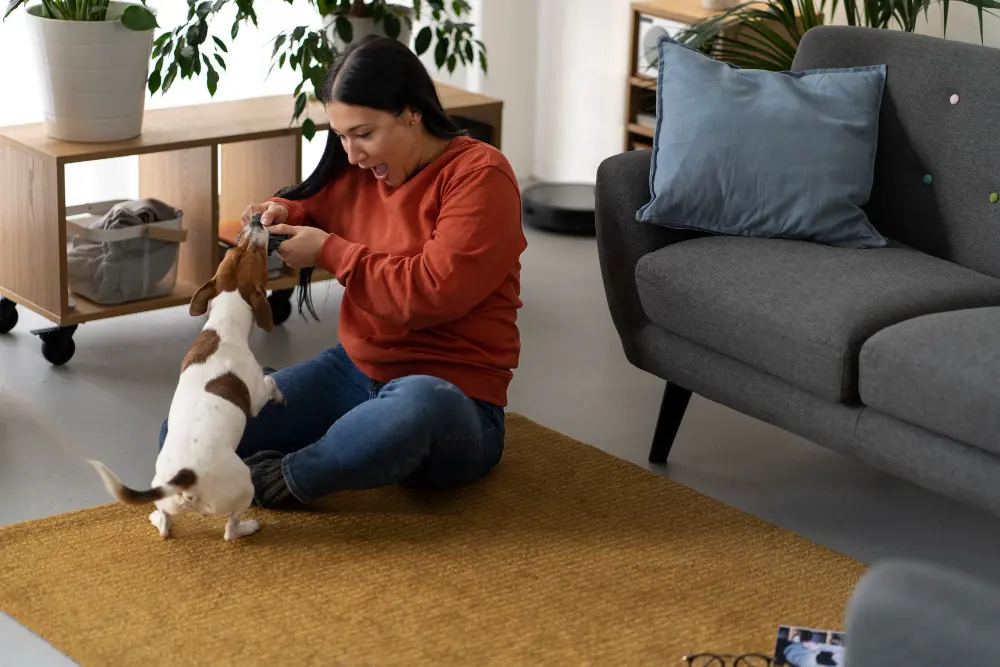
Your pet should have its own comfortable space within the living room. This helps keep the rest of the room organized and gives your pet a sense of security.
Add a cozy pet bed in a quiet corner. You can also include a basket for toys and essentials. This keeps clutter under control and makes it easier to clean.
Designing a dedicated area for your pet also reduces the chances of them using your furniture as their resting spot.
Use Washable and Removable Covers
Accidents happen, especially if you have young or active pets. That is why washable covers are essential.
Use removable covers for sofas, cushions, and chairs. These can be easily washed when they get dirty. Slipcovers are also a great way to protect your furniture while maintaining style.
Choose neutral or patterned fabrics that can hide stains and pet hair.
Manage Pet Hair and Odors
Keeping your living room clean is easier when you plan for pet hair and odors in advance.
Regular cleaning is important, but you can also reduce mess by choosing the right materials. Dark or patterned fabrics can help hide fur, while air purifiers can improve air quality.
Vacuum your living room frequently and use lint rollers to remove hair from furniture. Adding a washable rug can also help trap dirt before it spreads.
Protect Your Furniture from Scratches
Scratching is a natural behavior, especially for cats. Instead of trying to stop it completely, provide alternatives.
Place scratching posts near your furniture so your pet has a better option. You can also use protective covers on the most vulnerable areas.
Training your pet to use designated scratching areas can help protect your furniture in the long run.
Organize Pet Supplies Smartly
Keeping your living room tidy is easier when everything has a place. Store pet supplies in stylish baskets or cabinets.
Choose storage solutions that blend with your décor. This way, you can keep items like toys, grooming tools, and treats organized without making the room look cluttered.
Hidden storage furniture, such as ottomans with compartments, can be especially useful.
Choose Pet-Safe Colors and Fabrics
Light-colored furniture may look beautiful, but it can show stains and pet hair easily. Darker tones or patterned fabrics are more practical for pet owners.
Textures also matter. Smooth fabrics are easier to clean, while textured materials can trap hair.
When selecting colors, consider your pet’s fur color. Choosing similar shades can help make shedding less noticeable.
Improve Ventilation and Comfort

A comfortable living room benefits both you and your pet. Good ventilation helps reduce odors and keeps the space fresh.
Open windows regularly to let in fresh air. You can also use fans or air purifiers to maintain a clean environment.
Make sure your pet has access to water and a comfortable resting spot. Keeping the temperature balanced will ensure your pet feels relaxed.
Maintain a Stylish Look
A pet-friendly living room can still be stylish. The key is to combine functionality with design.
Choose furniture that matches your style while being practical. Add decorative elements like cushions, throws, and rugs that are easy to clean.
Minimalist designs often work best because they reduce clutter and make cleaning easier.
Final Thoughts
Designing a pet-friendly living room is all about balance. You want a space that looks great while also meeting your pet’s needs.
By choosing durable materials, organizing your space, and focusing on safety, you can create a living room that works for everyone. Small changes can make a big difference in keeping your home clean, comfortable, and stylish.
With the right approach, you can enjoy a beautiful living room without worrying about mess or damage.
For more helpful tips on Home Decor.
Frequently Asked Questions (FAQs)
1. What is a pet-friendly living room?
A pet-friendly living room is designed with durable furniture, safe décor, and easy-to-clean surfaces to ensure comfort and safety for both pets and owners.
2. What type of furniture is best for homes with pets?
Furniture made from leather, microfiber, or tightly woven fabrics is ideal because it is durable, easy to clean, and resistant to scratches and stains.
3. How can I protect my furniture from pet damage?
Use washable covers, slipcovers, and provide scratching posts or chew toys to redirect your pet’s behavior and protect your furniture.
4. Which flooring is best for a pet-friendly living room?
Hard flooring like tile, laminate, or vinyl is best as it is easy to clean and resistant to scratches. Washable rugs can also be used for added comfort.
5. How can I keep my living room clean with pets?
Regular vacuuming, using lint rollers, washing covers, and maintaining good ventilation can help control pet hair, dirt, and odors.