

By the Floor Decor Editorial Team | Last Updated: April 2026
For a complete home resource covering everything from flooring to furniture and beyond, visit the New Home Essentials homepage. This flooring guide is part of our dedicated Floor and Decor section, where you will find installation guides, cost breakdowns, and product comparisons.
Quick Answer: What Are the Main Types of Flooring?
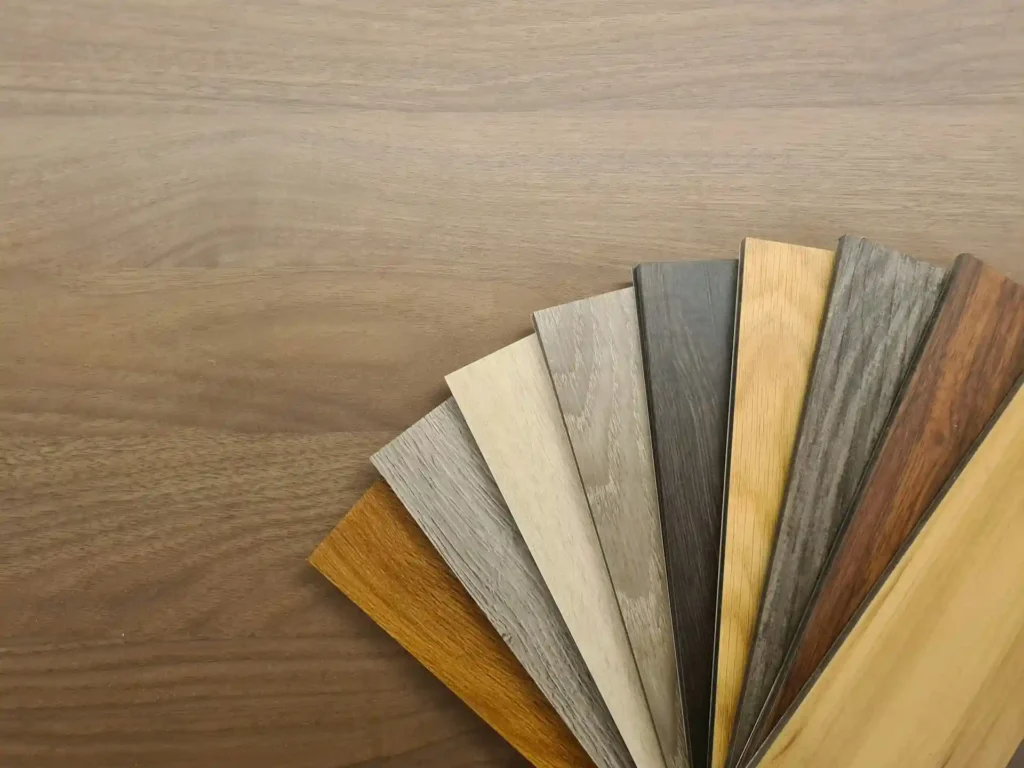
The main types of flooring are hardwood, engineered wood, laminate, luxury vinyl plank (LVP), ceramic tile, porcelain tile, natural stone, carpet, and bamboo. Each material varies in durability, water resistance, cost, and the rooms it suits best. Hardwood adds the most resale value. Vinyl is the most water-resistant wood-look option. Porcelain tile is the strongest choice for wet areas. Carpet remains the warmest and most affordable option for bedrooms. Choosing correctly depends on room conditions, budget, and the amount of foot traffic the floor will receive daily.
Key Takeaways
- Nine flooring types dominate the residential market: hardwood, engineered wood, laminate, LVP, LVT, ceramic tile, porcelain tile, natural stone, and carpet.
- Water resistance is the single most important factor for kitchens, bathrooms, and basements.
- Solid hardwood recovers up to 147% of its cost at resale, according to the National Association of Realtors’ 2023 Remodeling Impact Report.
- Luxury vinyl plank is currently the best-selling flooring type in the United States.
- The total installed cost is always higher than the material cost alone. Budget for labor, underlayment, and subfloor preparation.
- Flooring lifespan ranges from 10 years for carpet to over 100 years for natural stone.
Why the Type of Flooring You Choose Has Long-Term Consequences
Flooring is not a decision that can be easily reversed. It anchors the look, feel, and function of every room it covers. A wrong choice in a bathroom causes warping within months. The right choice in a living room can outlast two full renovations around it.
The floor you choose does not exist in isolation. It works alongside your furniture, coordinates with your furnishings, frames your wall art, and reflects or absorbs the output of your lights. A cohesive interior depends on each of these elements supporting the others.
The financial stakes are equally real. According to the National Association of Realtors, hardwood floor refinishing returns more at resale than almost any other home improvement project. Conversely, worn or mismatched flooring is among the top reasons buyers reduce their offers.
This guide covers every major flooring type with clear, factual information on cost, lifespan, ideal rooms, and honest limitations. No material is presented as universally superior because none is.
Types of Flooring Compared at a Glance
| Flooring Type | Cost per Sq. Ft. (Installed) | Water Resistance | Lifespan | Best Rooms |
|---|---|---|---|---|
| Solid Hardwood | $10 – $25 | Low | 80–100 years | Living rooms, bedrooms |
| Engineered Wood | $7 – $18 | Moderate | 25–40 years | Kitchens, basements |
| Laminate | $3 – $9 | Low–Moderate | 15–25 years | Bedrooms, offices |
| Luxury Vinyl Plank | $4 – $12 | Very High | 20–30 years | Whole home |
| Ceramic Tile | $4 – $12 | Very High | 20+ years | Kitchens, bathrooms |
| Porcelain Tile | $7 – $22 | Excellent | 30–50 years | Wet areas, outdoors |
| Natural Stone | $10 – $55+ | Varies | 50–100+ years | Entryways, luxury spaces |
| Carpet | $3 – $11 | Very Low | 10–15 years | Bedrooms, stairs |
| Bamboo | $6 – $14 | Low–Moderate | 20–25 years | Living rooms, offices |
Source: RSMeans Construction Cost Data 2025 and national contractor average surveys.
1. Solid Hardwood Flooring
What It Is
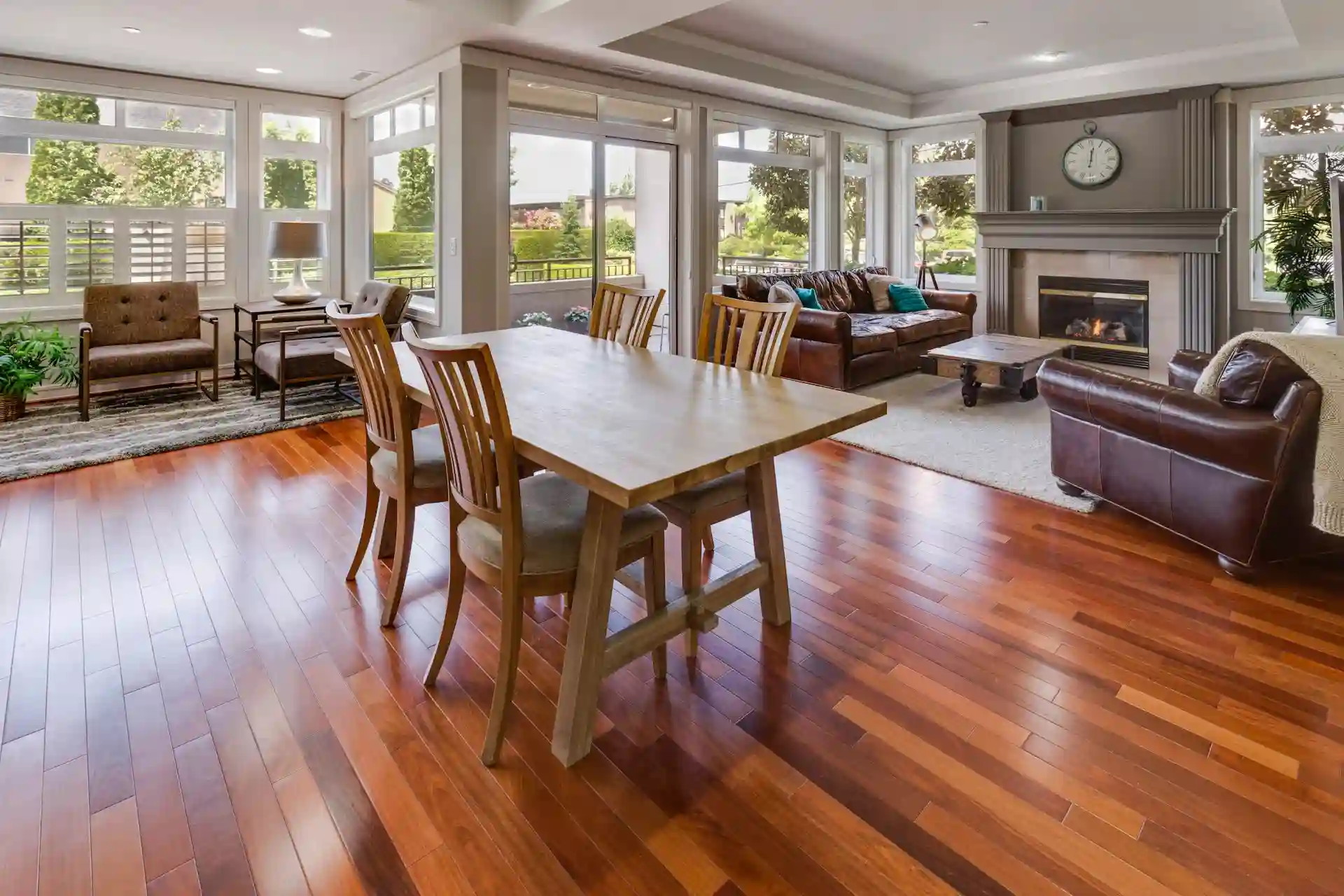
Solid hardwood is milled from a single piece of timber, typically 3/4 inch thick. Species include red oak, white oak, maple, walnut, and hickory. Hardness is measured on the Janka scale. Hickory scores 1,820 Janka units. Brazilian cherry reaches 2,350. Soft pine sits at 870. Species selection is a practical decision as much as an aesthetic one.
Where It Works Best
Solid hardwood performs best in living rooms, dining rooms, hallways, and bedrooms. It should never be installed in bathrooms, below-grade basements, or directly over concrete slabs without a proper moisture barrier and subfloor system.
Advantages
- Can be sanded and refinished five to eight times over its life
- Adds measurable resale value; preferred by most homebuyers
- Natural grain patterns improve visually with age and use
- Available in hundreds of species, stain colors, and plank widths
Limitations
- Expands and contracts with humidity, causing gaps or cupping if not managed
- Among the most expensive flooring options to purchase and install
- Requires refinishing every 7 to 10 years in busy areas
Expert Insight
“Solid hardwood remains the benchmark against which all other wood-look flooring is measured. The sound and feel of real wood underfoot communicates quality in a way that no manufactured product has fully replicated.” — National Wood Flooring Association, 2024 Consumer Trends Report
2. Engineered Wood Flooring
What It Is
Engineered wood consists of a real hardwood veneer, typically 2 to 6 mm thick, bonded over multiple layers of plywood or high-density fiberboard. Cross-grain construction makes it far more stable than solid wood in response to moisture and temperature changes.
Where It Works Best
Engineered wood is the correct choice when hardwood aesthetics are desired in spaces where solid wood is impractical: kitchens, basements with moisture control, and rooms with radiant floor heating systems.
Advantages
- Compatible with underfloor heating, which solid hardwood is not
- More stable in humid or variable climates
- Can span from the basement to the main floor without a material change
- Genuine wood surface with authentic grain and texture
Limitations
- The veneer can only be sanded one to three times, depending on the thickness
- Budget products often have veneers too thin to refinish, even once
- Still not suitable for bathrooms or consistently wet environments
3. Laminate Flooring
What It Is
Laminate is a four-layer synthetic product. From bottom to top: a backing layer, a high-density fiberboard core, a photographic image printed to resemble wood or stone, and a hard, clear wear layer. There is no real wood in the surface. Modern printing technology has made laminate visually convincing at a distance.
Where It Works Best
Laminate suits bedrooms, home offices, and low-moisture living areas where budget is a primary constraint and appearance matters more than longevity.
Advantages
- Among the lowest material costs of any flooring type
- Resistant to surface scratching compared to real wood
- Click-lock floating installation is accessible to confident DIY installers
- No sanding, staining, or finishing required after installation
Limitations
- Cannot be refinished; replacement is the only option when worn
- Fiberboard core swells and delaminates when exposed to standing water
- Hollow sound underfoot is perceptible and hard to eliminate
- Not appropriate for bathrooms or any moisture-prone room
If you are replacing flooring as part of a broader update, our Makeovers section covers full room transformations step by step. For hands-on installation guidance, the DIY section includes practical tutorials suited to homeowners working without a contractor.
Market Context
According to the Freedonia Group’s 2024 Floor Coverings Industry Report, laminate’s share of U.S. residential sales has declined steadily as luxury vinyl plank has captured the mid-market segment that laminate once dominated.
4. Luxury Vinyl Plank (LVP) and Luxury Vinyl Tile (LVT)
What It Is
Luxury vinyl is a multi-layer synthetic flooring product. Its layers include a rigid or flexible core, a printed design layer, and a clear wear layer measured in mils. LVP replicates hardwood planks. LVT replicates stone or ceramic tile. The wear layer thickness determines durability: 6 mil suits light residential use, 12 mil suits family homes with pets, and 20 mil or above is specified for commercial applications.
Why LVP Now Leads the U.S. Market
LVP has become the most commonly installed flooring type in new U.S. residential construction and remodeling because it solves the core limitation of every wood-based alternative: water. It is fully waterproof across virtually all product lines. It can be installed in bathrooms, laundry rooms, kitchens, and basements where no wood product belongs.
Advantages
- 100 percent waterproof in most product lines
- Warmer and softer underfoot than ceramic or stone tile
- Compatible with nearly any subfloor type, including concrete
- Lower installation cost than tile or hardwood
- Suitable for whole-home installation using one consistent material
Limitations
- Cannot be sanded or refinished; damaged planks must be replaced
- Lower-quality products show a plastic sheen in direct sunlight
- Prolonged exposure to high heat can cause warping or surface damage
- Does not match the resale value premium of real hardwood
Expert Insight
“Vinyl flooring’s share of the residential market has grown substantially because it solves the practical problems that real wood cannot. For young families, pet owners, and anyone in a humid climate, LVP is simply the most sensible choice available today.” — Floor Covering Weekly, 2024 Industry Outlook
5. Ceramic Tile Flooring
What It Is
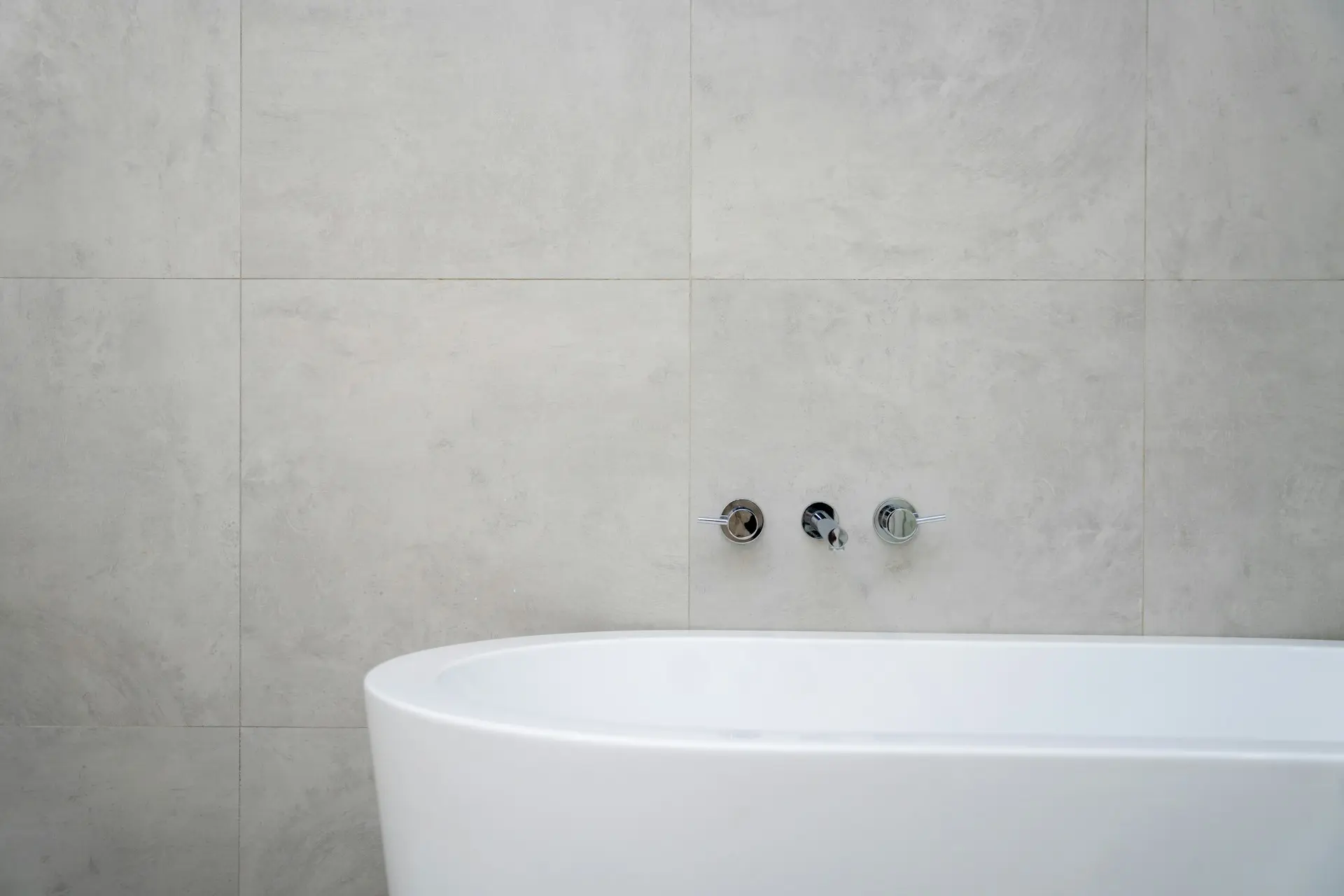
Ceramic tile is natural clay fired at high temperature and finished with a glazed surface. It is one of the oldest flooring materials in human construction, with documented use going back more than 4,000 years. Modern ceramic tiles range from 4×4-inch mosaic pieces to large-format 24×48-inch slabs.
Where It Works Best
Ceramic tile is appropriate for kitchens, bathrooms, laundry rooms, and covered outdoor spaces in temperate climates. Its glazed surface resists moisture and staining with minimal maintenance.
Advantages
- Highly water-resistant and easy to clean
- Non-allergenic surface that does not trap dust or pet dander
- Long lifespan of 20 or more years with correct installation
- Available in an enormous range of sizes, colors, and finishes
Limitations
- Hard and cold underfoot without radiant heating beneath it
- Grout lines require periodic cleaning and resealing every one to three years
- Prone to cracking on subfloors that flex, settle, or have structural movement
- Labor-intensive installation; not suitable for most DIY projects
6. Porcelain Tile Flooring
What It Is
Porcelain tile is a denser, harder subtype of ceramic tile, fired at higher temperatures using a finer clay mixture. The Tile Council of North America defines porcelain as tile with a water absorption rate of 0.5 percent or less. Standard ceramic tile can absorb up to 3 percent moisture by comparison.
When to Choose Porcelain Over Ceramic
Porcelain is the correct choice for outdoor installations, wet rooms, heated floors, and any area subject to freeze-thaw temperature cycles. In commercial or high-traffic residential settings such as entry foyers, porcelain’s harder surface withstands abrasion that ceramic cannot.
Advantages
- Superior resistance to moisture, staining, and freeze-thaw damage
- Available in through-body color formats, where chips are far less visible
- Realistic wood and stone textures available through precision digital printing
- Suitable for outdoor terraces and pool surrounds where ceramic is not
Limitations
- Higher cost than standard ceramic tile
- Requires diamond-tipped cutting equipment due to extreme hardness
- Heavier than ceramic tile, requiring stronger subfloor support
7. Natural Stone Flooring
What It Is
Natural stone flooring includes marble, granite, slate, travertine, limestone, and quartzite. Each piece is cut directly from the earth and is unique in pattern. Stone floors appear in structures that have survived thousands of years, making it the most proven flooring material by any measure of longevity.
Comparing the Main Stone Types
Marble is visually unmatched, but soft and porous. It stains and scratches more easily than other stones and requires regular sealing. Best suited for formal, low-traffic spaces.
Granite is among the hardest natural stones available. It resists scratching and staining well when sealed and is a practical choice for kitchen floors.
Slate has a naturally textured, non-slip surface. It is well-suited for entryways and outdoor areas and requires less maintenance than marble.
Travertine has a warm, aged appearance with characteristic surface pitting. Filled travertine is easier to maintain. Unfilled travertine traps debris in its pores and demands careful upkeep.
Quartzite is harder than granite, heat-resistant, and one of the most durable natural stone options available for residential use.
Advantages
- Extraordinary longevity; properly maintained stone can last centuries
- Every piece is unique in pattern, color, and texture
- Adds significant perceived value and luxury to any space
- Completely heat-resistant
Limitations
- High material and installation cost
- Most varieties require periodic sealing to prevent staining
- Heavy material requiring reinforced subfloor support in many homes
- Cold and hard underfoot without underfloor heating
8. Carpet Flooring
What It Is
Carpet consists of fabric fibers tufted or woven into a backing material, installed over a foam or rubber underlay. Fiber types include nylon, polyester, polypropylene, and wool. Nylon is the most durable synthetic option. Wool is the most durable natural option. Pile density and fiber twist level determine how well the carpet holds its appearance under regular foot traffic.
Where Carpet Still Makes Sense
Despite losing market share over the past two decades, carpet remains the most practical choice for bedrooms, nurseries, and any space where warmth, noise reduction, and comfort underfoot are the primary requirements. No hard surface flooring type reduces impact noise between floors as effectively as carpet over a quality underlay.
Advantages
- Warmest and most comfortable flooring underfoot
- Superior acoustic performance; reduces both impact and airborne noise
- Lowest slip risk of any flooring type
- Wide range of colors, textures, and pile heights available
Limitations
- Absorbs spills, odors, allergens, and pet dander over time
- Shortest lifespan of any major flooring category at 10 to 15 years
- Requires regular vacuuming and periodic professional deep cleaning
- Not appropriate for kitchens, bathrooms, or any wet environment
9. Bamboo Flooring
What It Is
Bamboo is technically a grass, but its flooring products closely resemble hardwood in both appearance and installation method. Stalks are sliced, compressed, and laminated into planks. Strand-woven bamboo, which shreds and compresses bamboo fibers under extreme pressure, is the hardest form available and rates above hickory on the Janka scale.
Environmental Considerations
Bamboo matures in three to five years compared to 25 to 70 years for most hardwood species, giving it a genuine renewable resource advantage. However, most bamboo flooring is manufactured in China, and transportation distances, along with adhesive compounds used in manufacturing, are factors that environmentally conscious buyers should investigate before assuming a full sustainability benefit.
Advantages
- Harder than most domestic hardwood species in strand-woven form
- Faster-growing renewable resource than hardwood timber
- Similar installation methods to engineered hardwood
- Competitive pricing relative to comparable hardwood products
Limitations
- Sensitive to humidity and temperature changes, similar to solid hardwood
- Scratches from pets and heavy furniture more readily than porcelain or LVP
- Quality varies significantly between manufacturers
- Not suitable for bathrooms or persistently wet areas
How to Choose Flooring by Room
Matching the material to the room’s specific conditions is more reliable than selecting by appearance alone. The following framework narrows the field before style or budget enters the discussion.
Living rooms and dining rooms: Hardwood, engineered wood, LVP, or large-format porcelain tile. These spaces need materials that handle moderate to high foot traffic and are easy to clean.
Kitchens: Porcelain tile, ceramic tile, or LVP. Moisture resistance is the primary requirement. Hardwood is possible only with diligent maintenance and immediate spill management.
Bathrooms: Porcelain tile is the professional standard. LVP is an acceptable residential alternative. No wood-based product belongs in a bathroom with regular water exposure.
Bedrooms: Almost any flooring type is appropriate. Carpet provides warmth and sound absorption. LVP and hardwood suit allergy-sensitive households better than carpet.
Basements: LVP and porcelain tile only. Solid hardwood must never be installed below grade. Moisture control must be verified before any flooring installation proceeds.
Entryways and mudrooms: Porcelain tile, natural stone, or high-mil LVP. These areas experience concentrated outdoor moisture and debris and need the most abuse-resistant surface in the home.
Modern homes increasingly combine flooring upgrades with technology improvements at the same time. If you are renovating a room, it is worth reviewing our Smart Home Devices guide to integrate underfloor heating controls, automated lighting, and climate sensors before the new floor goes down.
Flooring Installation Methods Explained
Nail-down or staple-down is used for solid hardwood and some engineered products. Planks are fastened directly to a wood subfloor. This produces the firmest feel and least movement, but requires a wood subfloor and cannot be done over concrete.
Glue-down bonds flooring directly to the subfloor with adhesive. Used for engineered wood, LVP, and tile. Produces a very stable result with minimal hollow sound, but it is difficult to remove later.
Floating attaches nothing to the subfloor. Click-lock planks rest as a single connected layer over an underlayment. Used for laminate, LVP, and some engineered wood. Easiest to install and remove, but can produce a hollow sound underfoot.
What Does Flooring Actually Cost in 2025?
Material price alone tells only part of the story. Every flooring project also includes labor, underlayment, adhesives, transition strips, removal of existing flooring, and subfloor preparation. These additions typically add 50 to 100 percent to the material cost.
A $5 per square foot LVP product often costs $9 to $12 per square foot fully installed. A $14 per square foot hardwood product may reach $22 to $26 per square foot once labor, sanding, staining, and finishing are included.
Subfloor condition is the most unpredictable cost variable. Significant moisture damage, structural unevenness, or rot will require repair before any new material can go down, adding $1 to $5 or more per square foot to the project total.
Flooring and Indoor Air Quality
Some flooring products emit volatile organic compounds (VOCs) from adhesives, laminates, and surface coatings during and after installation. This is a meaningful concern in homes with children, elderly residents, or occupants with respiratory conditions.
The California Air Resources Board (CARB) Phase 2 standard sets the strictest formaldehyde emission limits for composite wood products in the United States. FloorScore certification, managed by the Resilient Floor Covering Institute, independently tests flooring for low VOC emissions across a broader range of products.
Solid hardwood, natural stone, and wool carpet carry the lowest inherent VOC risk from the material itself. Installation adhesives and surface finishes may still be relevant regardless of the base material chosen.
Expert Perspectives on Flooring Selection
The single biggest mistake homeowners make is choosing flooring based on showroom appearance alone. The room’s moisture level, subfloor condition, and lifestyle demands should eliminate most options before aesthetics enter the conversation.” — National Floor Covering Association, Consumer Guide 2024
LVP has fundamentally changed the flooring industry. It has delivered genuine waterproofing and durability at a previously impossible price point, and that has permanently shifted buyer expectations across all product categories.” — Floor Covering Weekly, Annual Industry Review 2024
Natural stone is the only flooring material that genuinely improves with age when properly maintained. The patina that develops on marble or limestone over decades is something no manufactured product can simulate.” — Marble Institute of America, Design Resource Guide
Frequently Asked Questions
What is the most popular type of flooring in the United States right now?
Luxury vinyl plank (LVP) is currently the best-selling flooring type in the United States by installed volume. Its combination of full waterproofing, realistic wood appearance, durability, and competitive pricing has made it the dominant choice in both new construction and remodeling projects since approximately 2020.
What type of flooring lasts the longest?
Natural stone flooring, particularly granite, quartzite, and slate, lasts the longest of any flooring material. Properly maintained stone floors have remained in use for centuries. Among manufactured products, porcelain tile has the longest expected lifespan at 30 to 50 years or more with correct installation and grout maintenance.
Which flooring type is best for a home with pets?
Luxury vinyl plank with a wear layer of 12 mil or higher is the most practical choice for pet households. It resists scratching better than hardwood, is fully waterproof for accidents, and is comfortable for animals to walk on. Porcelain tile is also durable, but harder on the joints of older animals.
Can new flooring be installed over existing flooring?
Floating floor systems such as LVP and laminate can often be installed over existing hard flooring if the surface is clean, flat, and structurally sound. However, adding layers raises the floor height, which can affect door clearances and transitions to adjacent rooms. Tile installation over existing tile is generally not recommended without a professional assessment of the combined thickness and load.
What flooring adds the most value when selling a home?
Solid hardwood consistently adds the most measurable resale value, according to data from the National Association of Realtors and the National Wood Flooring Association. Porcelain tile in kitchens and bathrooms also receives positive buyer perception. New carpet is acceptable in bedrooms, but is frequently viewed as a neutral factor or minor deduction in resale evaluations.
How long does flooring installation take?
A standard bedroom of approximately 150 square feet typically takes one professional installer four to eight hours for floating or nail-down products. Tile work takes longer because of the setting and grout curing time; a full bathroom may require two to three days. Whole-home installations generally run three to seven days, depending on material type, square footage, and subfloor preparation required.
Conclusion
No single flooring type is right for every room or every household. The best floor for any given space is the one whose performance characteristics match that room’s actual conditions: moisture level, foot traffic, subfloor type, and the needs of the people living on it.
Solid hardwood delivers unmatched longevity and value in the right rooms. LVP solves water problems across the whole home at a fraction of the cost. Porcelain tile outlasts nearly everything in wet environments. Carpet still has a place where warmth and quiet matter most.
The decision becomes straightforward when material performance drives the process, and appearance follows from there. Use the comparison table and room-by-room guidance in this article as your starting point, then explore Floor Decor’s full product range to find the specific product that fits your project, your budget, and your home.
Flooring is one part of a well-considered home environment. Once your floors are settled, explore Gardening ideas to extend your interior style into outdoor spaces. For more flooring articles, guides, and product reviews, return to the Floor and Decor category or browse everything New Home Essentials has to offer on the homepage.
