Beyond the Canvas: Top 5 Textile Wall Hanging Trends for 2026
Textile wall hangings redefine interior design in 2026. Homeowners now demand texture, depth, and personality. Consequently, fabric art replaces traditional canvas in modern spaces. Designers embrace warmth and dimension over flat surfaces. Moreover, sustainable craftsmanship drives purchasing decisions worldwide.
Below are the top five textile wall hanging trends shaping 2026 interiors.
Sustainable Fiber Art Revolution
Eco-conscious decor dominates home styling in 2026. Consumers actively choose sustainable textile wall hangings. Therefore, artists prioritize organic cotton, hemp, and recycled fibers. Ethical sourcing strengthens brand credibility and market trust.
Natural dyes gain popularity across global design communities. Additionally, plant-based pigments deliver soft, earthy palettes. These tones create calm and grounding interiors. As a result, rooms feel balanced and serene.
Handwoven macramé pieces also return with sustainable upgrades. However, modern designs avoid outdated bohemian clichés. Instead, creators focus on refined patterns and neutral tones. Consequently, minimalist homes integrate fiber art effortlessly.
Sustainability no longer feels optional. Rather, it defines premium textile wall decor in 2026.
Oversized Statement Tapestries
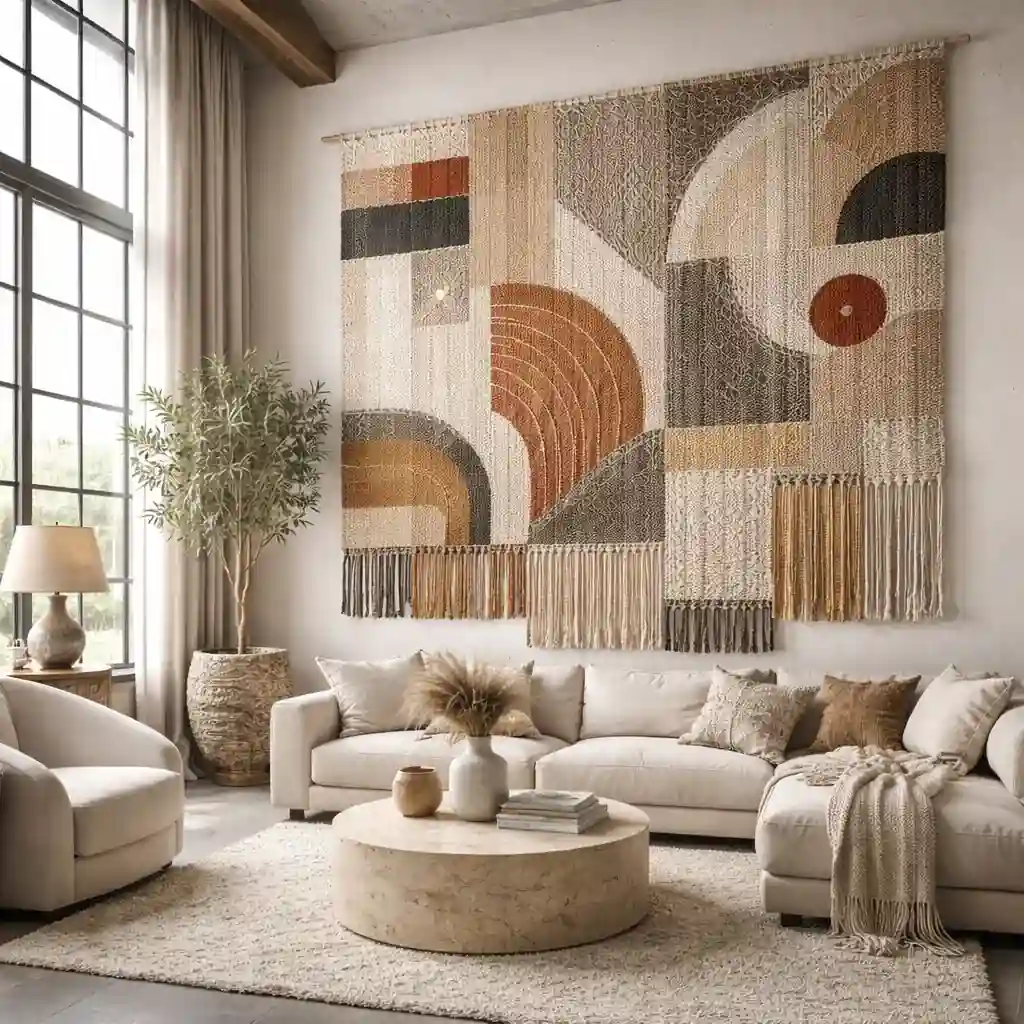
Large-scale textile wall art transforms empty walls dramatically. Designers favor bold, oversized pieces over small decorations. Therefore, statement tapestries anchor living rooms and bedrooms alike.
Massive woven installations introduce architectural impact instantly. Furthermore, textured layers enhance lighting and shadow play. This interaction creates visual movement throughout the day. As a result, spaces feel dynamic and alive.
Abstract patterns dominate this category. Meanwhile, geometric compositions and patterns attract modern homeowners. These bold designs command attention without overwhelming interiors.
Oversized textile wall hangings also improve acoustics. Additionally, thick woven fibers absorb unwanted noise effectively. Consequently, open-plan homes feel quieter and more comfortable.
Scale defines luxury in 2026 wall decor trends.
Mixed-Media Textile Installations
Artists now blend textiles with unexpected materials. For example, designers combine fabric with metal, wood, and ceramic. This fusion elevates traditional wall hangings into sculptural art.
Layered textures create depth and contrast. Moreover, metallic accents introduce subtle shine and sophistication. Soft fibers balance harder materials beautifully. Therefore, mixed-media installations suit contemporary interiors perfectly.
Framed textile art also evolves creatively. Instead of glass covers, designers expose raw textures. Consequently, fabric details remain tactile and authentic.
Dimensional layering becomes a defining feature. In addition, suspended elements add movement and fluidity. These artistic details captivate viewers instantly.
Mixed-media textile wall decor appeals to collectors seeking uniqueness.
Cultural Heritage and Global Patterns
Cultural storytelling strongly influences textile wall hanging trends. Designers celebrate heritage techniques from around the world. Therefore, global patterns gain mainstream recognition.
Traditional weaving methods inspire contemporary adaptations. However, creators reinterpret motifs with modern color palettes. This balance preserves authenticity while appealing to new audiences.
African mud cloth patterns appear in minimalist spaces. Similarly, Japanese sashiko stitching influences textured wall panels. These cultural elements enrich interior narratives significantly.
Handcrafted artisan pieces also gain higher demand. Moreover, buyers appreciate craftsmanship and cultural meaning. As a result, authentic textile wall art commands premium pricing.
Global inspiration shapes 2026 interior aesthetics powerfully.
Minimalist Neutral Textures
Minimalism evolves with stronger tactile presence. Instead of blank walls, homeowners choose subtle textile accents. Therefore, neutral woven wall hangings dominate Scandinavian-style interiors.
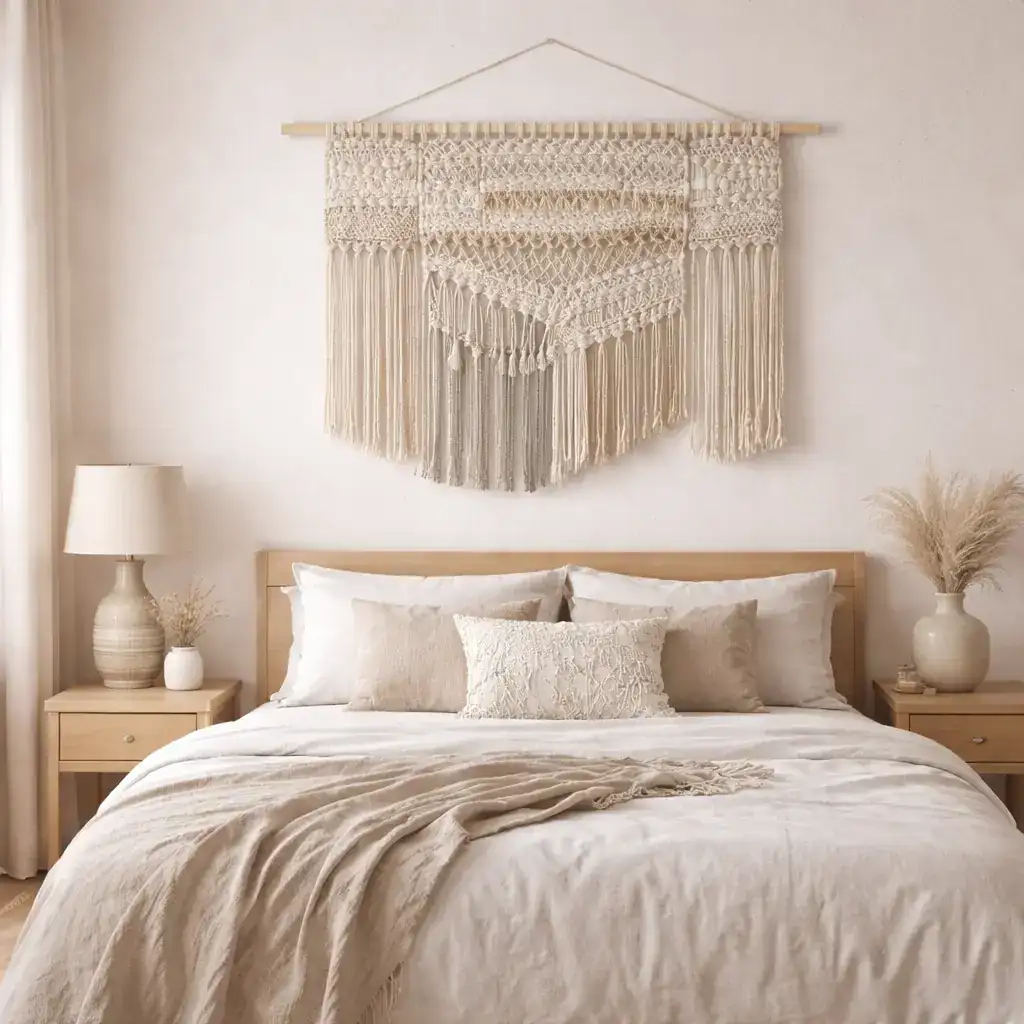
Beige, ivory, and soft gray remain timeless choices. Additionally, layered fringe and soft pleats add quiet sophistication. These details maintain simplicity without sacrificing interest.
Tone-on-tone embroidery gains traction rapidly. Furthermore, raised stitching introduces delicate dimension. Light interacts gently with textured surfaces throughout the day.
Minimalist textile art pairs seamlessly with natural wood furniture. Consequently, cohesive interiors feel warm and inviting. Clean lines remain essential, yet texture softens rigidity.
Neutral textile wall decor proves that simplicity can feel luxurious.
Personalized wall decore
Customization becomes a defining consumer demand in 2026. Buyers now request made-to-order textile wall hangings. Therefore, artists offer bespoke color schemes and sizing options.
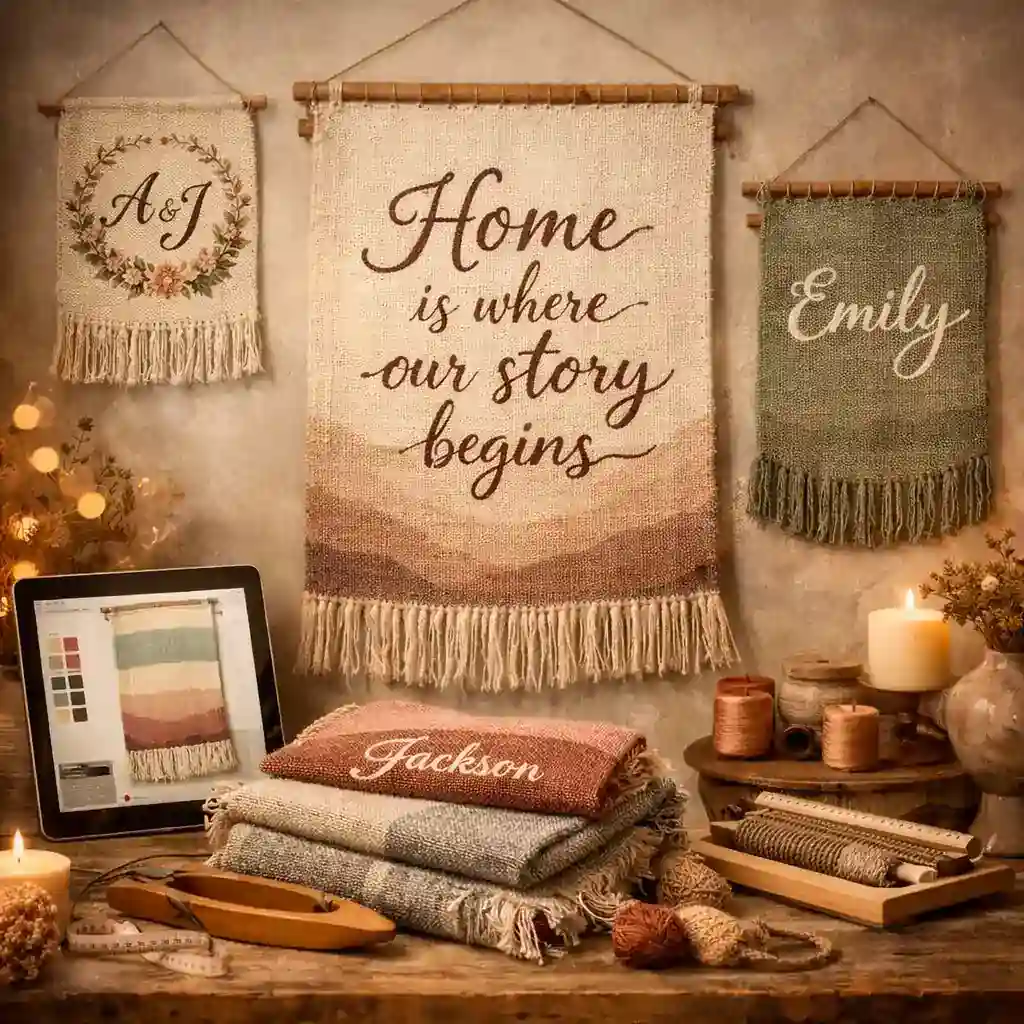
Monogrammed fabric art gains popularity in bedrooms. Additionally, custom woven quotes personalize living spaces. These tailored elements strengthen emotional connections to decor.
Digital previews simplify the design process. Consequently, customers visualize final pieces before production begins. This transparency builds confidence and trust.
Small studios benefit from direct-to-consumer platforms. Meanwhile, social media amplifies handcrafted textile brands globally. Personalized wall decor continues expanding rapidly.
Custom textile wall hangings reflect identity and lifestyle seamlessly.
Why Textile Wall Hangings Dominate 2026 Interiors
Fabric art introduces warmth that canvas cannot replicate. Moreover, textured surfaces add sensory richness to modern homes. Designers recognize this emotional impact clearly.
Textile decor also supports sustainable living goals. Therefore, eco-friendly fibers align with conscious consumer values. This alignment strengthens long-term market growth.
Versatility further increases demand. For instance, textile wall hangings complement boho, modern, rustic, and minimalist styles. Few decor elements offer such flexibility.
Installation remains simple and adaptable. Additionally, lightweight pieces reduce structural strain on walls. As a result, renters embrace textile art enthusiastically.
Overall, textile wall hanging trends in 2026 redefine artistic expression. These pieces go beyond decoration entirely. Instead, they create immersive and meaningful environments.
Homeowners now move beyond the canvas confidently. Textile wall art stands at the forefront of interior innovation. Consequently, 2026 marks a transformative era for fabric-based design.
FAQs
1. What are the top textile wall hanging trends for 2026?
The leading trends include sustainable fiber art, oversized tapestries, mixed-media installations, cultural heritage patterns, and minimalist neutral textures.
2. Why are textile wall hangings popular in 2026?
They add warmth, texture, and depth while supporting sustainable and personalized interior design choices.
3. Are textile wall hangings suitable for modern interiors?
Yes, designers create minimalist, abstract, and geometric textile pieces that complement modern and contemporary spaces.
4. How do oversized textile wall hangings enhance a room?
They create a bold focal point, improve acoustics, and add strong visual impact to large walls.
5. Can textile wall art be customized?
Many artists offer custom sizes, colors, and designs to match personal style and interior themes.