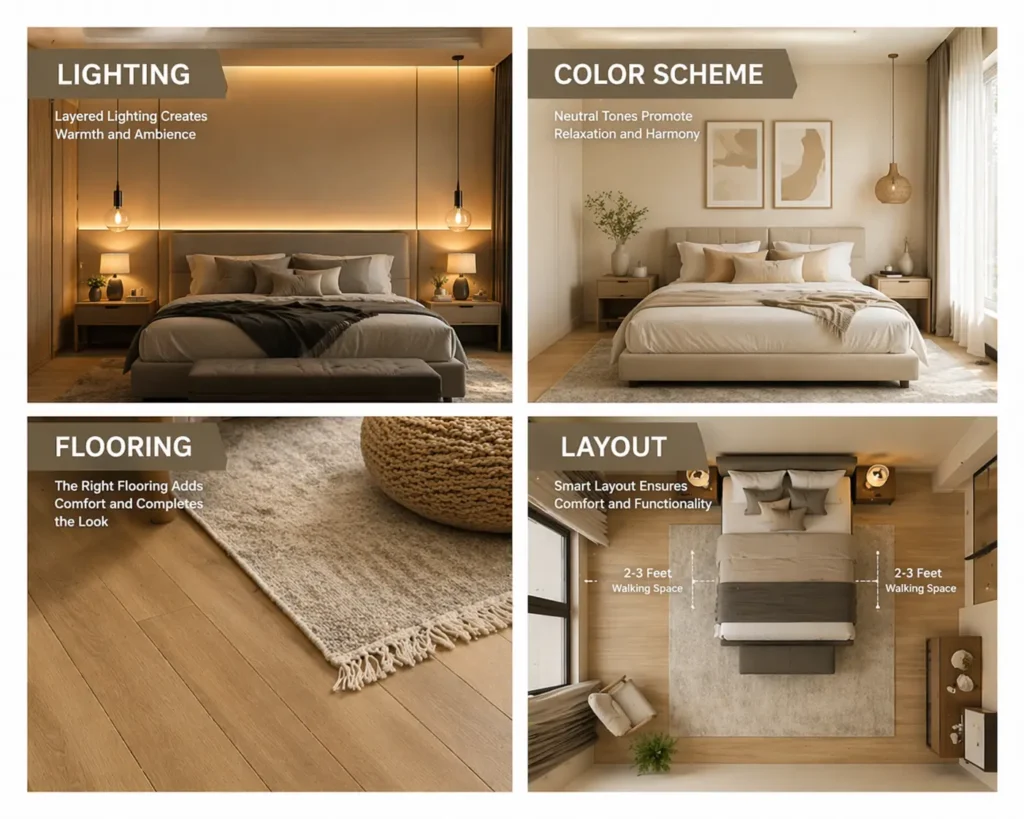

A master bedroom is the primary bedroom in a home, typically designed for the homeowner. It is usually the largest bedroom in the house and has additional features, such as an attached bathroom, a walk-in closet, and a sitting area. The master bedroom is more than a place to sleep; it serves as a personal retreat space and a space for relaxation and comfort.
The design of a master bedroom plays a very important role in a house and in its aesthetic. A room designed with proper planning and thought can improve the functionality of the room. It provides a person with a lifestyle or habitat you wants to live according to their profession and interests, enhancing everyday life. Elements such as lighting, layout, color schemes, and furniture selection all contribute to how restful and functional the space feels.
In this article, you will discover a complete guide to master bedroom ideas that combine style, comfort, and functionality. It is a guide that will start from scratch, covering all factors that are involved in designing, and will provide bonus ideas that you will be able to apply. After reading this blog, you will be familiar with important terms used in bedroom designing and major factors that are involved in the design of a bedroom.
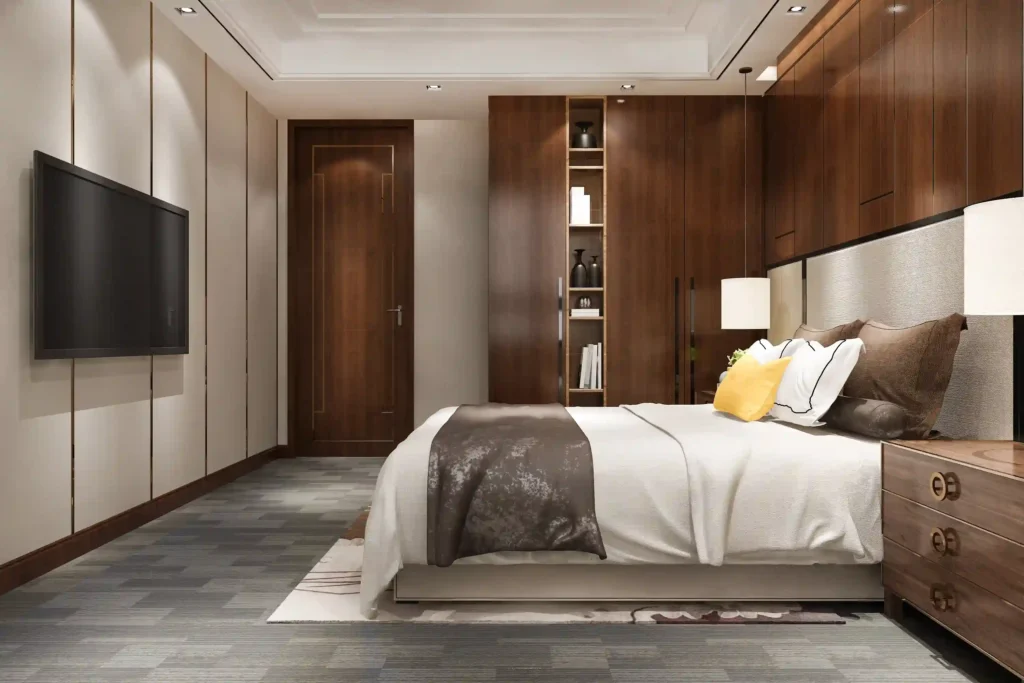
A perfect master bedroom balances aesthetics with functionality. It should feel inviting, organized, and tailored to your personal taste. The key components include:
- A comfortable and well-positioned bed
- Adequate storage solutions
- Layered lighting for different moods
- A cohesive color scheme
- Thoughtful décor that enhances the space
When these elements come together, the room becomes more than just visually appealing; it becomes a sanctuary.
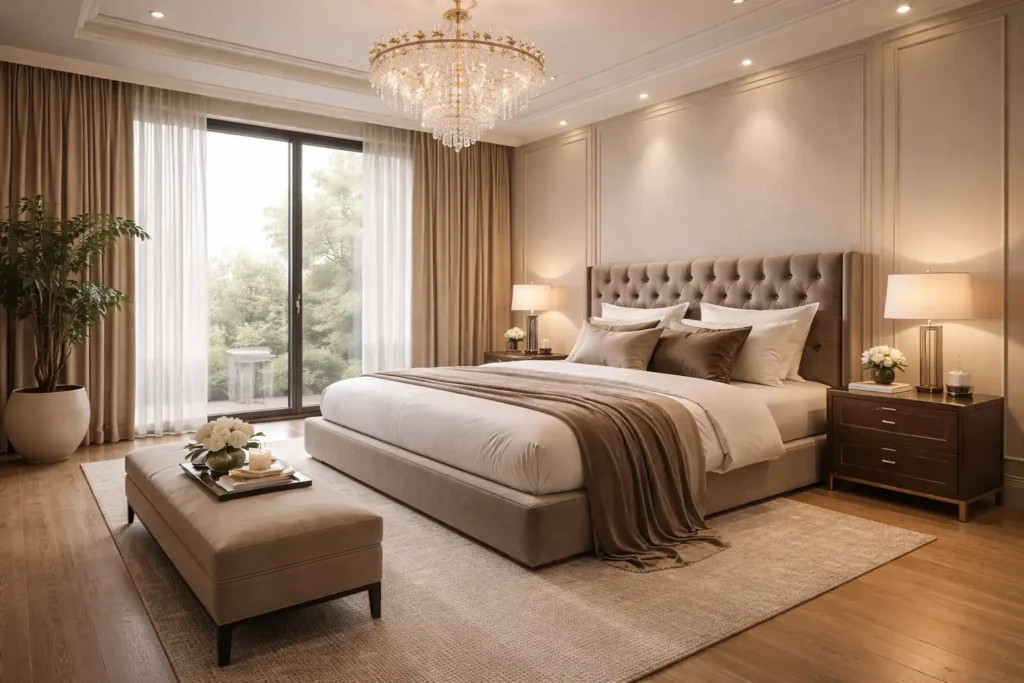
Factors in Designing a House Bedroom Plans
Some important factors to keep in mind while you are planning your bedroom from the beginning, including construction, or when you are rearranging your master bedroom to modern trends.
The following are the factors to consider:
Master Bedroom Layout Ideas
The size and shape of a master bedroom are the foundation of every layout decision. A large rectangular room offers flexibility, allowing you to divide the space into zones such as sleeping, seating, and dressing areas. In contrast, smaller or irregularly shaped rooms require careful planning to avoid a cramped or awkward feel.
Start by measuring the room accurately, including wall lengths, ceiling height, and any architectural features like niches or columns. Square rooms are easier to balance, while long rectangular rooms benefit from zoning techniques, such as placing the bed centrally and using rugs or furniture to define separate areas.
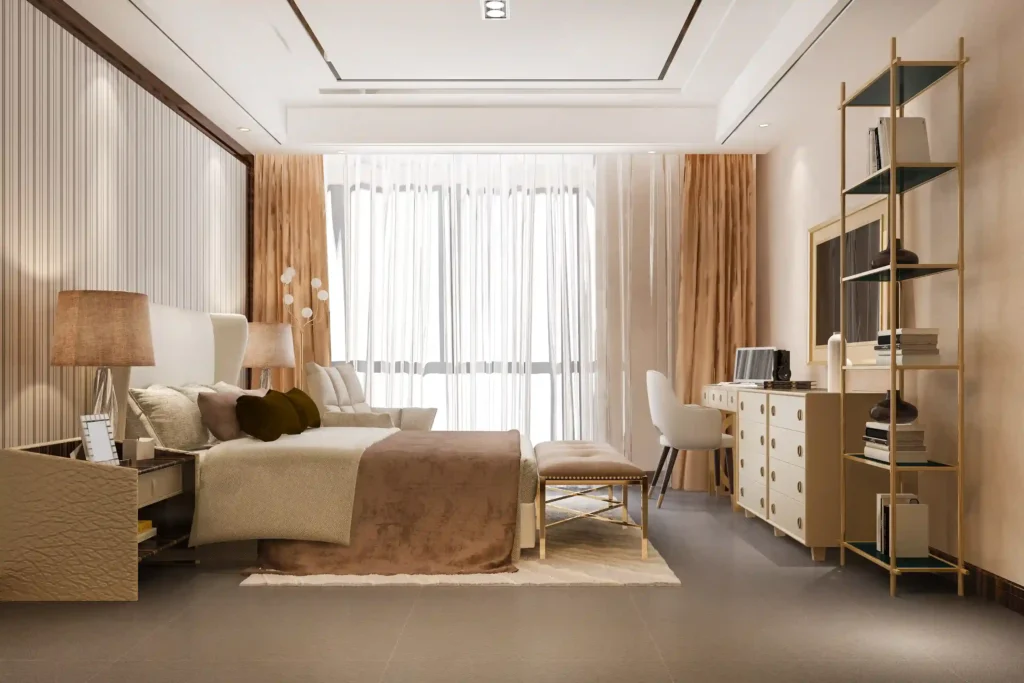
A practical tip is to sketch a basic floor plan before buying furniture. This helps you visualize placement and avoid costly mistakes. Ultimately, respecting the room’s size and shape ensures a layout that feels comfortable, functional, and visually pleasing.
| House size | Master bedroom floorspace | Master bedroom ceiling height |
| 185 square meters (20 squares) | 3.9 meters x 4.9 meters | 2.40 meters |
| 232 square meters (25 squares) | 4.5 meters x 6.0 meters | 2.59 meters |
| 278 square meters (30 squares) | 6.0 meters x 7.0 meters | 2.70 meters |
Keep In Mind
- In a larger bedroom, you can create a cozy seating area with lovely furniture that blends with the bedroom design.
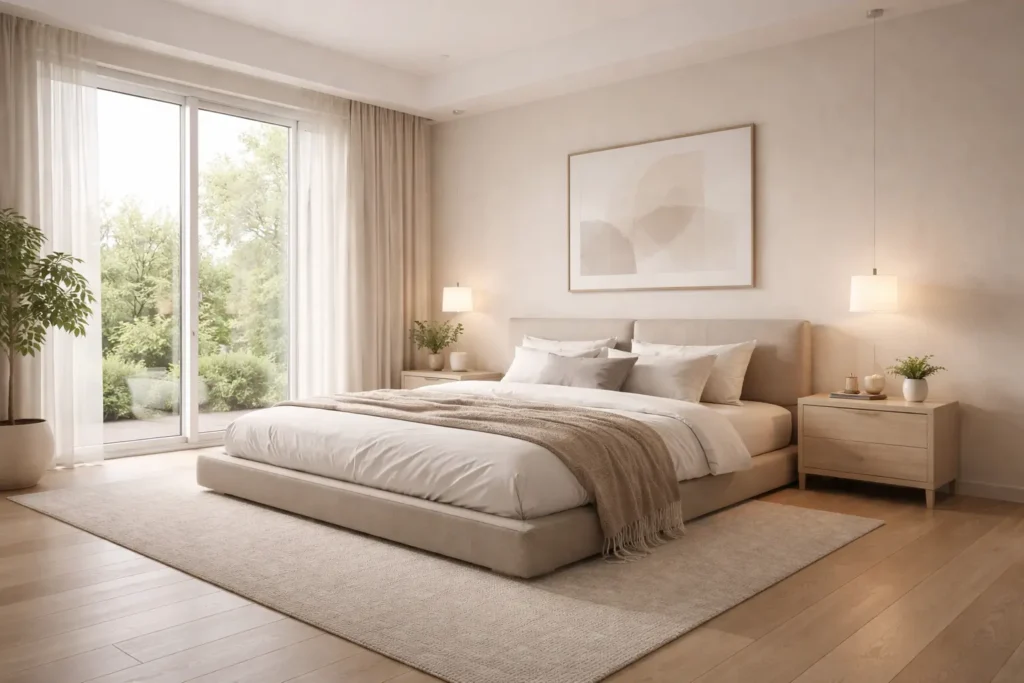
- A small bedroom might be better to use multi-functional furniture such as a bed with a storage built into the headboard, so that you don’t need to take up additional floor space for the side tables.
- One way to maintain the balance is to use the brighter shade on only one of the walls or in a small section so that it introduces a splash of color without overpowering the space.
- In smaller bedrooms, prioritize essential furniture and avoid overcrowding.
- In larger rooms, avoid leaving too much space, which can make the room feel cold or incomplete.
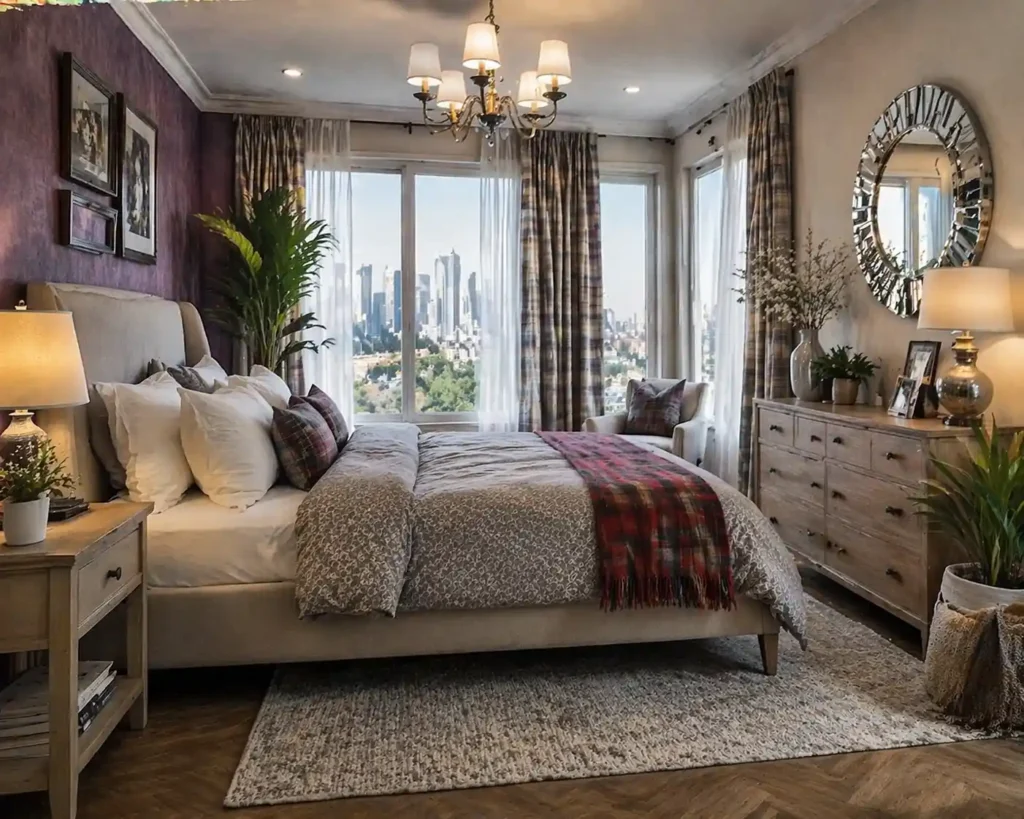
Master Bedroom Furniture Arrangement Ideas
Furniture placement and its size are the basic elements for creating space and a nice look in a master bedroom. Oversized pieces can overwhelm a room, while undersized furniture may look insignificant. Match furniture size to room dimensions. For example, a king-size bed suits large rooms, while a queen-size bed is better for spaces. Test the different placements before finalizing the furniture layout because even slight adjustments can make a big difference.
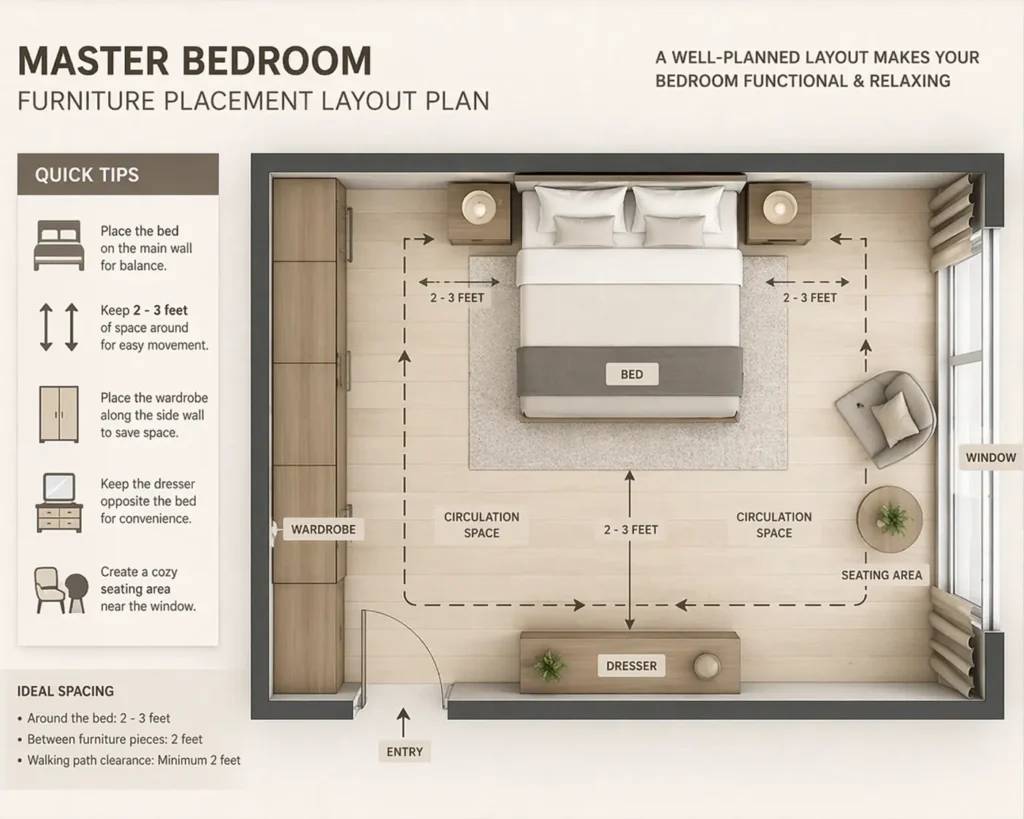
- Nightstands should be proportional to the bed, and wardrobes should not dominate the room. Avoid filling every corner.
- Space is important for visual balance and comfort.
Bed Ideas For Master Bedroom
- The bed is the central element of any master bedroom, ideally it should be placed against the longest uninterrupted wall, creating a natural focal point when entering the room. This placement enhances both visual appeal and functionality.
- Avoid placing the bed directly in line with the door if possible, as it can reduce privacy and create discomfort.
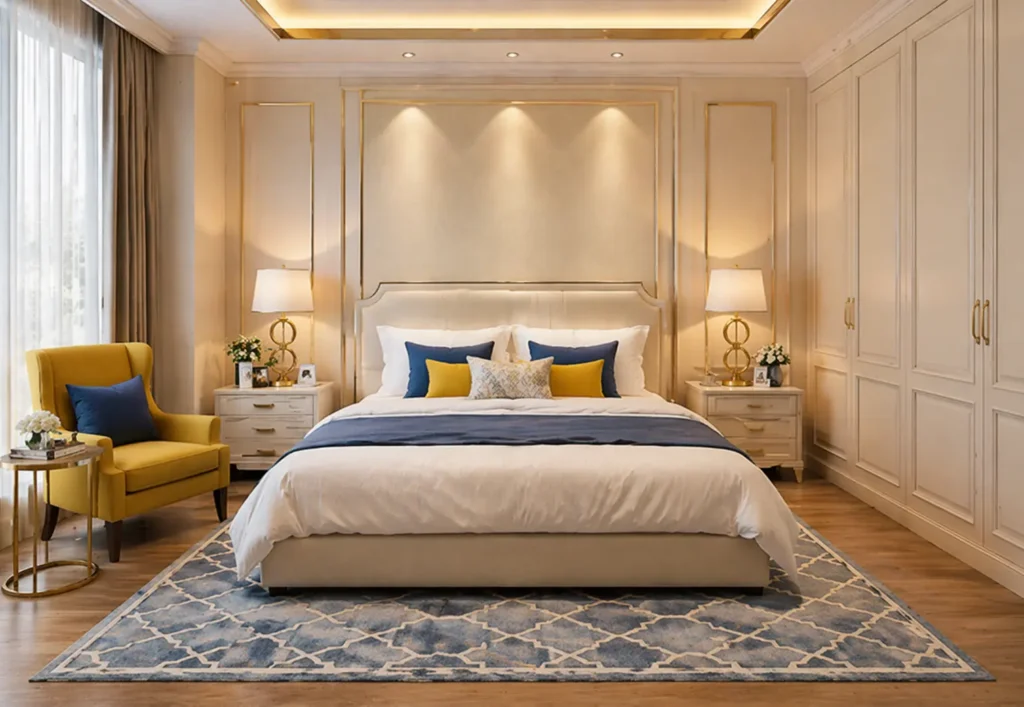
- Windows also play a role, placing a bed under a window can work in smaller rooms, but may limit access to natural light and reduce design flexibility.
- Symmetry is often preferred; centering the bed with matching nightstands and lamps on either side creates a harmonious and organized look.
- Ensure there is enough space around the bed—at least 2 feet on each side for easy movement. This improves usability and prevents the room from feeling cramped.
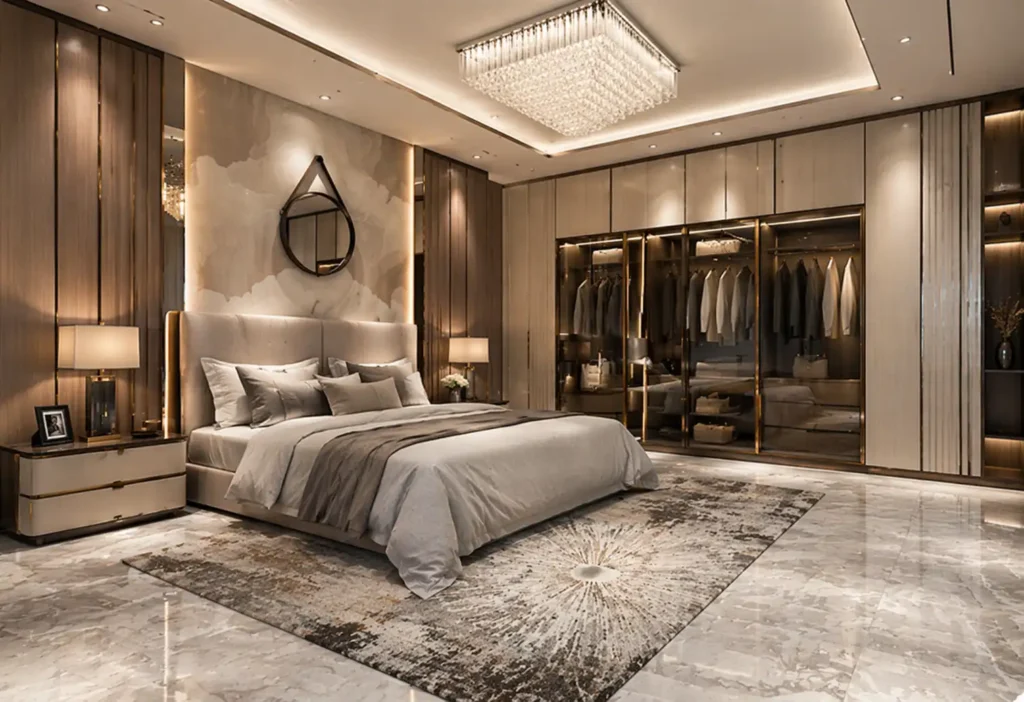
- You can choose an elegant upholstered chair or a minimalist headboard to introduce an eye-catching element to the room. The size of your bedroom will determine the number of pieces you can use.
- Keep the colors light and try not to use too many shades, as this will visually clutter the room.
Lighting Design
Electrical planning is often overlooked but is essential for a functional layout. Proper placement of switches, sockets, and lighting fixtures improves convenience. Bedside switches should be easily accessible. Charging points near the bed are also important. Plan lighting layers, including ceiling lights, bedside lamps, and accent lighting. Good electrical planning ensures the room is practical and comfortable to use.
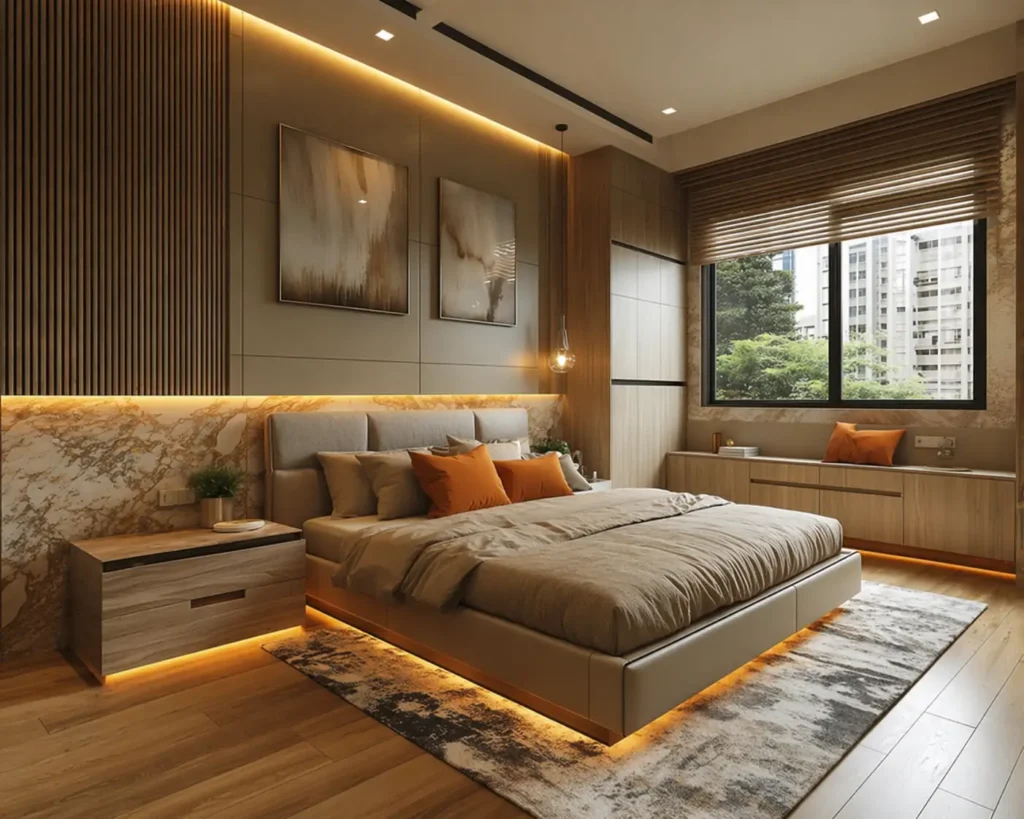
- Avoid relying on a single light source.
- Multiple lighting options allow flexibility for different moods and activities.
- Monotony light is an ally for decorating a small space if the room has a window that invites natural light into the area.
- Make sure that you don’t block natural light with the furniture. Cover the window with sheer curtains during the day so that the room is bright without compromising on your privacy.
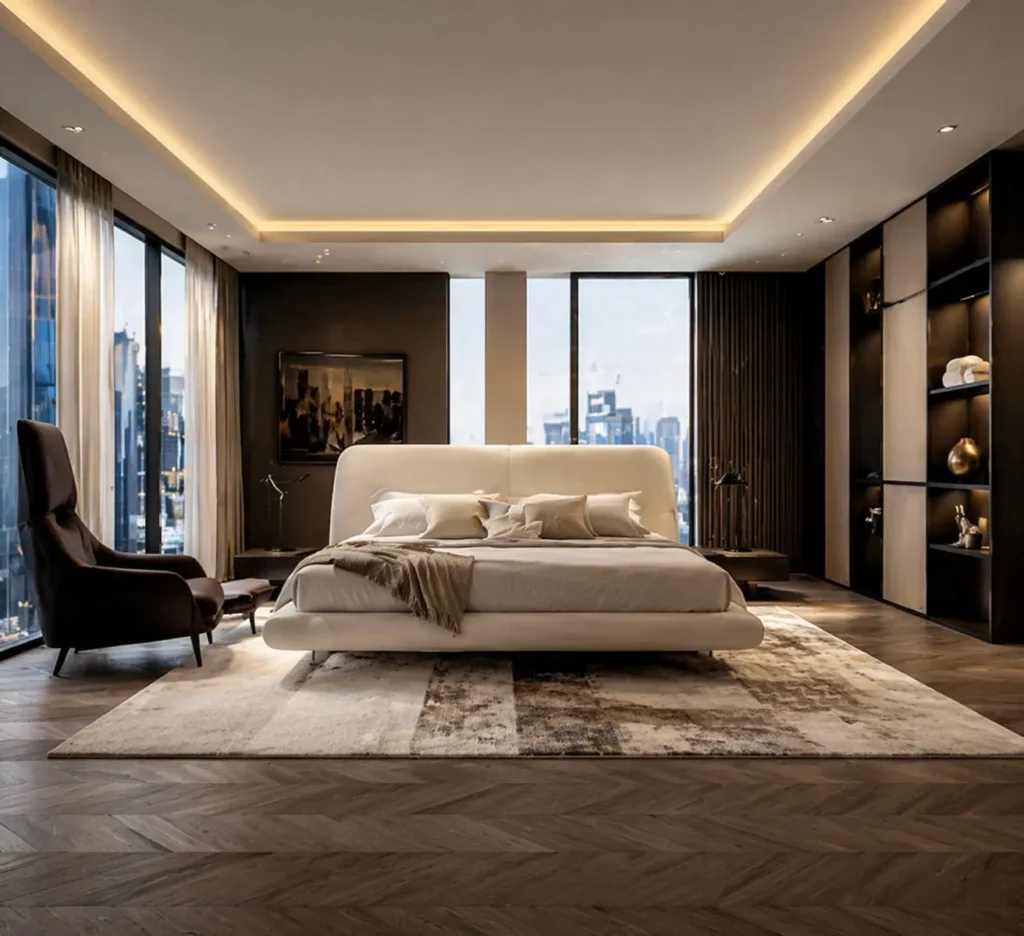
- Install an effective lighting system to keep the small bedroom well illuminated even at night.
- Identify the direction of natural light.
- Rooms with morning sunlight create an energizing atmosphere, while those with evening light feel warmer and more relaxed.
- In smaller rooms, natural light can make the space appear larger.
- Use mirrors to reflect light and enhance brightness.
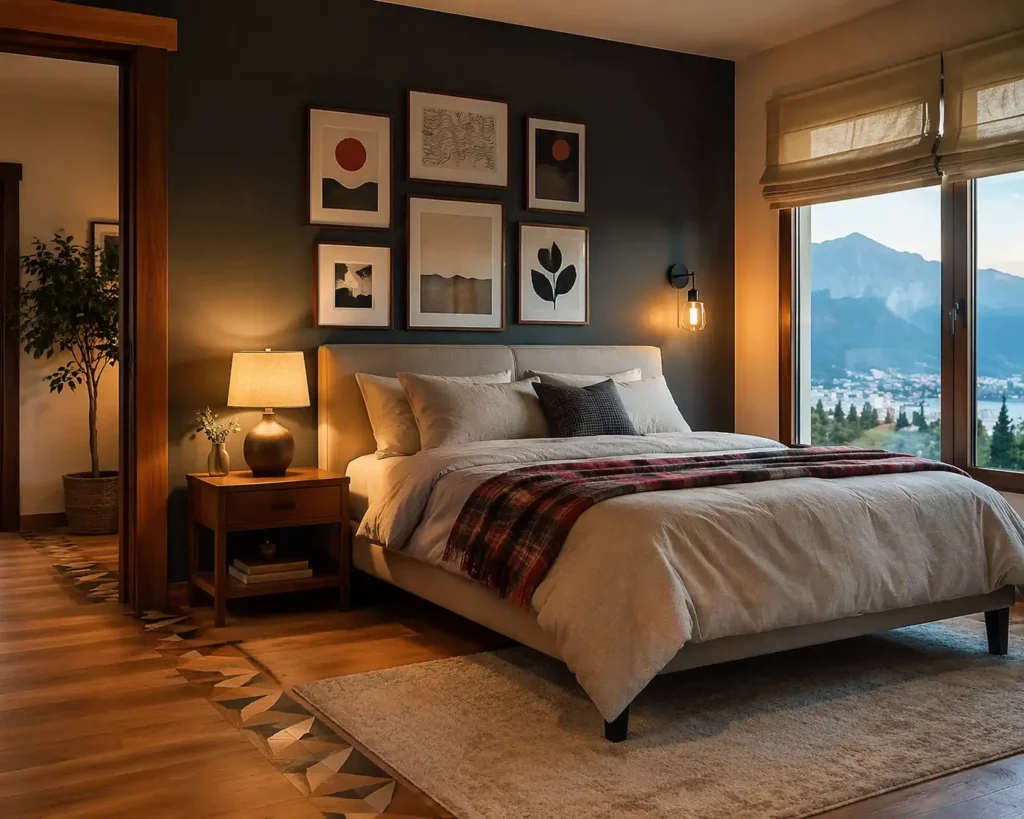
Color Schemes
Color is one of the most powerful elements in bedroom design. It influences mood, perception, and overall ambiance. Soft, neutral colors like beige, gray, and white create a calm and relaxing environment ideal for sleep. Dark tones like navy or charcoal add depth and coziness, but should be balanced with lighter elements. The secret to a luxurious space isn’t in choosing the loudest color; it’s about finding the perfect balance between elegance and expression, where every shade feels purposeful.
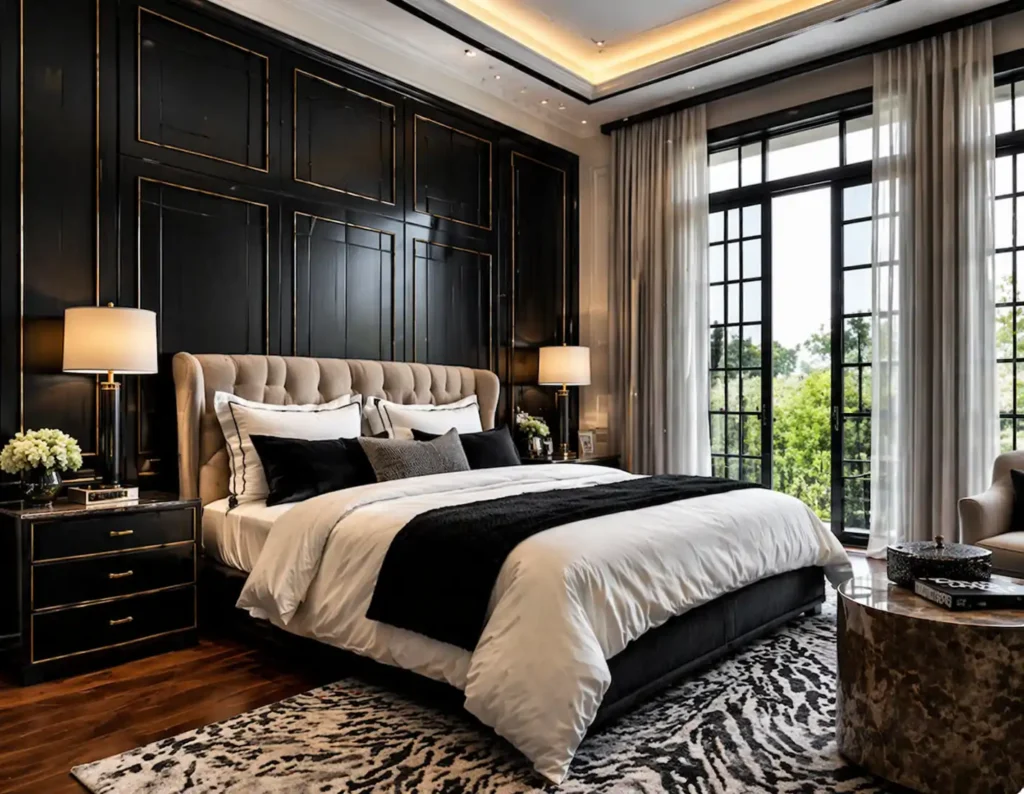
Keep in Mind
- Warm colors (such as soft browns and earthy tones) create a welcoming feel.
- Cool colors (like blues and greens) promote relaxation.
- Accent colors can be introduced through pillows, rugs, or artwork to add personality without overwhelming the space.
- Avoid overly bright or harsh colors, as they can disrupt relaxation.
- A well-balanced color palette ties all elements together and creates a cohesive design.
- If you’re aiming for luxury, forget bright yellows or neon greens. The wrong colors can take your bedroom from sophisticated to chaotic in an instant.
- If you want to create a space that embodies luxury, you need to think in layers, starting with a neutral base and then building with carefully chosen accents. Neutral colors like soft beiges, creamy whites, and warm Grays are your foundation. These shades provide a sense of calm, comfort, and elegance.
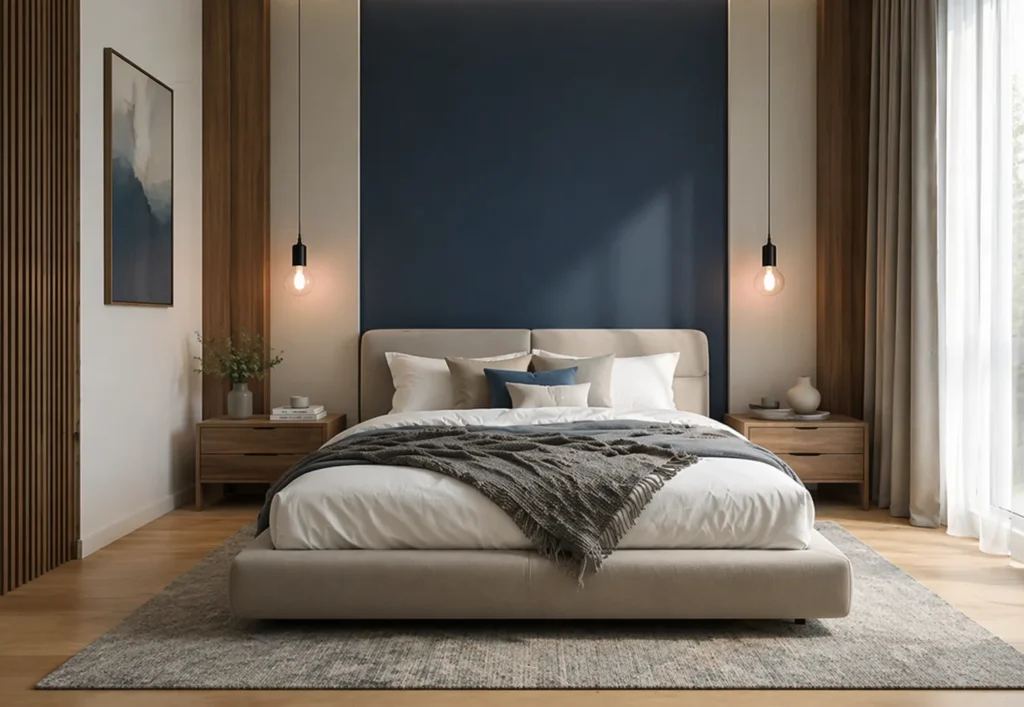
- If you want to make an impact, choose deep jewel tones like emerald green, sapphire blue, or amethyst purple. These colors exude opulence and can elevate your bedroom from simple to stunning.
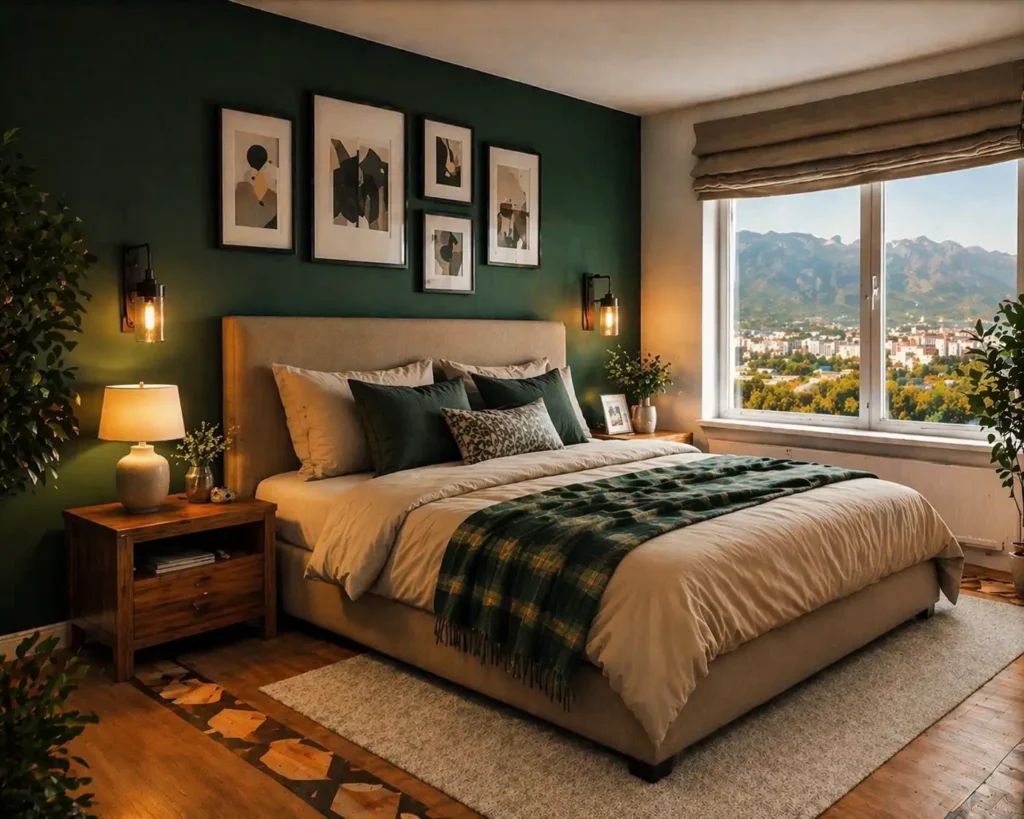
- A rich emerald green accent wall behind your bed can instantly make the room feel more elegant, adding depth and a focal point that draws the eye.
- If you want to create a high-end feel, stick to deep jewel tones for accent walls. These colors make a statement without overpowering the space. The trick is to use them sparingly and deliberately.
- You don’t need to paint every wall in a deep color to make an impact; instead, focus on a single accent wall, perhaps the wall behind your bed, which will immediately draw attention and set the tone for the rest of the room.
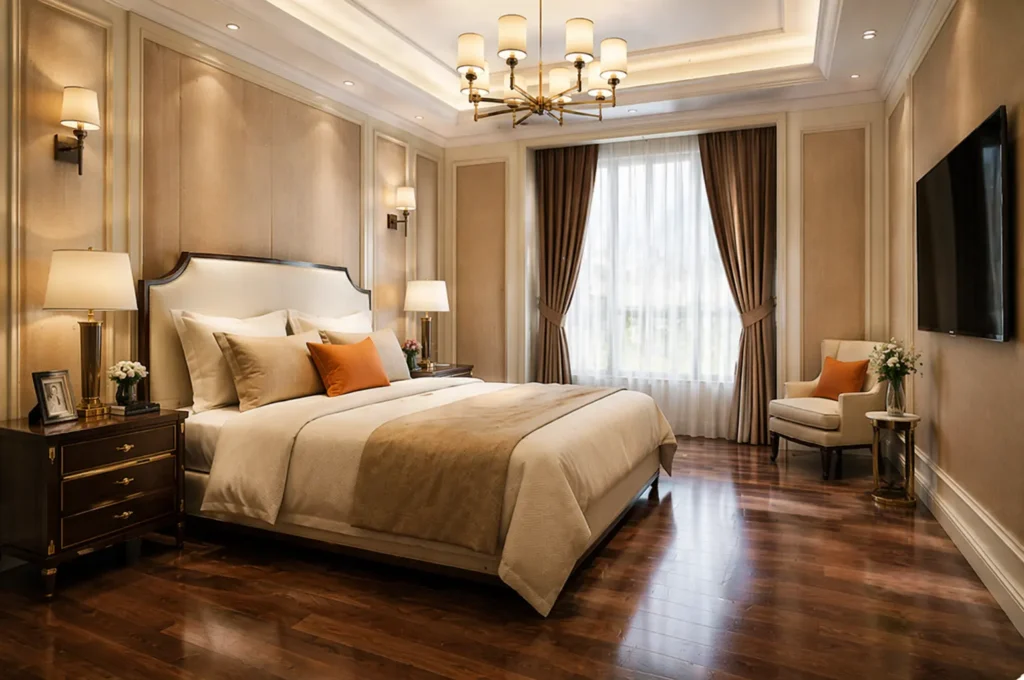
Choosing the Right Flooring
Choosing the right floor type and color is one of the important steps in designing a master bedroom. The flooring influences comfort, aesthetics, and the overall atmosphere of the space. The floor is one of the largest visible surfaces in the room, so its material and tone set the foundation for all other design elements. The type of flooring affects both functionality and feel.
Ultimately, the right combination of floor type and color enhances both comfort and visual harmony, making the master bedroom feel balanced, inviting, and well-designed.
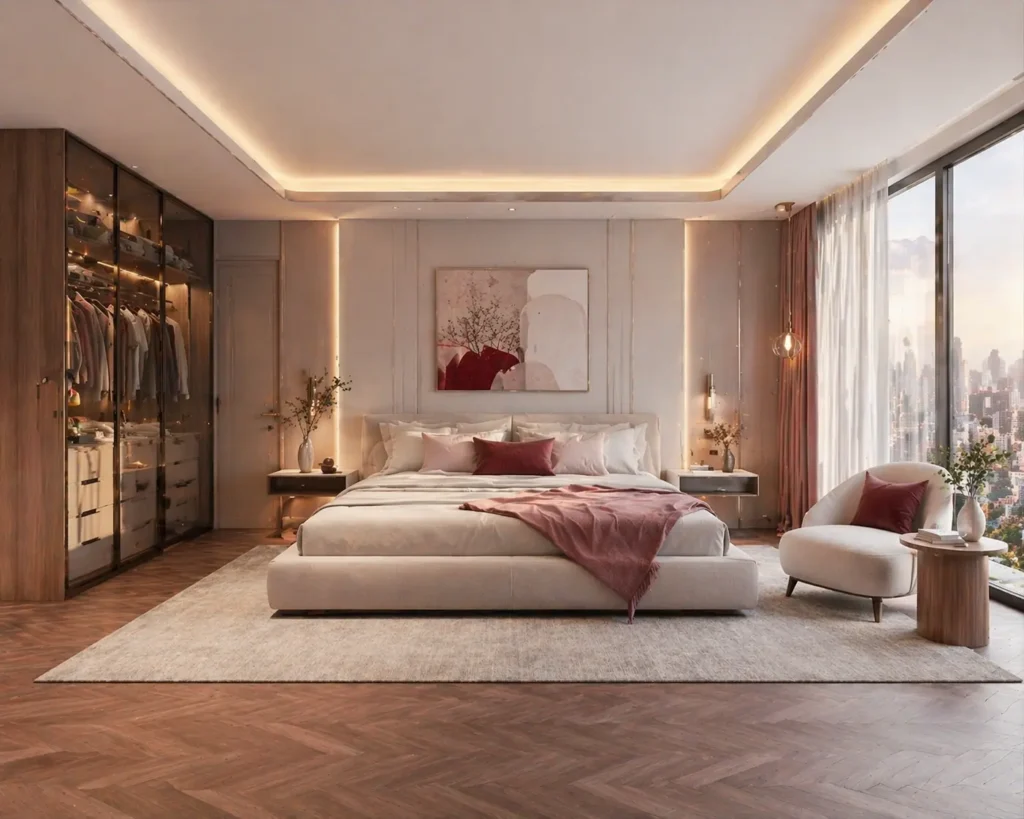
- Light-colored floors, such as oak or beige tones, make a room appear larger, brighter, and more open. They reflect natural light and create an airy atmosphere.
- Darker floors, like walnut or espresso shades, add depth, richness, and a sense of luxury, but they may show dust and scratches more easily.
- Wooden flooring is a popular choice because it brings warmth, elegance, and a natural texture that suits both modern and classic interiors.
- Engineered wood or laminate can offer a similar look at a lower cost. Carpets provide softness and insulation, making the bedroom feel cozy and quiet. It is ideal for relaxation.
- Hand tiles or marble are durable and easy to maintain, especially in warmer climates, but they may require rugs to add warmth and comfort underfoot.
Choosing Curtains and Window Treatments
Windows are a key element in bedroom design, as they influence lighting, ventilation, and overall ambiance. A well-lit room feels more open, fresh, and inviting. Proper window placement and usage improve both aesthetics and comfort, making the bedroom feel more livable and pleasant.
- Choose blackout curtains if you value deep, uninterrupted sleep. They block outside light and are especially useful for bedrooms facing streets or early sunlight.
- Use a combination of sheer curtains and heavy drapes. Sheers allow soft daylight during the day, while thicker curtains provide privacy and darkness at night.
- Curtains should complement your interior theme. For example, linen works well in modern or Scandinavian designs, while velvet suits luxury or classic bedrooms.
- Floor-to-ceiling curtains create a taller and more elegant look. Avoid curtains that stop midway, as they can make the room feel shorter.
Storage Solutions
Storage is essential for maintaining a clean and organized bedroom. Poorly planned storage can disrupt the layout and reduce usability. Well-planned storage keeps the room clutter-free, enhancing both functionality and visual appeal.
TIPS
- Wardrobes should be placed where they are easily accessible without blocking movement. Built-in wardrobes are ideal as they save space and create a seamless look.
- In smaller rooms, sliding wardrobe doors are a practical choice. They require less space and improve circulation.
- Consider vertical storage to maximize space. Tall cabinets or shelves can provide additional storage without taking up floor space.
- Under-bed storage is another effective solution, especially for seasonal items.
- Keep frequently used items within easy reach, while storing less-used items in less accessible areas.
- You can use a few visual tricks that make space look bigger by arranging furniture directions and furniture color.
- In a bedroom, it’s best to restrict the number of accessories so that space doesn’t look cluttered, and having too many things that draw your attention won’t allow you to relax.
Functional Zones
Dividing the bedroom into functional zones improves usability, especially in larger spaces. Common zones include sleeping, dressing, and seating areas. Zoning adds structure and purpose to the room, making it more functional and comfortable.
- The sleeping zone should remain the primary focus, with the bed centrally positioned. The dressing area should be close to the wardrobe for convenience.
- If space allows, add a seating area with a chair or small sofa. This creates a relaxing corner for reading or unwinding.
- In smaller rooms, zones can be implied rather than physically separated. For example, a rug can define the sleeping area.
- Avoid overcomplicating the layout. Each zone should feel connected and not disrupt the overall flow.
Ceiling Height and Vertical Space
The choice of the right ceiling type and its color plays a key role in shaping the overall feel of a master bedroom. The ceiling types, like false ceiling, tray ceilings, or simple flat finishes, influence depth, lighting, and visual interest. Colors impact perception; light shades make the room feel taller and more open. Darker tones create a cozy and intimate atmosphere. A well-planned ceiling enhances ambiance, supports lightning and ties the entire design together. It makes the bedroom feel more comfortable, stylish, and visually complete.
- Wooden panels bring warmth and natural texture. They work especially well in modern and rustic bedrooms, creating a cozy atmosphere.
- A simple white ceiling with clean edges suits minimalist interiors. It keeps the space open, bright, and uncluttered.
- Linear LED strips embedded in the ceiling create a sleek, modern look. They also provide subtle ambient lighting.
- A central chandelier paired with a clean ceiling design creates a strong focal point and adds elegance.
- Exposed or decorative beams add character and depth. They suit rustic, farmhouse, or industrial styles.
- Ceiling wallpaper introduces patterns and texture. It works best as a feature element in otherwise simple rooms.
- Soft fabric ceilings create a luxurious and cozy feel. They also help with sound insulation.