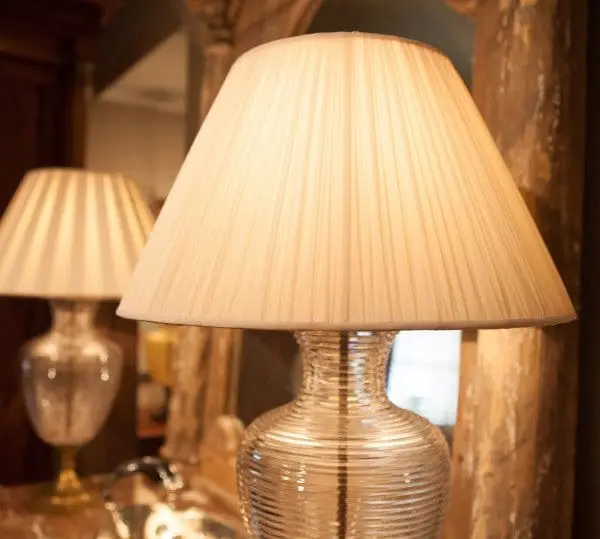

Silk lamp shades must be cleaned using dry methods first such as gentle dusting with a microfiber cloth or soft brush. If deeper cleaning is needed, the safest approach is light hand-washing with cold water and a pH-neutral detergent, followed by air-drying in a shaded place. These steps prevent shrinking, fading, and deformation. Homeowners often ask how to achieve this without damaging the fabric, and the following guide explains each stage in clear detail to match all search expectations.
As a new homeowner, you have carefully chosen every piece of decor, and a silk lamp shade is often one of the most elegant and delicate additions to a room. But silk is notoriously unforgiving when it comes to cleaning. Use the wrong product, apply too much moisture, or rub too hard, and you can permanently damage the fabric, leaving water stains, warping, or fading. This guide walks you through exactly how to clean silk lamp shades from routine dusting to tackling stubborn stains, so your shades stay luminous and beautiful for years to come.
What Makes Silk Lamp Shades Delicate
Silk is a natural protein fiber. Its smooth texture and light sheen make it desirable for interior lighting. Unlike cotton or polyester shades, silk can shrink, stain, or disintegrate if exposed to too much moisture or the wrong cleaning agents. It is vulnerable to:
- Water spotting
- Color fading
- Heat distortion
- Frame warping
- Weakening when wet
The University of Nebraska research on textile fibers explains that silk loses nearly 20 percent of its strength when soaked in water (Source: Nebraska Extension Textile Science). This is why it must be cleaned with careful support and minimal agitation.
According to The Spruce (thespruce.com), one of the most trusted home care resources online, silk fabric should never be rubbed or wrung, as this breaks the delicate fibers and causes permanent dullness. Before touching your lamp shade, always check the manufacturer’s label. Most silk shades carry a care tag with cleaning codes: S (dry clean solvent only), W (water-based cleaning), or WS (either). If there is no label, treat it as dry-clean-only.
⚠ IMPORTANT WARNING: Never put a silk lamp shade in the washing machine or submerge it in water. Even ‘hand wash’ methods should be used sparingly and only on shades labelled ‘W’ or ‘WS.’ Always test any solution on a hidden area first.
Essential Tools for Cleaning Silk Lamp Shades
Gather these supplies before you begin — having everything on hand means you will not have to pause mid-clean and risk leaving product on the fabric too long:
| Tool | Purpose |
| Microfiber cloth | Removes surface dust |
| Soft natural-bristle brush | Reaches pleats and seams |
| Lint roller | Collects loose particles |
| pH-neutral detergent | Prevents fiber weakening |
| Large basin | Allows gentle immersion |
| Clean white towel | For drying support |
| Hair dryer (cool only) | Speeds drying safely |
| Dry cleaning solvent | For ‘S’-coded shades only |
| Distilled water | Avoids mineral water spots |
| White vinegar (diluted) | Mild yellowing treatment |
Avoid colored towels, harsh soaps, and abrasive brushes.
Step-by-Step: How to Clean Silk Lamp Shades
Step 1 — Remove Dust Before Anything Else
Dusting: Close-up of a hand using a lint roller on a pleated silk shade, moving downward in one direction. Warm indoor lighting. Caption: ‘Always dust from top to bottom in one direction.’
The most important rule of silk lamp shade care is this: prevention beats deep cleaning every time. Dust your shades weekly to prevent buildup that embeds into the fibers. Dusting removes up to 70 percent of visible soil, according to the American Cleaning Institute.
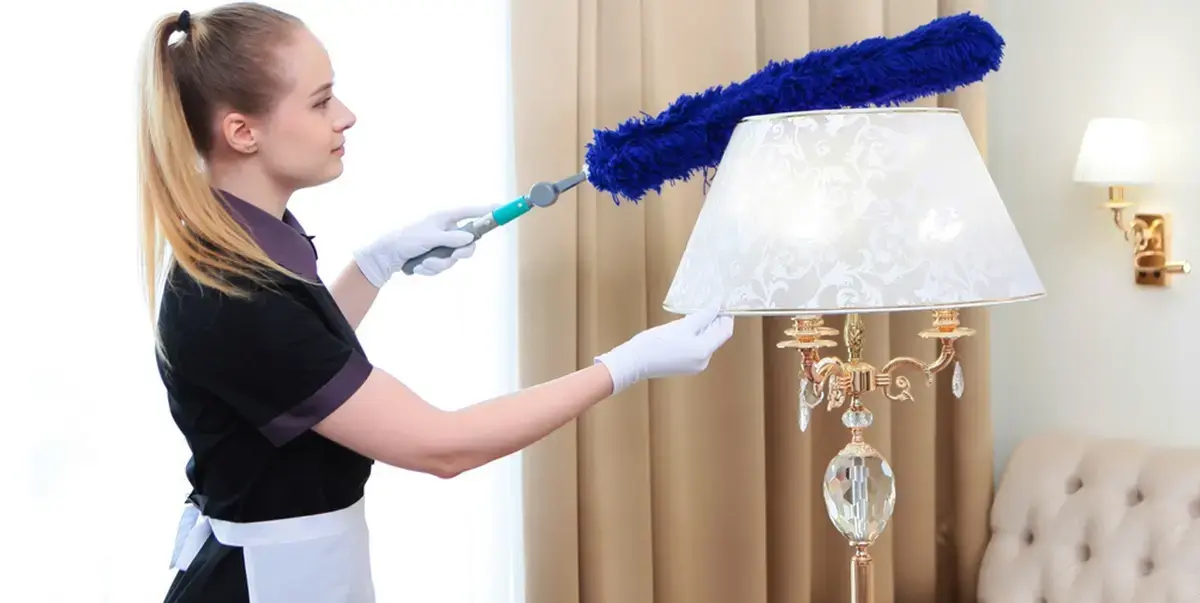
How to dust a silk shade correctly:
- Unplug the lamp.
- Remove the shade and hold it by the frame.
- Use a microfiber cloth in smooth downward strokes — always top to bottom in one direction.
- For pleated areas use a natural-bristle brush with light, downward strokes.
- Use a lint roller only on the outside surface.
- For stubborn dust, use a can of compressed air held at least 8 inches away, blowing in short bursts.
✦ PRO TIP: A clean, dry makeup brush (powder brush size) is one of the best tools for reaching pleated silk shades where a lint roller cannot go. Keep one dedicated to lamp shade dusting only.
Step 2 — Decide Between Dry and Wet Cleaning
Not every silk shade should be washed. The following comparison helps you decide the correct approach:
| Method | Advantages | Disadvantages |
| Dry Cleaning | Safest for vintage silk, preserves trim, avoids shrinkage | Cannot remove deep stains, requires specialty products |
| Hand Washing | Effective for light soil, inexpensive, suits durable silk | Risk of warping, requires careful handling |
Dry Cleaning Is Best When:
- The silk is very thin or vintage
- The shade has glue-based seams
- There is embroidery or delicate trim
Wet Cleaning Is Acceptable When:
- The frame is stable
- The silk is durable or lined
- Light staining is present
Synthetic silk (polyester blend) tolerates water better, but natural silk must still be treated carefully. When in doubt, choose the dry method.
Step 3 — How to Hand Wash a Silk Lamp Shade
Spot Cleaning: Blotting a stain on a silk lamp shade with a white cloth — dabbing motion, small bowl of distilled water nearby. Caption: ‘Always blot, never rub. Work from the outer edges inward.’
For water-safe shades (labelled W or WS), follow these steps for safe hand washing:
- Fill a basin with cold water.
- Add a teaspoon of pH-neutral detergent.
- Submerge the shade gently.
- Swish the water lightly without twisting.
- Rinse in cold water until clear.
- Support the shape using both hands throughout.

⚠ IMPORTANT: Do not scrub seams or pleats. Avoid wringing or flattening the frame. A textile care report from the Smithsonian Museum Conservation Institute recommends minimal agitation for historical silk to prevent fabric strain.
Step 4 — Removing Specific Stains on Silk Shades
Water Spots: Dab lightly with a cloth dampened in cold distilled water. Air-dry in indirect light.
Oil Marks: Use a tiny amount of neutral detergent on a damp cloth. Move in gentle circular motions without pressing hard.
Smoke Residue: Brush with a soft natural-bristle brush. Consider professional cleaning if yellowing is deep-set.
Step 5 — Deep Cleaning (When Necessary)
If your silk shade has significant yellowing, accumulated grime, or widespread discoloration, a deeper clean may be needed. However, this should only be done once or twice a year at most, and only on shades with a ‘W’ or ‘WS’ label.
For shades marked ‘S’ only, use a dry cleaning solvent (available at hardware stores) applied with a soft cloth and blotted away — never rubbed. According to Good Housekeeping (goodhousekeeping.com), dry solvents are safer than water-based methods for delicate natural fabrics and dramatically reduce the risk of water rings.
For water-safe shades, fill a bathtub with lukewarm water and a small amount of gentle silk detergent such as The Laundress Delicate Wash. Submerge briefly, swish gently — never agitate — and remove within 60 seconds. Support the full shade weight to prevent warping of the frame underneath.
Step 6 — Drying the Shade Correctly
Drying: Silk lamp shade air drying near an open window. Positioned off its base on a clean towel, away from direct sunlight. Caption: ‘Dry away from direct sunlight to prevent fading.’
Drying mistakes often cause more damage than washing. Silk must dry quickly and evenly to prevent water marks and mildew.
- Blot excess moisture immediately with dry white towels — never wring or squeeze.
- Place the shade over a clean towel on a flat, well-ventilated surface.
- Use a hair dryer on the lowest, coolest setting, holding at least 12 inches away, moving continuously.
- Rotate the shade occasionally to retain shape and ensure even drying.
- Do not use a heater or direct sunlight. A controlled indoor temperature prevents warping of metal frames.
Step 7 — Maintaining Shape While Cleaning
Silk becomes weaker when wet, which increases the risk of misshaping. Support the frame with both hands during washing and drying. If the frame begins to bend, gently correct it before the fabric dries.
Best Products for Cleaning Silk Lamp Shades
Recommended pH-Neutral Detergents:
- Woolite Delicates
- The Laundress Delicate Wash
- Ecover Delicate Fabric Wash
Brush Options:
- Natural goat-hair brush
- Horsehair upholstery brush
These are known for mild formulations that protect protein fibers such as silk, and soft enough to avoid abrasion.
Ongoing Maintenance Tips for New Homeowners
Switch to LED bulbs. Traditional incandescent bulbs generate heat that accelerates silk aging and causes yellowing. LED bulbs run cooler and extend the life of your shade significantly.
Keep shades away from humidity. Bathrooms, kitchens, and laundry rooms are hostile environments for silk. Ensure strong ventilation if used in these spaces.
Rotate the shade occasionally. If one side faces a window, rotate the shade quarterly to ensure even light exposure and prevent one-sided fading.
Dust monthly and deep-clean once or twice per year. Regular light dusting prevents accumulation of grime that becomes harder to remove over time.
Store correctly if needed. Wrap in acid-free tissue paper — never plastic — and store in a cool, dry place away from light and moisture.
✦ FINAL THOUGHT: Consistent light dusting every week is worth more than one annual deep clean. Silk rewards gentle, regular attention — neglect it and you will face far more challenging problems down the line.
When to Hire a Professional Cleaner
Recommended when:
- The shade is antique or has sentimental / high financial value
- The silk is extremely thin
- There are water rings or dye migration
- Home cleaning methods have not resolved deep staining or yellowing
Professional textile cleaners use controlled rinsing methods and padded drying forms. Costs range from $25 to $60 per shade depending on size and age, according to industry pricing surveys.
Case Study: Restoring a 1960s Silk Shade
📖 CASE STUDY: A homeowner in Boston reported severe yellowing on a mid-century silk shade. Superficial dust was removed with a natural brush. Because of age, dry cleaning with solvent-based materials was used instead of water. The shade regained its original cream color without shrinking. This example demonstrates the value of selecting the correct cleaning technique based on fiber condition.
For more details watch clean silk lamp
Expert Quotations
Victoria Blyth, Textile Conservator, Victoria and Albert Museum
“Silk is among the most sensitive fibers. Cleaning must always be the least invasive method suitable for the object.”
Source: Victoria and Albert Museum Conservation Department
Dr. Janice Choi, Fiber Scientist, Cornell University
“Neutral detergents with low alkalinity are essential for preserving the molecular structure of silk proteins.”
Source: Cornell Fiber Science Laboratory
American Institute for Conservation (AIC) Textile Committee
“Support is the key factor. Any fabric that loses strength when wet should be lifted and dried with its full shape maintained.”
Source: AIC Textile Conservation Guidance
Summary of the Cleaning Process
- Remove dust with microfiber cloth and soft brushes
- Evaluate whether dry or wet cleaning is appropriate
- If washing, use cold water and a neutral detergent
- Support the shade while rinsing and drying
- Avoid sunlight, heat, and harsh chemicals
- Preserve the frame shape throughout the process
Conclusion
Silk lamp shades add refinement to any home, but they require thoughtful care to preserve their color, sheen, and structure. The safest approach is always to begin with dry cleaning methods and proceed to wet cleaning only when necessary. By using neutral products, supporting the frame, and avoiding heat or scrubbing, homeowners can maintain silk shades for many years. Those caring for vintage or fragile shades should consider professional cleaning for best results. Understanding the material and following a precise method ensures both safety and aesthetic longevity.
Every Homeowner should visit New Home Essentials before set their homes.
Related Guides for New Homeowners
Best LED Bulbs for Fabric Lamp Shades
How to Clean Linen Curtains Without Shrinking
Frequently Asked Questions (FAQs)
Q1 Can silk lamp shades be washed with soap?
Only if the soap is pH-neutral and designed for delicates. Regular detergents are too alkaline and weaken silk.
Q2 Will water damage silk shades?
Water can cause spotting and warping. Use cold water in gentle amounts and dry slowly away from direct heat or sunlight.
Q3 Is brushing safe for silk?
Yes, if the brush has very soft natural bristles such as goat-hair or horsehair. Avoid synthetic stiff brushes.
Q4 Can a steam cleaner be used on a silk lamp shade?
No. Steam heat can shrink silk and distort adhesives used in the frame construction. Always use cool air methods.
Q5 How often should a silk lamp shade be cleaned?
Dust monthly and perform deeper cleaning once or twice per year. Spot-clean stains immediately as they occur.
Q6 What is the safest way to clean a silk lamp shade?
Gentle dusting with a microfiber cloth is the safest and should always be tried first before any wet methods.
Q7 Can I wash a pleated silk lamp shade?
Yes, but only with minimal water movement and full support of the pleats throughout the process.