Best Soil Mix for Balcony Plants in Small Spaces
Balcony gardening is one of the simplest ways to add greenery to apartment living. However, growing plants in containers is very different from planting them in the ground. Because pots have limited space and drainage, the soil you choose plays a major role in plant health.
In fact, the right soil mix can determine whether your plants thrive or struggle. In this guide, you will learn why regular soil does not work, what makes a good potting mix, and how to prepare the ideal blend at home.
Why Regular Garden Soil Is Not Suitable for Balcony Plants
At first glance, using soil from a backyard may seem practical. However, natural ground soil is too heavy for containers. In small pots, dense soil creates several problems.
For example, it compacts quickly and blocks drainage holes. As a result, water collects at the bottom of the pot. Over time, this reduces airflow and increases the risk of root rot.
Instead, balcony plants require a light and airy growing medium. This type of mix supports root development and allows excess water to drain properly.
What Makes the Best Soil Mix for Balcony Plants?
A good balcony soil mix should provide three essential benefits. Most importantly, it must balance drainage, airflow, and nutrients.
Proper Drainage
First of all, excess water must flow out easily. Without proper drainage, roots remain wet for too long, which leads to fungal diseases.
Good Aeration
In addition, plant roots need oxygen to grow strong. When soil becomes compact, roots cannot breathe. Consequently, growth slows down.
Balanced Nutrient Retention
Finally, the mix should hold enough nutrients to feed plants. At the same time, it must stay lightweight and loose.
When these three factors work together, plants grow healthier and stronger.
The Ideal Soil Mix Formula for Small Balcony Pots
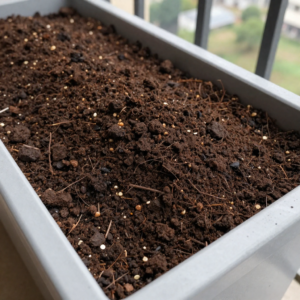
Fortunately, you can prepare an effective potting mix at home. The following ratio works well for most balcony plants:
-
40% coco peat or peat moss
-
30% organic compost or vermicompost
-
20% perlite or coarse sand
-
10% garden soil (optional, for structure)
This combination creates a lightweight and well-draining mix. As a result, it supports vegetables, herbs, and flowering plants in small containers.
Best Soil Mix for Different Types of Balcony Plants
Although the basic formula works for most plants, small adjustments can improve results.
For Vegetables (Tomatoes, Chillies, Spinach)
Vegetables require more nutrients. Therefore, slightly increase the compost portion. At the same time, maintain good drainage to prevent fungal problems.
For Herbs (Mint, Basil, Coriander)
Herbs prefer lighter soil. For this reason, keep the mix airy and avoid heavy fertilization. Otherwise, excessive nutrients may reduce flavor.
For Flowering Plants
Flowering plants benefit from additional nutrients during blooming. In this case, you can add a small amount of bone meal or organic fertilizer. Meanwhile, ensure consistent moisture without overwatering.
How to Improve Drainage in Balcony Containers
Even the best soil mix will not work if drainage is poor. Therefore, follow these simple steps:
-
Always choose pots with drainage holes.
-
Place small stones or broken clay pieces at the bottom.
-
Avoid leaving pots in water-filled trays for long periods.
By improving drainage, you protect plant roots from water damage and disease.
Common Mistakes to Avoid
Many beginners face problems because of simple mistakes. For instance:
-
Using only heavy garden soil
-
Watering too frequently
-
Ignoring compost
-
Adding very fine sand that compacts
Fortunately, these mistakes are easy to correct. Once you improve the soil structure, plant health improves quickly.
Store-Bought Potting Mix vs Homemade Mix
If you prefer convenience, a high-quality store-bought potting mix can save time. On the other hand, a homemade blend is often more affordable and flexible. Moreover, it allows you to control ingredients and maintain an organic approach.
For most apartment gardeners, a lightweight organic mix offers better long-term results.
How Often Should You Refresh Balcony Soil?
Because container soil loses nutrients faster than ground soil, regular maintenance is important.
-
Add compost every 30 to 45 days.
-
Replace soil completely every 6 to 12 months.
-
Remove old roots before reusing pots.
By refreshing the soil regularly, you ensure consistent plant growth and productivity.
Final Thoughts
In conclusion, successful balcony gardening begins with the right soil foundation. A balanced mix improves drainage, supports airflow, and provides steady nutrition. As a result, plants grow stronger even in small spaces.
With proper care and the right soil blend, any apartment balcony can become a healthy and productive green space.